
Your Buyers Have Moved—Has Your Funnel?
Why most funnels are optimized for buyers who no longer exist.
|
Welcome to Funnel Marketing System!
AI automation is finally getting transparent. Here’s what that means for your funnel—and how to capitalize before your competitors do.
- 🔍 Google just fixed the AI Max black box with full-journey attribution reporting
- 🧪 Microsoft’s expanded testing framework now validates changes across Shopping, PMax, and Audience campaigns
- ⚡ Workflow automation that removes creative bottlenecks from your funnel execution
The Attribution Visibility Breakthrough You’ve Been Waiting For
AI-powered campaigns have delivered results, but they’ve operated like black boxes. You feed them budget, they return conversions, and you’re left guessing which search terms, creative assets, and landing pages actually drove the outcome.
That changed this week. Google’s AI Max expansion introduces consolidated customer journey reporting that shows search term → creative asset → landing page in a single view. For the first time, you can see exactly how AI-driven Search campaigns convert prospects without stitching together three different reports and making educated guesses about the gaps.
This matters because attribution visibility determines everything downstream. When you know which search queries trigger your ads, which creative variants perform, and which landing pages close, you can systematically improve each stage instead of treating the entire campaign as an inscrutable algorithm. The AI Brief feature expanding to seven languages (French, German, Japanese, Spanish, and more) means you can now scale context-driven automation internationally while maintaining that same visibility.
But transparency alone doesn’t optimize funnels—validation does. Microsoft’s expansion of Optimization Experiments to Shopping, Audience, and Performance Max campaigns gives you the statistical confidence layer that attribution visibility unlocks. Design 4-8 week experiments with flexible traffic allocation, select confidence levels (80%, 85%, 90%, 95%), and view scaled treatment metrics for non-50/50 splits. This isn’t A/B testing as an afterthought—it’s systematic validation infrastructure built into your campaign management.
The final piece is execution velocity. Once you know what works and you’ve validated it statistically, creative production becomes the bottleneck. Plainly Flows solves this by automating repetitive creative tasks: one B2B company now produces 50-70 personalized CEO avatar videos monthly in 2-3 minutes each. Another generates multi-format event graphics on-site via smartphone. When you encode production knowledge into reusable workflows, non-designers can operate templates while your creative team focuses on innovation rather than repetitive execution.
The through-line connecting these three developments: better signals (Google), better validation (Microsoft), faster execution (Plainly). That’s the funnel marketing stack evolution happening right now.
🔗 Google Expands AI Max with Multilingual AI Brief and New Reporting Tools (3 minute read)
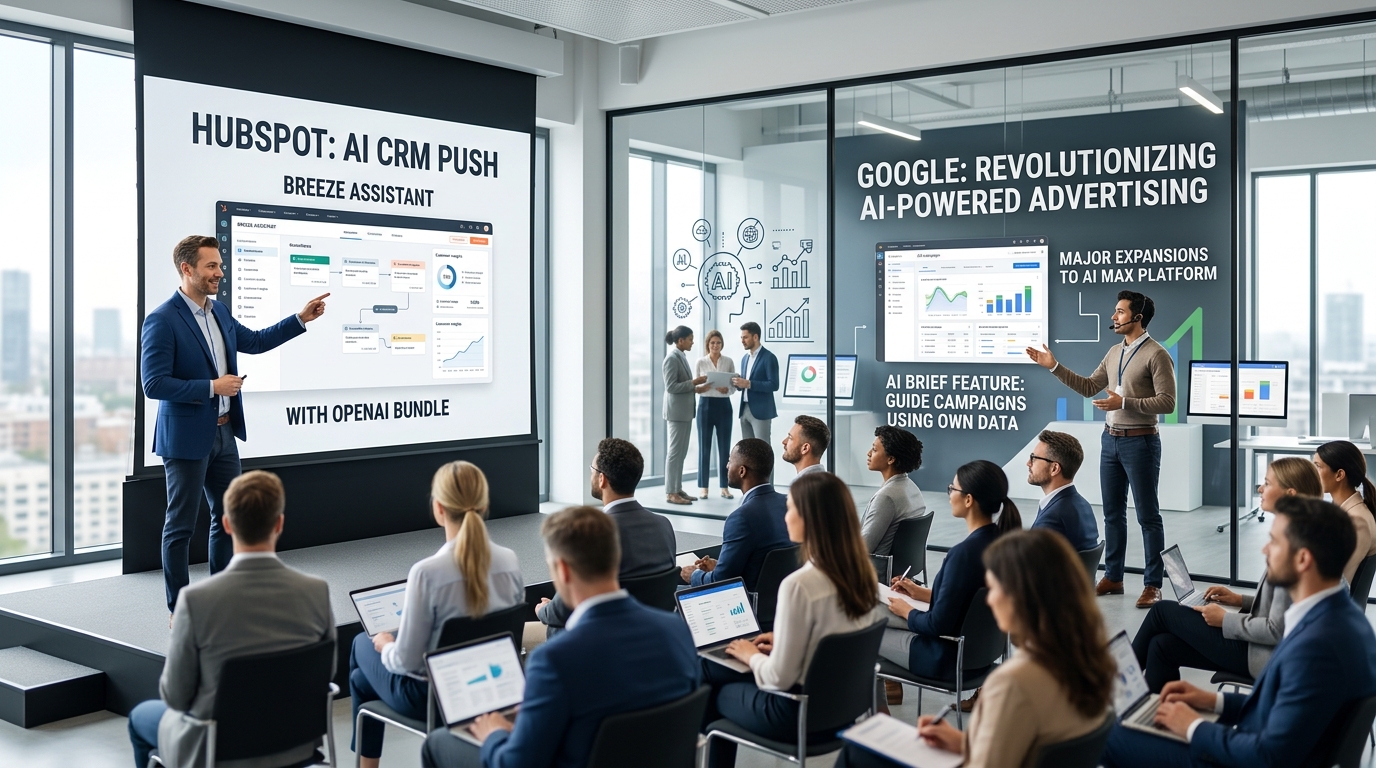
Google is revolutionizing AI-powered advertising by expanding its AI Max platform with two critical updates: multilingual AI Brief support and consolidated customer journey reporting. The AI Brief feature—which lets advertisers guide campaigns using their own business context—now supports seven new languages including French, German, Japanese, and Spanish. More importantly, Google launched an innovative reporting tool that consolidates the entire customer journey across AI-driven Search campaigns into a single view.
Key Points:
- New reporting tool reveals search terms triggering ads, creative assets displayed, and landing pages visited in one consolidated view
- AI Brief feature expands to seven new languages (French, German, Japanese, Spanish, and more) for international campaign scaling
- Updates balance AI automation with advertiser control and transparency, addressing the “black box” criticism of AI-powered campaigns
Why it matters: This is the attribution transparency breakthrough funnel marketers have been demanding. AI Max campaigns have delivered results but operated as black boxes—you couldn’t see which search terms, creative variants, and landing pages actually drove conversions. The consolidated journey view eliminates report stitching and guesswork, letting you systematically optimize each funnel stage. Combined with multilingual AI Brief, you can now scale context-driven automation internationally while maintaining full visibility into campaign mechanics. This shifts AI Max from “trust the algorithm” to “understand and improve the system.”
🔗 Microsoft Advertising Optimization Experiments Now Available for Shopping, Audience, and Performance Max Campaigns (4 minute read)
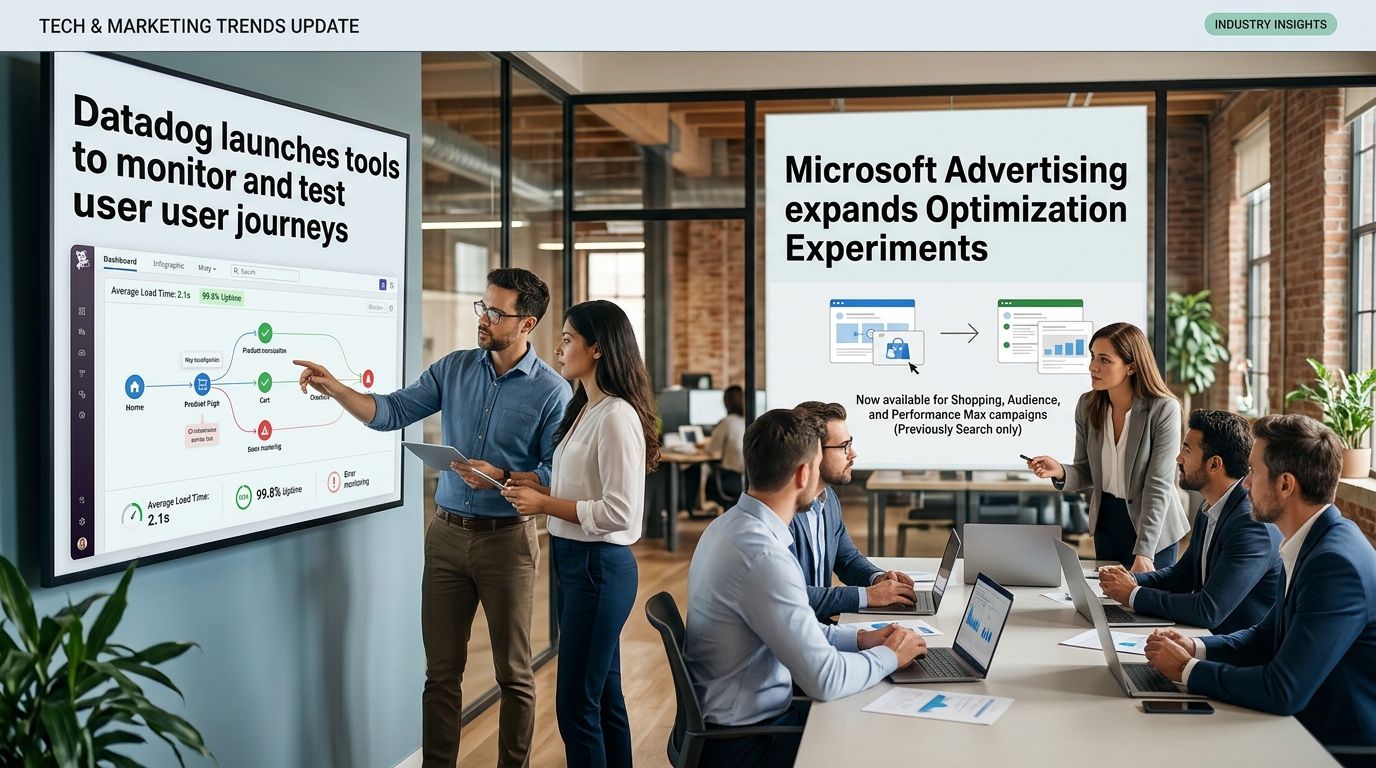
Microsoft Advertising has significantly expanded its Optimization Experiments feature beyond Search campaigns to now include Shopping, Audience, and Performance Max campaigns. Advertisers can design experiments lasting 4-8 weeks with flexible traffic allocation, select confidence level thresholds (80%, 85%, 90%, 95%), and view scaled treatment metrics for non-50/50 splits. The expansion streamlines campaign testing and evaluation processes, though campaigns using shared or lifetime budgets or featuring Dynamic Search Ads remain ineligible.
Key Points:
- Optimization Experiments now available for Shopping, Audience, and Performance Max campaigns (previously Search-only)
- 4-8 week testing windows with customizable confidence level selectors (80%, 85%, 90%, 95%) provide statistical rigor
- Scaled treatment metrics for non-50/50 splits enable more flexible experiment designs without sacrificing measurement accuracy
Why it matters: Test smarter, not harder. Microsoft’s expanded experiment framework lets you validate funnel changes across multiple campaign types before committing full budget. The confidence level selectors act as guardrails against false positives—you’re not making optimization decisions based on noise or insufficient sample sizes. This matters most when combined with Google’s new attribution visibility: you can now see the complete customer journey AND test changes with statistical confidence. The 4-8 week testing window forces discipline—no premature optimization based on three days of data. For conversion-focused marketers, this is the validation layer that separates systematic improvement from random tweaking.
🔗 Plainly Launches Plainly Flows: Workflow Automation Platform for Creative Teams (5 minute read)

Plainly, a London-based automation company, has launched Plainly Flows to streamline creative production through workflow automation. The platform enables creative teams to set up video templates, AI generation steps, and customizable inputs that non-designers can operate. Beta users report producing 50-70 personalized CEO avatar videos monthly in just 2-3 minutes each, while others generate multi-format event graphics on-site via smartphone. By encoding production knowledge into reusable workflows, Plainly Flows democratizes creative asset creation across organizations.
Key Points:
- Automates repetitive creative tasks through reusable workflows combining video templates, AI generation, and customizable inputs
- Beta users produce 50-70 personalized videos monthly in 2-3 minutes each, removing creative bottlenecks from campaign execution
- Non-designers can operate workflows, freeing design teams to focus on innovative work rather than repetitive production
Why it matters: Creative production velocity determines how fast you can test variants, personalize at scale, and respond to campaign data. When producing a single personalized video takes hours of designer time, you can’t run meaningful nurture sequences or test creative hypotheses systematically. Plainly Flows removes that bottleneck—50-70 personalized CEO videos monthly means you can actually execute account-based marketing at scale or build lifecycle nurture sequences with video touchpoints. This connects directly to the Google and Microsoft stories: once you know what works (attribution visibility) and you’ve validated it (experimentation framework), execution speed determines whether you capitalize on those insights or watch competitors move faster. Encoding production knowledge into workflows means your funnel velocity isn’t limited by designer availability.
“The future belongs to those mastering the complete commercial journey—from discovery through guest experience and advocacy.”
— Allison Handy, Chief Commercial Officer, Aimbridge Hospitality
What’s your biggest funnel bottleneck right now?
- A) Attribution visibility—I can’t see which touchpoints actually drive conversions
- B) Testing infrastructure—I’m making optimization decisions without statistical confidence
- C) Creative production speed—I know what to test but can’t produce assets fast enough
- D) Something else entirely
The three stories in today’s issue form a complete system: visibility into what’s working, validation that changes improve performance, and execution velocity to capitalize on insights before they’re stale. Most marketing teams have one or two of these pieces. The competitive advantage goes to whoever assembles all three first.
AI automation isn’t replacing funnel marketing—it’s raising the bar for what systematic optimization looks like. The marketers winning in 2026 aren’t running more campaigns or spending more budget. They’re seeing clearer signals, testing with statistical rigor, and executing faster than their category allowed six months ago.
Which piece of this system are you building next?
Keep optimizing,
Funnel Marketing Systems Editor
📊 How did you like today’s email?
Originally published by Funnel Marketing Guy, your resource for funnel marketing, sales funnels, ClickFunnels, lead generation, conversion optimization, email marketing, marketing automation, and digital marketing strategies.
Continue your journey at https://www.funnelmarketingguy.com.
Enjoyed this issue?
Subscribe to get Funnel Marketing System delivered to your inbox every week.
Join 17 other subscribers • Free forever