
Why Your Funnel Optimization Is Failing (Hint: It's AI)
Plus: The retail brands that cracked personalization at scale
|
Welcome to Funnel Marketing System!
You’re paying for traffic you already own—and AI just made it worse. This week: how to stop the bleed, find the moments that actually convert, and automate the rest.
- 🔍 Search ROI cannibalization: The incrementality blind spot costing you real growth
- 🎯 Critical moments methodology: Stop optimizing everything, start optimizing what converts
- 🤖 AI is fragmenting the funnel—here’s how to maintain control and measure what matters
- ⚙️ Automation as efficiency: Run enterprise-level campaigns with startup-sized teams
- 🔧 Tool selection framework: Match funnel builders to your actual business model
The Incrementality Trap
Your paid search team hit their CPA target. Your SEO team doubled organic traffic. Both teams celebrated. Your CFO asked why revenue didn’t move.
Here’s what happened: you paid Google to deliver traffic that was already coming through organic search. Amy Crowther, CEO of Incubeta, calls this the “total search” blind spot—treating paid and organic as separate channels when AI has collapsed them into one system.
The fix isn’t better attribution modeling. It’s asking a different question: Where is paid spend actually driving incremental growth? Machine learning can calculate true incremental value by comparing what would have happened without the paid investment. Most brands discover 20-40% of their search budget is buying traffic they already owned.
Redirect that spend toward genuine growth channels. The future belongs to companies that stop confusing activity with incrementality.
🔗 Stop Buying Your Own Traffic: Protecting Search ROI in the AI Era (8 minute read)

Marketers are hemorrhaging search ROI by confusing activity with incrementality. Amy Crowther reveals a critical blind spot: brands unknowingly pay for traffic they already own through organic search. As AI reshapes search experiences, paid and organic channels are collapsing into one, making cannibalization invisible.
Key Points:
- Adopt a “total search” methodology that treats paid and organic as interdependent systems, not rival departments
- Use machine learning to calculate true incremental value—where paid spend actually drives growth versus cannibalizing organic
- Integrate data across channels to identify and redirect wasted spend toward genuine growth opportunities
Why it matters: This is the incrementality blind spot costing you real growth. For attribution-obsessed funnel operators trying to prove ROI and eliminate wasted spend, the “total search” methodology provides a diagnostic to separate channel cannibalization from actual conversion improvement. Stop paying for traffic you already own.
🔗 Stop treating every customer touchpoint the same (9 minute read)

Not all customer touchpoints deserve equal attention. Tim Boylan reveals how identifying “critical moments”—where risk and opportunity spike simultaneously—can transform your customer strategy. Using real-world examples of apparel brands with vastly different chatbot approaches, he demonstrates that premium pricing elevates expectations, and fumbled critical moments guarantee customer loss.
Key Points:
- Export churn and growth customer lists, analyze events 30-60 days prior, find overlapping patterns to identify actionable moments
- At critical junctures, human connection beats AI automation—25% escalation rate with 90% satisfaction outperforms 5% escalation with 70% satisfaction
- Focus optimization efforts on the 3-5 touchpoints where conversion lives or dies, not uniform improvement across all interactions
Why it matters: Stop optimizing everything and start optimizing what matters. This 30-60 day event analysis playbook gives you the methodology to find your own critical moments using churn and growth data. For funnel operators drowning in optimization opportunities, this framework prioritizes where conversion actually happens.
🔗 Retail Spent Years Optimizing the Funnel. At eTail Boston, AI Started Pulling It Apart. (12 minute read)
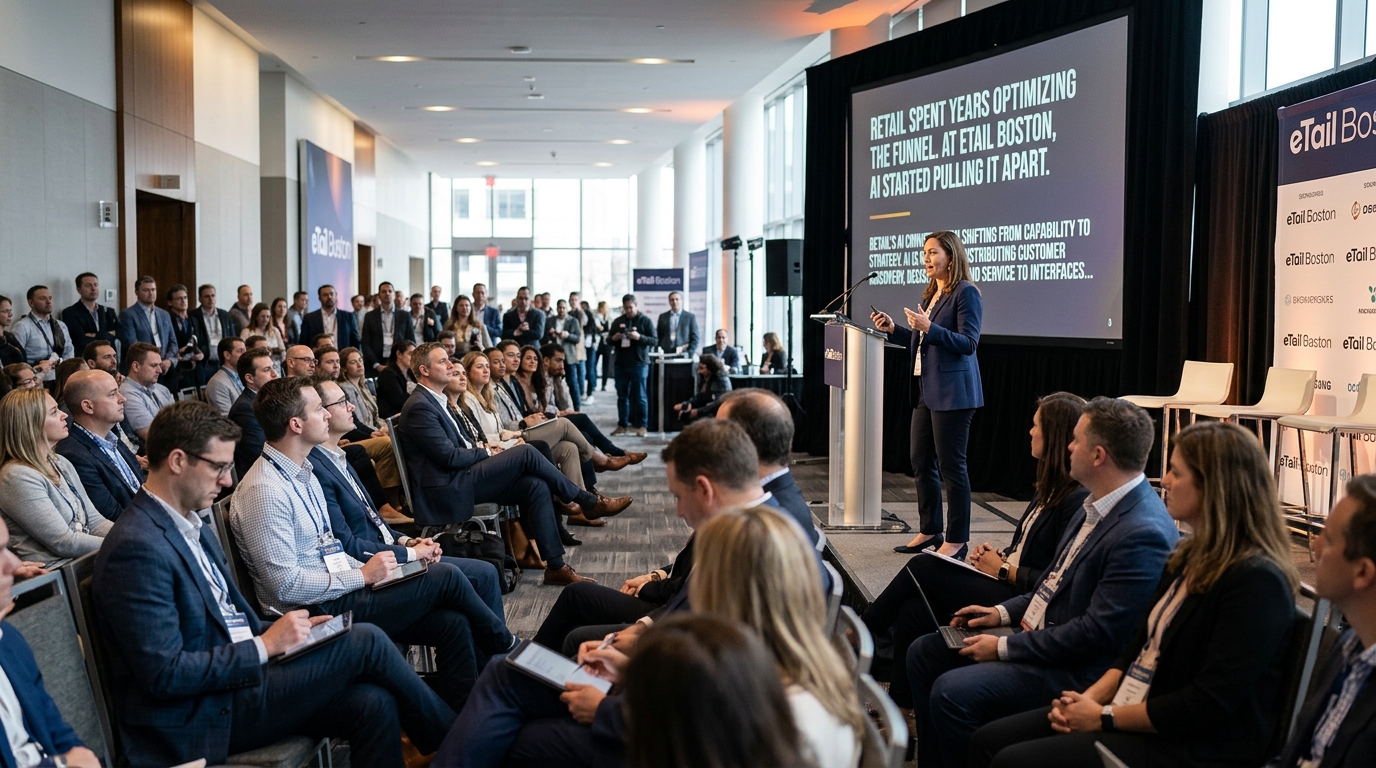
Retail’s AI conversation is shifting from capability to strategy. At eTail Boston 2026, a critical insight emerged: AI is redistributing customer discovery, decisions, and service to interfaces retailers don’t control. Adobe Analytics revealed AI traffic to retail sites surged 393% year-over-year in early 2026, while discovery through brand-owned properties declined 7% and traditional search dropped 15%.
Key Points:
- AI traffic to retail sites increased 393% YoY while brand-owned discovery dropped 7% and traditional search fell 15%
- The challenge isn’t deploying AI everywhere—it’s managing “journey continuity” as customers experience fragmented touchpoints across AI assistants, retailer platforms, and human teams
- CX leaders must identify where AI should influence decisions, where humans should intervene, and how to measure experiences across distributed handoffs
Why it matters: The funnel is fragmenting—here’s how to maintain control. AI-assisted discovery is happening on platforms you don’t own, creating new measurement and orchestration challenges. For marketers building attribution models, these distributed touchpoints demand new infrastructure for tracking intent-to-conversion handoffs.
Trending Now
-
AI-driven Commerce Friction: AI assistants generate high-intent consumers, but enterprise commerce infrastructure can’t complete the handoff—contributing to the stubborn 70% cart abandonment rate
-
Marketing Budget Crisis: Marketing budgets have plummeted to 6.4% of revenue (lowest in a decade) while 52% of marketers using AI-powered automation report increased sales
-
Loyalty Program Growth: Southwest’s Rapid Rewards hit 100M members with 35% YoY growth by blending transactional value with emotional connection and universal perks
-
Automated Media Buying: Small teams can now run sophisticated campaigns across ten channels using rule-based optimization and consolidated interfaces
🎯 Optimizing Every Touchpoint Won’t Save Your Customer Experience
PwC’s 2025 survey reveals a shocking 50-point gap: 9 in 10 executives believe loyalty is growing, but only 4 in 10 customers agree. The problem isn’t individual touchpoints—it’s the seams between departments where marketing, service, and product each optimize separately. Real loyalty requires shared data across teams, unified language for success, and single leadership accountability spanning all channels. (Read more)
🎯 MarkinBlog Publishes 2026 Analysis of the Best Sales Funnel Builders
MarkinBlog released a comprehensive analysis introducing a seven-category classification system for funnel builders based on 300+ funnels built over nine years. ClickFunnels ranks best overall, Systeme.io excels for beginners, GoHighLevel suits agencies, Perspective Funnels serves mobile-first lead generation, and Funnelish dominates ecommerce. The key insight: different funnel software serves different purposes—match tools to your specific funnel stage or business model. (Read more)
🎯 Scale like an enterprise: How small teams can win with automated media buying platforms
Automated media buying platforms like XMP enable small teams to compete with enterprise organizations by consolidating fragmented platforms into unified interfaces. Small teams can now run sophisticated campaigns across ten channels with minimal overhead using rule-based optimization for bid adjustments and budget management. The technology transforms media buying from labor-intensive manual work into streamlined, scalable operations. (Read more)
“Not all customer touchpoints deserve equal attention. At critical junctures, human connection beats AI automation every time.”
— Tim Boylan, Customer Experience Strategist
What’s the biggest conversion leak in your funnel right now?
- A) Attribution blind spots—paying for traffic I already own
- B) AI-generated intent hitting checkout friction
- C) Departmental silos killing journey continuity
- D) No idea—I’m optimizing everything equally
Three things changed this week: AI made search cannibalization invisible, critical moments replaced total optimization as the conversion strategy, and automation became the only path to do more with shrinking budgets.
The through-line? Siloed optimization fails. Orchestrated funnels win. Stop treating paid and organic as rivals, stop optimizing every touchpoint equally, and stop assuming your commerce stack can handle AI-generated intent without backend infrastructure investment.
Your move: run the 30-60 day event analysis to find your critical moments, audit search spend for incrementality, and redirect resources toward the 3-5 touchpoints that actually convert.
Keep building,
Funnel Marketing Systems Editor
📊 How did you like today’s email?
Originally published by Funnel Marketing Guy, your resource for funnel marketing, sales funnels, ClickFunnels, lead generation, conversion optimization, email marketing, marketing automation, and digital marketing strategies.
Continue your journey at https://www.funnelmarketingguy.com.
Enjoyed this issue?
Subscribe to get Funnel Marketing System delivered to your inbox every week.
Join 17 other subscribers • Free forever