
Turn Browsers Into Buyers: Your 2026 Conversion Playbook

|
Welcome to Funnel Marketing System!
Your funnel isn’t broken—it’s just not adaptive yet. This week: how autonomous systems, disciplined testing, and clean attribution data replace manual optimization.
- 🤖 Why static funnels are dead and adaptive systems win in 2026
- 📊 The four-phase CRO framework that delivers 49% YoY conversion gains
- 🔍 Meta’s attribution updates: hygiene fixes, not breakthroughs
- 💰 When $99 automation replaces $5K freelancers (and when it doesn’t)
- 🚚 Multi-stakeholder pipeline lessons from commercial vehicle CRM
The System Design Shift
Most marketers still treat funnels like fixed sequences: awareness → consideration → conversion. But in 2026, the winners are building autonomous systems that respond to behavior signals in real time. AI doesn’t just support your funnel anymore—it runs it, adjusting messaging, timing, channels, and offers based on what users actually do, not what your static workflow assumes they’ll do.
This shift creates a new bottleneck: you can’t optimize adaptive systems without clean attribution data and systematic testing infrastructure. Meta’s recent measurement updates are table stakes hygiene, not competitive advantage. The real unlock is disciplined experimentation frameworks—removing form fields, optimizing speed, fixing mobile experiences—that turn incremental gains into compounding 49% year-over-year improvements.
The through-line for this issue: stop manually tweaking campaigns and start designing systems. Your job isn’t to run ads or write emails anymore. It’s to set constraints, build measurement infrastructure, and let disciplined testing do the heavy lifting.
🔗 These Marketing Trends Are Helping Small Businesses Get Ahead in 2026 (9 minute read)
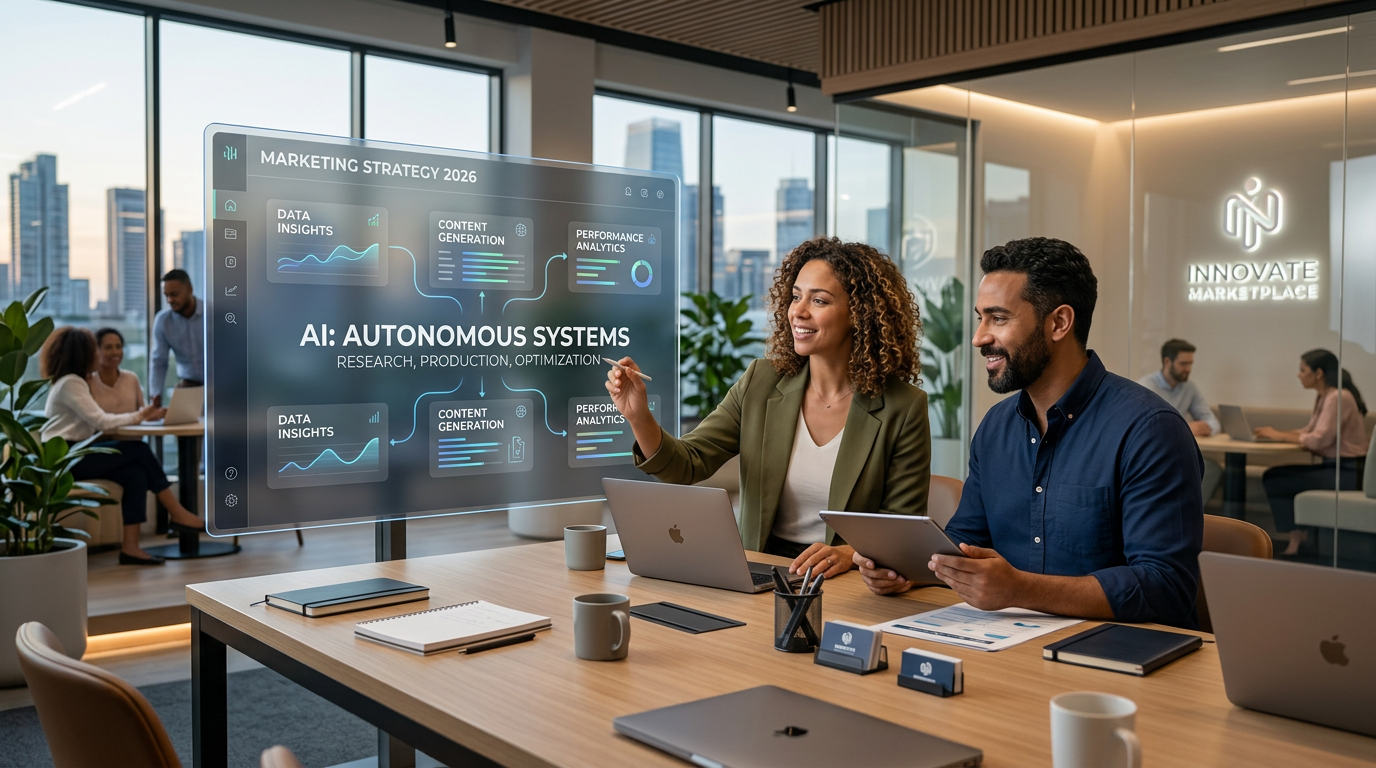
Marketing in 2026 isn’t about louder campaigns—it’s about better systems. AI now operates autonomously, handling research, production, and optimization without manual intervention. Traditional funnels are evolving into adaptive systems that respond to real-time behavior signals. Websites are no longer the primary destination; AI assistants guide buying decisions directly, social platforms function as search engines for early-stage research, and paid media success depends on quality inputs rather than manual optimization.
Key Points:
- AI assistants, social feeds, and marketplaces now drive discovery—search rankings matter less than multi-platform brand visibility
- Organizations are shifting hiring priorities toward strategic thinkers who set constraints and interpret outcomes, away from execution-focused roles
- Winners design better systems, not louder campaigns—paid media success depends on quality inputs for autonomous optimization
Why it matters: This is the strategic shift defining 2026: funnels as autonomous systems, not linear paths. If you’re still hiring for execution (copywriters, ad managers, social schedulers), you’re optimizing for the wrong bottleneck. The new constraint is constraint-setting—designing inputs for AI optimization, building multi-platform visibility infrastructure, and interpreting outcomes to refine system parameters. Your funnel doesn’t need more manual tweaks; it needs better architecture.
🔗 Infintech Designs Publishes Conversion Rate Optimization Guide With Four-Phase Testing Framework (15 minute read)
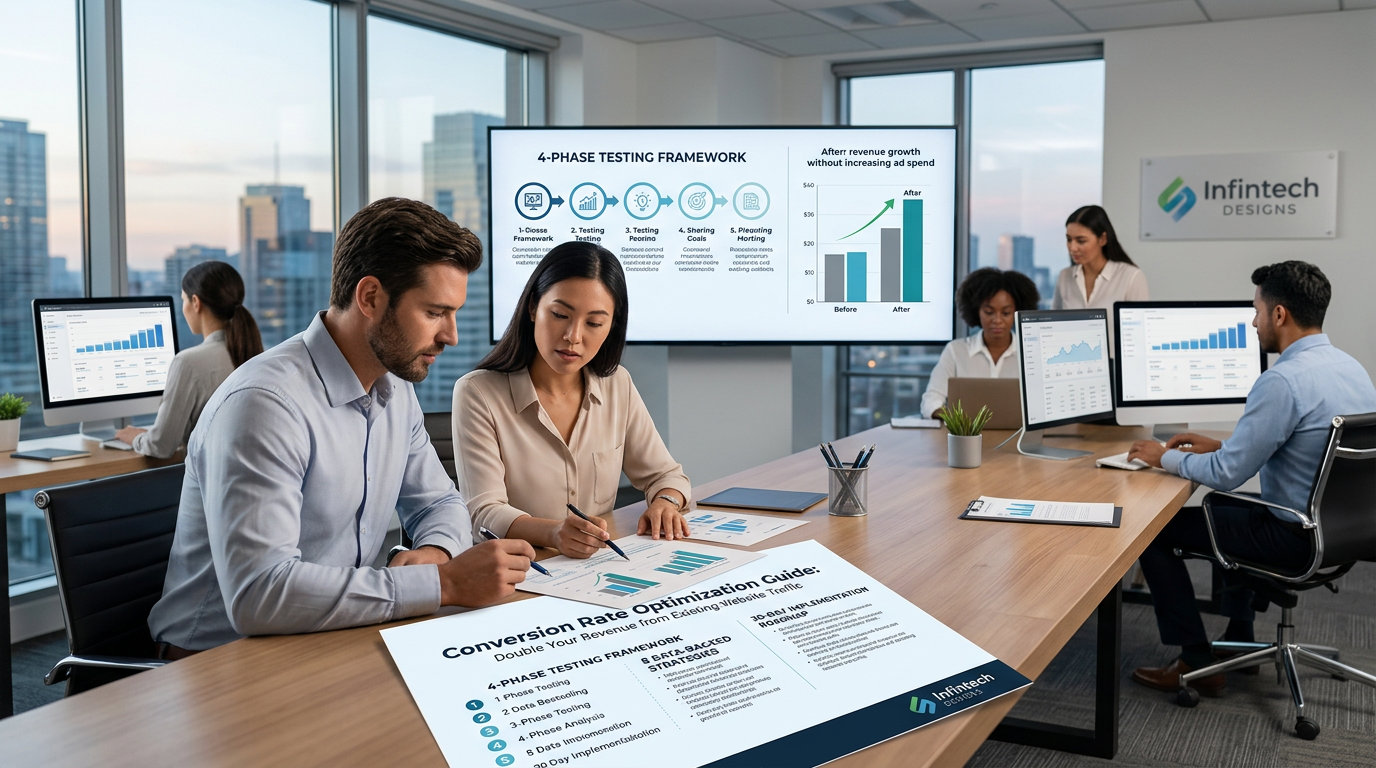
Infintech Designs released a comprehensive conversion rate optimization guide demonstrating how businesses can double revenue from existing website traffic without increasing advertising spend. The guide features a four-phase testing framework, eight data-backed strategies, and a 30-day implementation roadmap. Median website conversion rates sit at 2.35%, while top performers achieve 5.31%+—meaning most sites are leaving 2-3x revenue on the table.
Key Points:
- Specific tactics deliver measurable lifts: removing form fields (5% improvement), optimizing page speed (3x conversion difference), and improving mobile experience (53% worse conversion on mobile vs desktop)
- Companies using systematic testing achieve 49% average year-over-year conversion improvements—not from bigger budgets, but from disciplined experimentation
- First-week improvements of 15-30% are achievable with foundational fixes before entering multi-variate testing phases
Why it matters: This is the tactical counterpart to adaptive funnel strategy—systematic testing infrastructure with real numbers. The 49% YoY improvement from disciplined experimentation proves that CRO infrastructure beats ad spend increases. Most teams throw budget at acquisition when they’re sitting on 2-3x revenue gains from conversion optimization. The four-phase framework (audit, quick wins, systematic testing, continuous optimization) gives you a repeatable system for extracting compounding gains from existing traffic.
🔗 Meta’s Measurement and Attribution Updates Are Welcomed, But Not Ground-Breaking (6 minute read)

Meta rolled out measurement and attribution updates aimed at aligning with third-party reporting tools, but ad executives say the changes are welcome yet underwhelming. The platform redefined click-through attribution for consistency with Google Analytics and rebranded “engaged view” to “engage-through” to showcase social interactions’ value. While these updates reduce reconciliation debates and clarify performance reporting, they don’t fundamentally impact ad delivery or campaign performance—only how results are labeled.
Key Points:
- Meta’s updates address reporting consistency but don’t improve campaign performance—they just reduce time spent reconciling discrepancies between platforms
- The real challenge isn’t producing results but proving transparency—marketers need segment-level insights, forecasting tools, and reduced minimum spend requirements for brand lift studies
- Attribution clarity helps with funnel diagnostics, but without actionable depth (targeting segments, predictive modeling), it won’t move budgets
Why it matters: This is a tactical win for attribution hygiene—cleaner reporting means better funnel diagnostics and fewer client reconciliation meetings. But emphasize the gap: you still need segment-level insights and forecasting tools to actually move budgets or optimize adaptive systems. Meta’s updates are table stakes, not competitive advantage. If your attribution infrastructure stops at platform-reported metrics, you can’t optimize autonomous funnels that span multiple touchpoints and channels.
🎯 Trending Now
-
ObsessAI Shopify SEO Automation Platform: Shop Bezza grew organic traffic 200% in 90 days while reducing monthly content costs from $5,000 to $99—concrete automation ROI at funnel entry point, though results vary by vertical and content quality thresholds.
-
Work Truck Solutions Commercial Vehicle CRM: First CRM purpose-built for multi-unit commercial deals, with pipeline statuses like “waiting on upfit” and multi-decision-maker tracking—lessons for handling complex B2B sales cycles and extended funnels.
-
CRM Automation for Lead Retention: Most teams automate capture but fail at systematic nurture sequences and scoring—retention-over-acquisition angle ties to pipeline maturity gaps where conversion drops after initial lead capture.
🎯 When $99 Automation Replaces $5K Freelancers
ObsessAI’s Shopify SEO platform demonstrates where AI content tools actually pencil out for e-commerce lead generation. Shop Bezza’s 90-day traffic play shows 200% organic growth while cutting costs from $5,000/month to $99—but the real question is CAC/LTV math. Does top-of-funnel traffic from AI-generated content convert at the same rate as manually optimized content? Early results suggest yes for product-focused e-commerce, less clear for complex B2B funnels requiring domain expertise. (Read more)
🎯 Multi-Stakeholder Pipeline Design Lessons
Work Truck Solutions’ commercial vehicle CRM handles multi-unit deals, multiple stakeholders, and extended sales cycles—problems every high-ticket B2B funnel faces. Custom pipeline statuses like “waiting on upfit” and multi-decision-maker tracking model how to design funnel stages that reflect real buying committee dynamics, not idealized linear paths. The mobile-first design and automatic email/call logging address a tactical gap: most CRMs assume desk-based selling, not field sales or job site interactions. (Read more)
🎯 Lead Retention Over Acquisition
CRM automation for lead retention addresses a common pipeline maturity gap: most teams automate capture but fail at systematic nurture sequences and scoring that convert leads consistently. Instant lead responses, nurturing workflows, and automatic segmentation are table stakes, but the real unlock is tracking metrics like response time and engagement rates to identify where leads drop off. Small teams can implement gradually—basic lead capture and responses first, then nurture sequences and lead scoring—building systematic retention infrastructure without overwhelming existing operations. (Read more)
“The goal is to turn data into information, and information into insight.”
— Carly Fiorina, Former CEO of HP
Which funnel optimization lever will you prioritize in Q2 2026?
- A) Conversion rate testing infrastructure
- B) Attribution and measurement cleanup
- C) AI-driven automation and adaptive systems
- D) Lead retention and nurture sequences
The shift from manual optimization to system design is complete. Static funnels are dead. Adaptive systems that respond to behavior signals, disciplined testing frameworks that compound gains, and clean attribution data that enables optimization—these are the new competitive advantages.
Your action item for this week: audit one conversion bottleneck using the four-phase CRO framework. Pick a single page, run the numbers, implement one quick win (form fields, speed, mobile experience), and measure the lift. Then repeat. Systematic testing beats bigger budgets every time.
Keep building,
Funnel Marketing Systems Editor
📊 How did you like today’s email?
Enjoyed this issue?
Subscribe to get Funnel Marketing System delivered to your inbox every week.
Join 17 other subscribers • Free forever