
The Automation Myth That's Costing You Sales
Why most funnels fail (and the simple fix that actually works)
|
Welcome to Funnel Marketing System!
Your funnel doesn’t break during normal traffic. It breaks when it matters most—and by then, you’ve already lost the revenue.
- 🤖 Why marketing automation 2.0 replaces if-then rules with real-time orchestration
- 🛒 Shopify’s new funnel builder proves embedded tools are killing external landing pages
- 📬 The offline channel outperforming your email nurture (with data)
- 🎯 How to stress-test your funnel before Black Friday exposes the cracks
- 🏦 Why financial services got prebuilt funnels first—and what that means for you
The Automation Shift Nobody’s Talking About
Marketing automation isn’t dying. It’s shedding its skin.
The rule-based workflows you built two years ago—those carefully constructed if-then sequences triggered by form fills and email clicks—are becoming legacy infrastructure. AI-powered orchestration is replacing them, and the difference isn’t incremental. It’s architectural.
Traditional automation required you to predict every customer path, map every decision tree, and manually maintain the logic as behavior shifted. Real-time orchestration flips that model: the system detects intent, predicts the next action, and activates personalized messages across channels without your intervention. You’re no longer building workflows. You’re defining guardrails while machines handle execution.
This shift has three immediate implications for your funnel strategy. First, your tech stack decisions matter more than your campaign calendar—choosing platforms that support adaptive orchestration versus static sequences will determine your ceiling. Second, better automation still requires better data foundations; AI amplifies your inputs, so garbage data produces garbage orchestration at scale. Third, the competitive advantage moves from execution speed to strategic architecture—teams that design intelligent systems will outpace teams that optimize manual workflows.
The evidence is everywhere. Shopify just launched an embedded funnel builder. Financial institutions are deploying prebuilt lifecycle programs. B2B marketers are reaching decision-makers before they search. Even direct mail is getting automated with CRM integration and real-time triggers.
Your funnel works until it doesn’t. And scale reveals what normal traffic hides.
🔗 Marketing automation is dead. Long live marketing automation! (7 minute read)
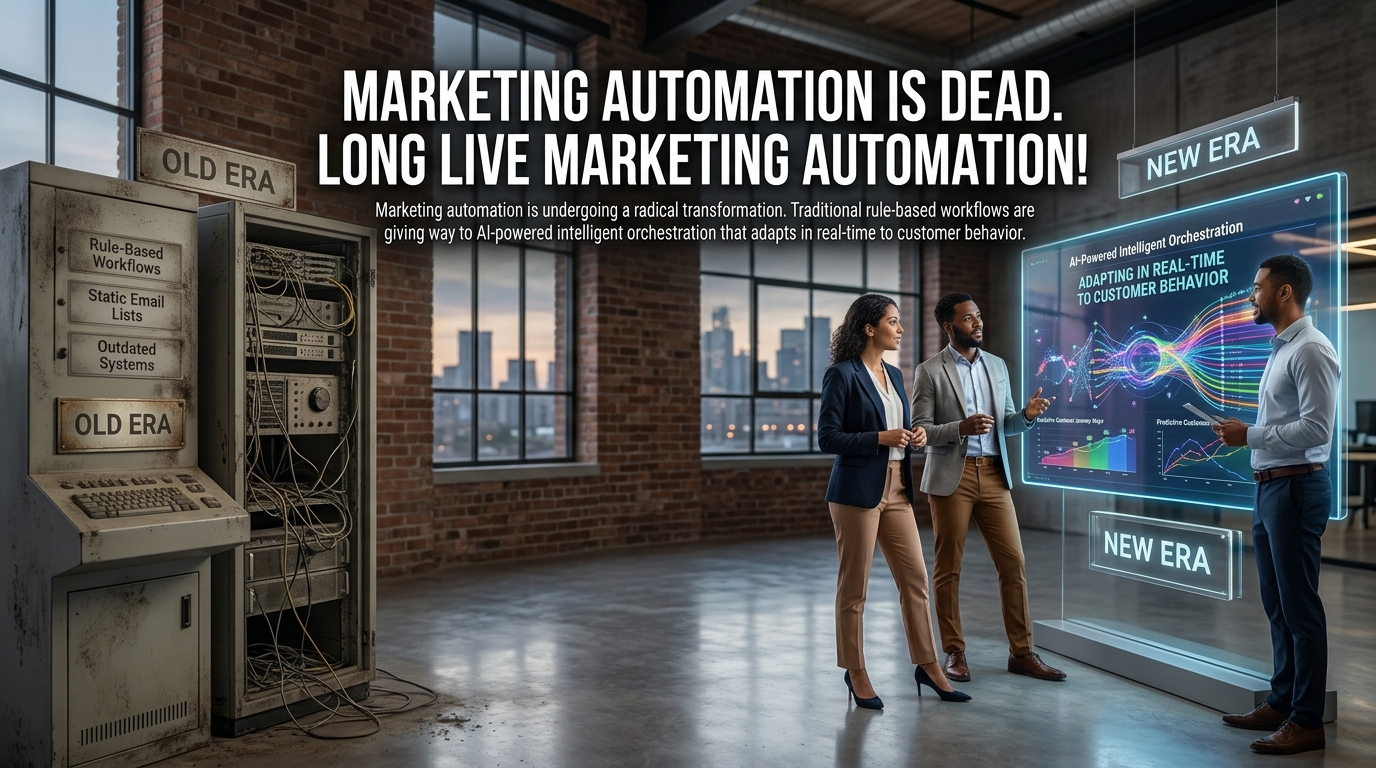
Traditional rule-based marketing automation is giving way to AI-powered intelligent orchestration that adapts in real-time to customer behavior. The MarTech Conference panel on November 4 brought together leaders from Luxury Presence, Iterable, and MartechTribe to discuss how AI is fundamentally changing automation—freeing teams from manual workflow maintenance to focus on strategic growth.
Key Points:
- AI replaces static if-then rules with adaptive systems that respond to customer behavior without manual intervention
- The shift moves teams from workflow construction to strategic architecture and governance
- Modernizing tech stacks requires balancing human strategy with machine efficiency while maintaining operational control
Why it matters: Your automation platform determines your ceiling. Systems built for rule-based workflows can’t retrofit real-time orchestration—you’re either migrating to adaptive infrastructure or watching competitors operate at a speed you can’t match. The panel provides actionable blueprints for platform evolution, helping you evaluate whether your current stack can scale or needs replacement. This isn’t about adding AI features to existing tools; it’s about fundamentally rethinking how customer journeys execute.
🔗 FunnelCraft for Shopify: Build Sales Funnels, Generate Leads, and Boost Conversions (3 minute read)
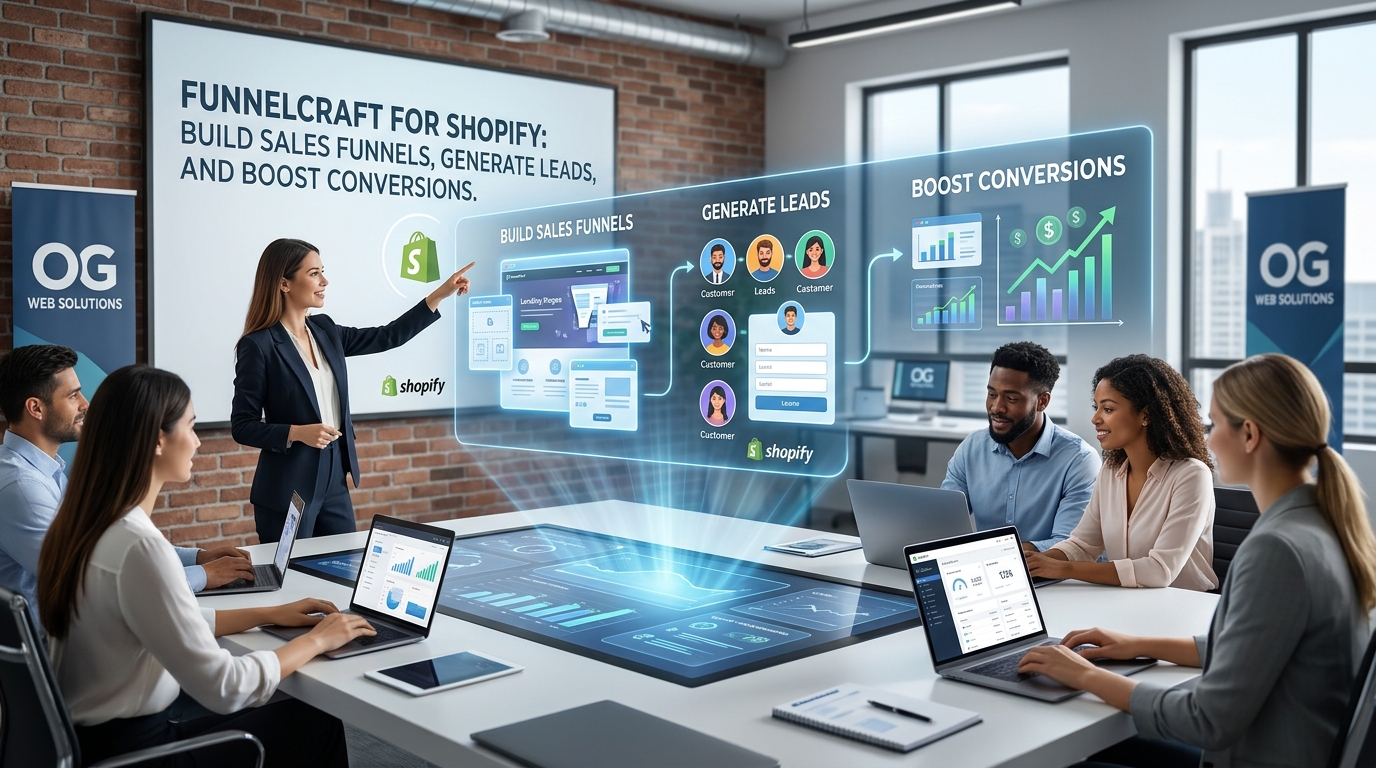
OG Web Solutions launched FunnelCraft, a Shopify app that builds sales funnels, captures leads, and automates follow-ups directly inside the e-commerce platform. The tool offers customizable templates for lead generation, product sales, quizzes, and appointment booking, with native integration to Klaviyo, Mailchimp, and Google Analytics.
Key Points:
- Embedded funnel builder eliminates need for external landing page tools by operating natively within Shopify
- Includes landing pages, forms, workflow automation, and built-in analytics to track conversions and identify optimization opportunities
- Pricing starts at $39/month with a free trial, targeting growing e-commerce businesses
Why it matters: E-commerce funnels are moving inside the platform. External landing page builders added friction—separate logins, data sync delays, and integration headaches. FunnelCraft represents the broader shift toward embedded tools with native data access, where funnel infrastructure lives alongside product catalogs and order management. For Shopify merchants, this means faster deployment, cleaner attribution, and one less vendor to manage. The pricing also signals commoditization: what used to require $200+/month in separate tools now costs $39 because platform integration eliminates infrastructure overhead.
🔗 Stop Letting the Programmatic Platform Decide Who Your Audience Is (6 minute read)

Jennifer Gressman argues that marketers obsess over programmatic optimization—bids, budgets, creative—while ignoring a critical question: are you targeting the right audience? Platforms excel at ad delivery but fail at audience definition. The solution is starting with first-party data you control, then running matchback analysis post-campaign to evaluate targeting accuracy.
Key Points:
- Platform-defined segments prevent independent evaluation of audience quality—you can’t assess what you don’t control
- Start campaigns with CRM records or verified identities, not lookalike audiences or platform segments
- Matchback analysis compares converters against your original audience file, revealing targeting accuracy and refinements for future campaigns
Why it matters: Your programmatic platform doesn’t know your customer. When campaigns rely solely on Meta’s lookalikes or Google’s in-market segments, you’re outsourcing the most strategic decision—who to reach—to an algorithm optimizing for engagement, not your business outcomes. First-party audience control with post-campaign matchback transforms each activation into audience intelligence, building a proprietary understanding of who actually converts. This approach also future-proofs against signal loss: as third-party data degrades, marketers who built first-party audience assets will maintain targeting precision while competitors guess.
“The funnel doesn’t break during normal traffic. It breaks when volume reveals the bottlenecks you couldn’t see at rest.”
— Dirk Jan van der Pol, Head of Commerce, Empathy Lab by EPAM
🎯 More Than Just a Discount: Why the Digital Customer Experience Determines Sales Success
Black Friday and holiday promotions drive massive traffic spikes, but increased visitors don’t guarantee higher revenue. Dirk Jan van der Pol argues that peak shopping periods function as stress tests for your entire digital journey—slow pages, unclear navigation, and malfunctioning checkout processes lose potential customers. Success requires year-round attention to testing complete customer journeys across devices, preparing infrastructure for peak traffic, ensuring accessibility compliance, and leveraging analytics to identify bottlenecks continuously. Your funnel works until scale breaks it. (Read more)
🎯 Lob launches direct mail automation platform
Direct mail is experiencing a surprising renaissance as Lob launches a no-code web platform to automate physical mail campaigns. Unlike older generations who viewed direct mail as junk, millennials find it refreshingly novel amid digital channel overload. The platform integrates with CRM and marketing automation systems, enabling targeted campaigns based on customer data. Real-world success stories like Marley Spoon demonstrate ROI through personalized reactivation efforts. The channel’s revival is bolstered by sustainable paper innovations and cloud-based targeting tools that reduce waste and costs. As marketers seek alternatives to saturated digital channels, direct mail has transformed from environmental nuisance to strategic marketing asset. (Read more)
🎯 Above Digital challenges B2B reliance on sales enquiries
Above Digital demonstrated how Meta and Google Ads effectively reach B2B decision-makers, challenging the notion that Facebook and Instagram are purely consumer platforms. BNI New Dubai’s campaign generated over 1,800 confirmed info-session bookings from 2,676 leads. CEO Namita Ramani emphasizes that B2B success requires reaching relevant audiences, tailoring messages to purchasing needs, and integrating advertising with structured sales follow-up. The key insight: introduce your business to buyers before they make direct enquiries. B2B funnels don’t start with your website—they start where decision-makers already spend attention. (Read more)
🎯 Act-On launches prebuilt marketing automation for credit unions and regional banks
Act-On Software launched specialized marketing automation tools designed for credit unions and regional banks, dramatically reducing setup time by providing four ready-to-launch programs: acquisition, onboarding, cross-sell, and retention. Each solution includes audience segmentation, campaign templates, performance reports, prewritten content, and automated workflows that integrate with core banking, CRM, lending, and digital banking platforms. CEO Kate Johnson emphasized that financial institutions shouldn’t start from scratch. This marks phase one of Act-On’s industry-specific expansion strategy, with availability beginning November 4. Why financial services got prebuilt funnels first: regulated industries need compliance-ready templates, and the four lifecycle programs are universal across verticals. (Read more)
🎯 Have hotel websites become the least important part of the digital customer journey?
Hotel websites aren’t becoming less important—they’re transforming from conversion destinations into authoritative data sources for AI systems and search engines. While discovery has shifted to OTAs, AI platforms, and social media, websites now serve as the training data powering the entire digital customer journey. Success requires shifting focus from cosmetic redesigns to SEO, Answer Engine Optimization (AEO), Generative Engine Optimization (GEO), accurate content, and online reputation management. Your website isn’t the funnel anymore—it’s what AI reads before recommending you to customers. (Read more)
What’s your biggest funnel bottleneck right now?
- A) Traffic quality—getting the wrong visitors
- B) Conversion rate—visitors aren’t taking action
- C) Follow-up—leads go cold before closing
- D) Attribution—can’t prove what’s working
The shift from manual workflows to AI-powered orchestration isn’t coming—it’s here. Shopify merchants are building funnels inside the platform. Financial institutions are deploying prebuilt lifecycle programs. B2B marketers are reaching buyers before they search. Even direct mail is getting automated with real-time CRM triggers.
The common thread: systems that adapt in real-time outperform systems that require manual maintenance. Your competitive advantage is moving from execution speed to strategic architecture. Teams that design intelligent systems will outpace teams that optimize static workflows.
Before Black Friday hits, stress-test your funnel under peak traffic. Scale reveals what normal volume hides.
Keep building,
Funnel Marketing Systems Editor
📊 How did you like today’s email?
Originally published by Funnel Marketing Guy, your resource for funnel marketing, sales funnels, ClickFunnels, lead generation, conversion optimization, email marketing, marketing automation, and digital marketing strategies.
Continue your journey at https://www.funnelmarketingguy.com.
Enjoyed this issue?
Subscribe to get Funnel Marketing System delivered to your inbox every week.
Join 17 other subscribers • Free forever