
Stop Wasting Money on Attribution (Here's Why)
Most marketers are tracking the wrong metrics—here's what actually drives revenue
|
Welcome to Funnel Marketing System!
Your AI funnel isn’t working because you automated before you built foundations. Here’s what the 4% who got ROI did differently.
- 🚨 Why 96% of AI implementations fail to deliver expected returns
- 🎯 The attribution obsession that’s starving your upper funnel
- 🔧 Unsexy infrastructure work that makes automation actually work
- 📊 Pipeline math that works regardless of AI hype
The Foundation-First Framework
You’ve heard the pitch: AI will revolutionize your funnel. Automate lead qualification. Personalize at scale. Predict customer behavior before they click.
The reality? Only 4% of organizations achieve expected ROI from AI investments. The other 96% are automating broken processes and wondering why their results look the same—just faster and more expensive.
The pattern is consistent: companies chase AI tools before building the data infrastructure, integration architecture, and strategic clarity those tools require to function. They measure everything that’s easy to track while starving the activities that actually build pipeline. They consolidate tech stacks in theory while operating fragmented customer experiences in practice.
This issue breaks down what separates the 4% from the 96%. You’ll see why Generac’s CMO argues that attribution obsession makes marketing worse, how a four-brand flooring company eliminated reporting that took hours by consolidating systems first, and what university researchers discovered about wineries operating in silos—a cautionary tale for any multi-touchpoint business.
The through-line: automation amplifies strategy and infrastructure. It doesn’t replace them.
🔗 Only 4% of customer service teams have achieved expected ROI from AI. Here’s what needs to change. (7 minute read)
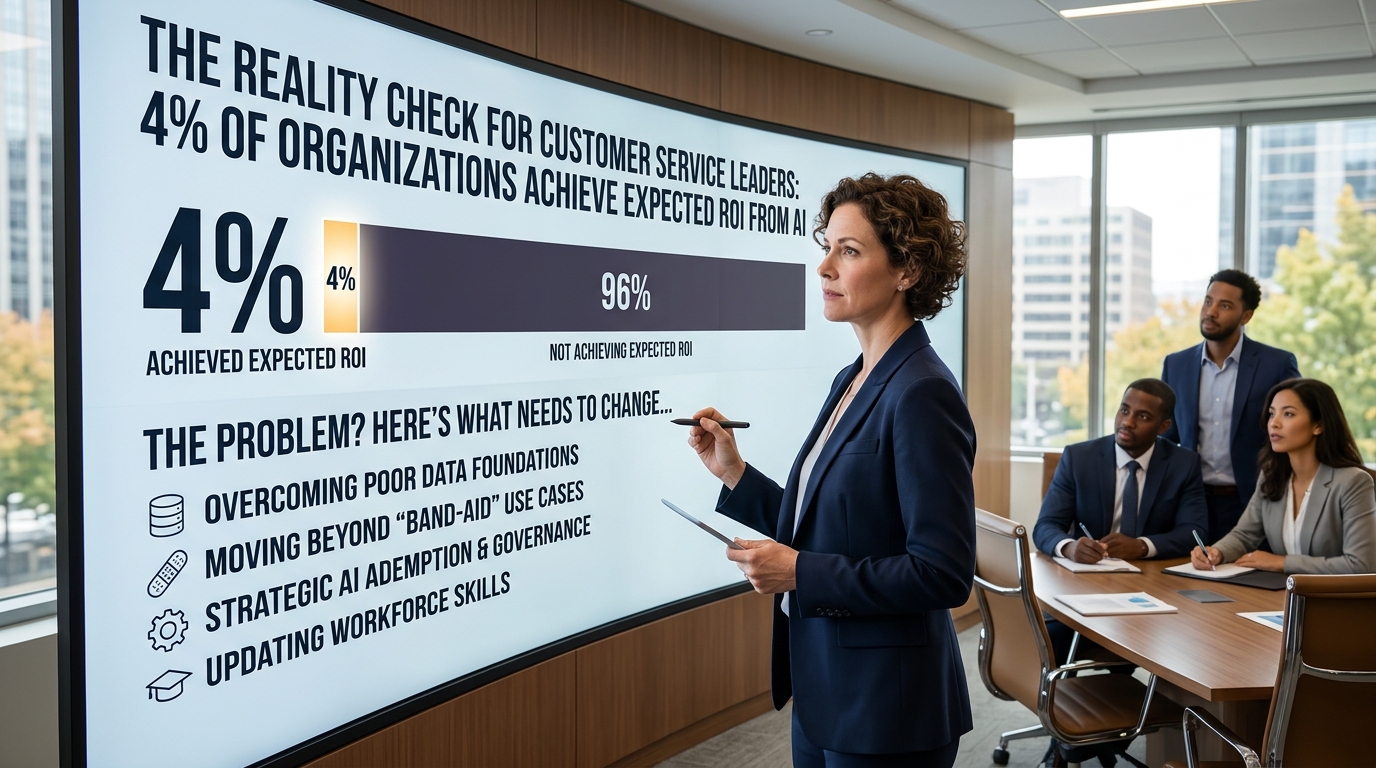
Gartner surveyed 275 service leaders and found a brutal truth: only 4% have achieved expected ROI from AI investments. The culprit isn’t the technology—it’s the approach. Companies pursue AI primarily as a cost-reduction tool rather than a value-creation strategy, automating before building the data foundations that make automation effective.
Key Points:
- Organizations need to invest 1.8 times more in data foundations than in AI use cases themselves
- The wrong question: “How do we remove humans from interactions?” The right question: “Where does human involvement create disproportionate customer value?”
- Success requires comprehensive employee training on when and how to deploy AI tools, not just technical implementation
- AI-forward approach means leveraging conversational data to uncover customer insights and drive strategic outcomes
Why it matters: This isn’t a customer service problem—it’s a funnel automation problem. You’re seeing the same 4% success rate because teams automate lead qualification, email sequences, and personalization before establishing clean data, integrated systems, and clear strategy. The 1.8x investment ratio in data foundations over use cases is the number that should guide your 2026 planning. Build the infrastructure first, then automate what works.
🔗 Brandweek 2026: Can Too Much Attribution Make Marketing Worse? ft. Amanda Teder (4 minute read)
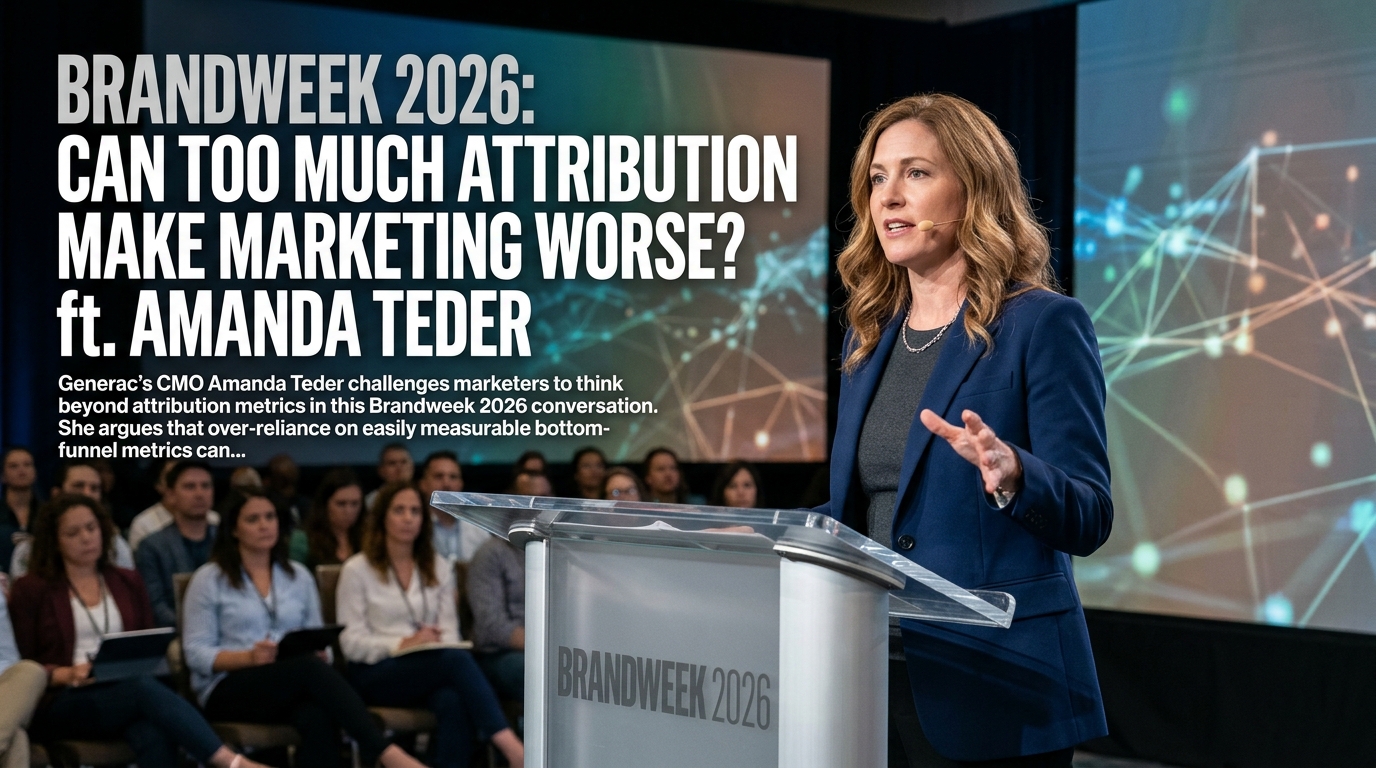
Generac’s CMO Amanda Teder makes a contrarian argument: over-reliance on easily measurable bottom-funnel metrics actually harms marketing strategy by starving brand-building and demand generation of investment. Drawing from 20 years at P&G, she shares her full-funnel operating model that connects demand generation, nurturing, sales enablement, and post-purchase support into a complete customer journey.
Key Points:
- Attribution obsession drives investment toward easily measurable bottom-funnel activities while starving upper-funnel demand generation
- High-consideration purchases require months or years of nurturing—optimization for last-click attribution misses the actual customer journey
- Strategy must precede automation; great CMOs understand their builder mindset before chasing exciting opportunities
- Full-funnel operating model treats demand gen through post-purchase as integrated system, not separate functions
Why it matters: This is the strategic counterpoint to AI automation hype. You can measure everything and optimize for the wrong outcomes. When you attribute revenue only to activities with clear last-touch attribution, you systematically defund the awareness and consideration stages that fill your pipeline in the first place. Teder’s framework—connecting demand gen, nurturing, sales enablement, and post-purchase into one operating model—is exactly what enables effective automation later. Build the strategy, then automate execution.
🔗 Four Brands, One HubSpot: America’s Floor Source Unifies Shopify, Zoho, and SharpSpring with Orange Marketing (4 minute read)
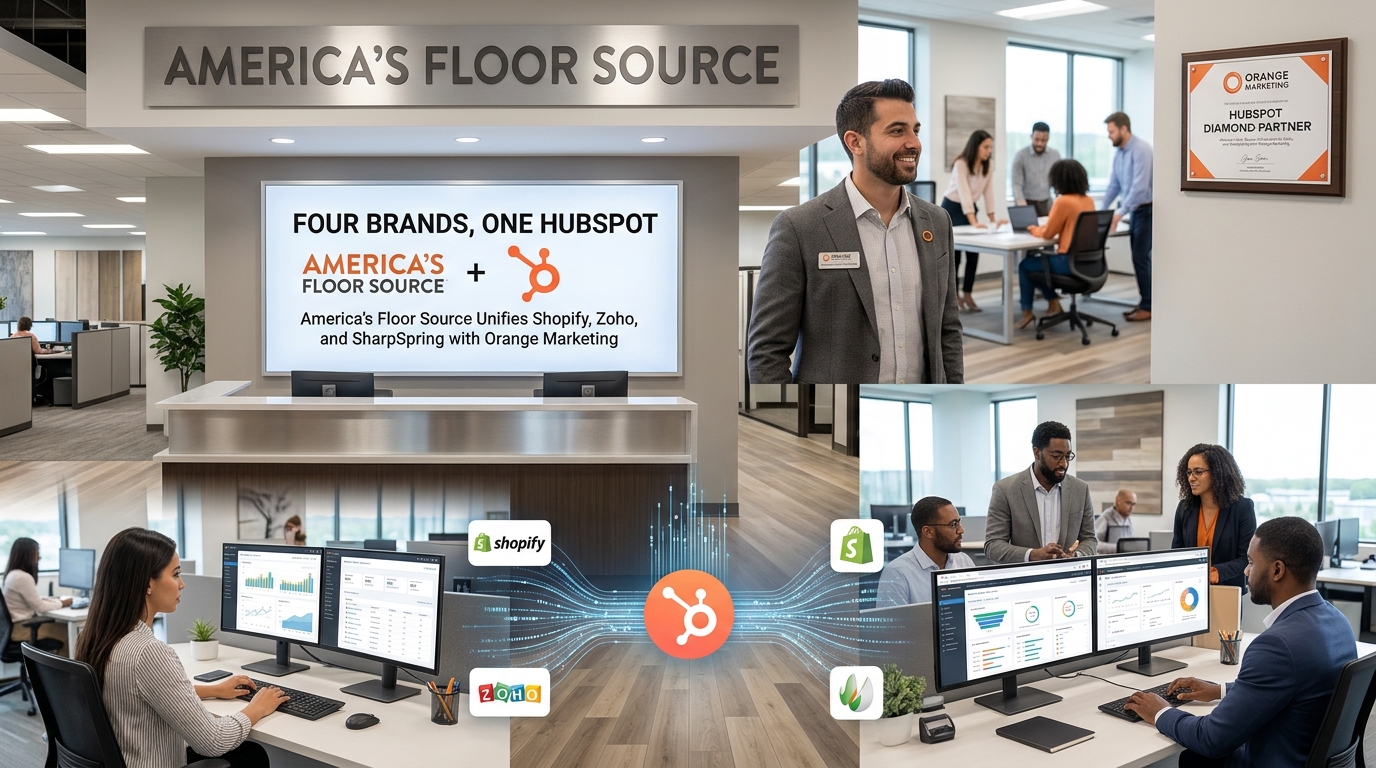
Orange Marketing consolidated four flooring brands under America’s Floor Source into a single HubSpot instance, integrating Shopify storefronts, Zoho CRM, and eliminating fragmented systems like SharpSpring and Jotform. The transformation delivered dramatic efficiency gains—reporting that previously took hours now takes minutes—while maintaining distinct brand identities within centralized marketing infrastructure.
Key Points:
- Consolidated multiple Shopify storefronts, Zoho CRM, and eliminated SharpSpring and Jotform fragmentation
- Reporting that took hours now takes minutes through unified data infrastructure
- Each brand maintains distinct identity while sharing centralized marketing systems
- Strategic CRM consolidation enables seamless order tracking, customer segmentation, and comprehensive business reporting across brand portfolios
Why it matters: This is the unsexy infrastructure work that makes AI-ready funnels possible. You can’t automate customer journeys across fragmented systems—you get data silos, broken attribution, and manual workarounds that scale linearly with revenue. The ROI isn’t in the HubSpot license; it’s in reporting that takes minutes instead of hours, customer data that’s actually accessible, and the ability to segment and automate without custom integrations. Consolidate systems before automating journeys.
🎯 Sonoma State Students Find Gap in How Wineries Manage Customer Experience
Sonoma State students developed a Winery Customer Experience Management framework after visiting seven Napa and Sonoma wineries. Their finding: wineries excel at individual experiences but operate in silos across tasting rooms, e-commerce, and events. The industry lacks unified, strategic approach to managing the complete customer journey—a cautionary tale for any multi-touchpoint business. Your funnel isn’t broken; it’s fragmented. (Read more)
🎯 The Minimum Viable Pipeline: 5 Numbers That Put You in Control
Real estate agent Bob Burns breaks down the five critical numbers every agent needs: income per closing, closings target, contract target, listing target, and weekly conversation target. Using a case study of Amy who needs $120,000 annually, he demonstrates how to calculate minimum viable pipeline—20 closings, 24 contracts, 27 listings, and 610 conversations yearly (12 weekly). The framework is transferable: work backward from revenue goals through conversion stages to daily activity targets. (Read more)
🎯 Marketing Automation for Small Business: Tools and Tips (2026)
Shopify breaks down marketing automation fundamentals that still matter: welcome emails, cart recovery, post-purchase flows. Real entrepreneurs like Teri Johnson (Harlem Candle Co.) and Tique Chandler (Chandler Honey) share how automation maintained revenue during absences, nurtured leads instantly, and rewarded loyal customers at scale. Shopify Flow offers free automation with 90+ app integrations; Zapier provides broader connectivity for $30/month. The basics work—automate them before chasing AI agents. (Read more)
“Strategy must precede automation. Great CMOs understand their builder mindset before chasing exciting opportunities.”
— Amanda Teder, CMO at Generac
What’s your biggest automation challenge right now?
- A) We haven’t built the data infrastructure yet
- B) Our systems are too fragmented to automate effectively
- C) We’re automating but not seeing ROI
- D) We’re over-optimizing for bottom-funnel metrics
The pattern across today’s stories is consistent: the 4% who achieve AI ROI built foundations first. They consolidated fragmented systems before automating workflows. They established full-funnel strategy before optimizing individual touchpoints. They invested 1.8 times more in data infrastructure than in use cases.
The 96% who failed? They automated broken processes, measured everything that was easy to track, and wondered why their results looked the same—just faster and more expensive.
Your move: audit your current state. Are your systems integrated enough to support automation? Do you have clean data feeding your tools? Does your attribution model reward the activities that actually build pipeline, or just the ones that close deals?
Build the infrastructure. Then automate what works.
Until next time,
Funnel Marketing Systems Editor
📊 How did you like today’s email?
Originally published by Funnel Marketing Guy, your resource for funnel marketing, sales funnels, ClickFunnels, lead generation, conversion optimization, email marketing, marketing automation, and digital marketing strategies.
Continue your journey at https://www.funnelmarketingguy.com.
Enjoyed this issue?
Subscribe to get Funnel Marketing System delivered to your inbox every week.
Join 17 other subscribers • Free forever