
Stop Wasting Martech $ on Bad CX
Plus: Google's new lead tracker and ChatGPT's bid upgrade you need to know
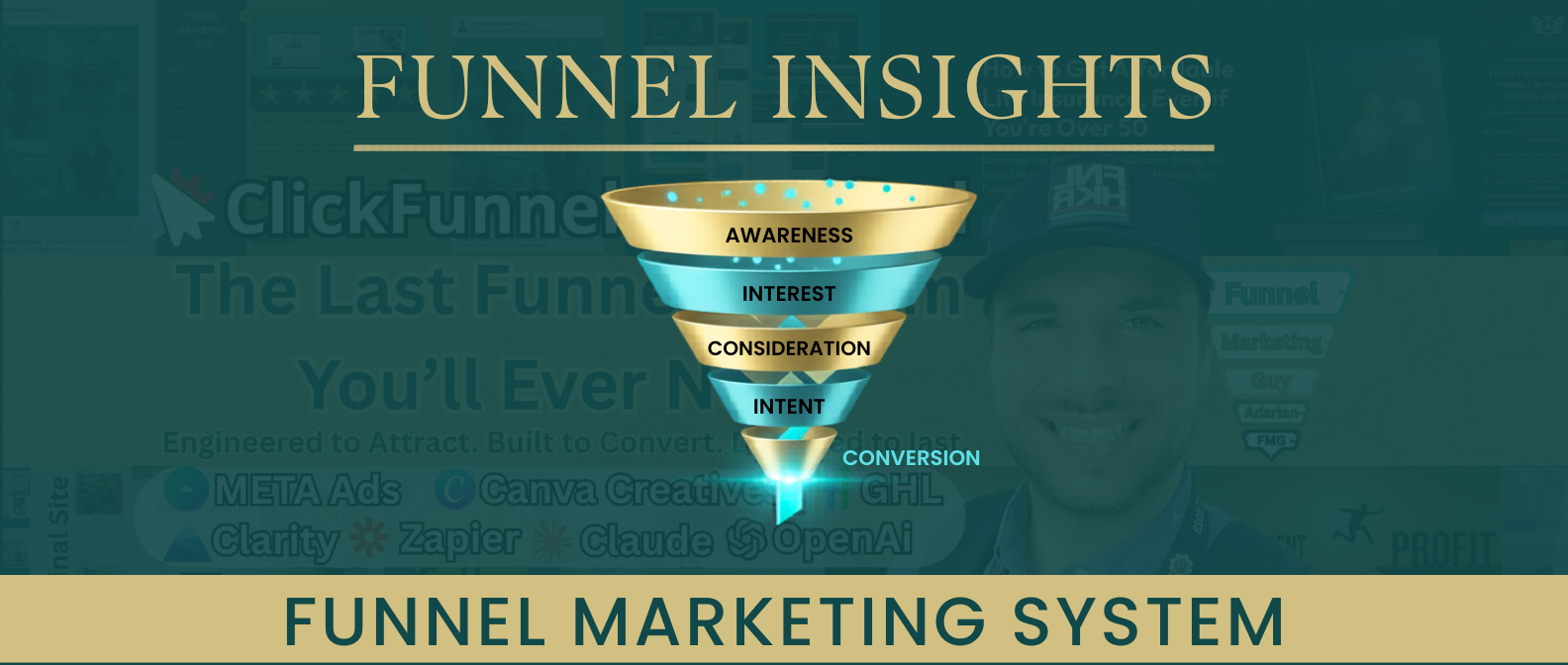
|
Welcome to Funnel Marketing System!
Your martech stack just got bigger. Your customer experience just got worse. Here’s why—and what to do about it.
- 🔧 Record martech spend is destroying customer experience (and it’s not the tools)
- 🤖 AI automation shifting from execution to autonomous strategy
- 📊 New measurement foundations unlocking performance gains across channels
- 🧠 Psychology-driven funnel design reducing friction at the cognitive level
- 🔗 Journey architecture beating siloed channel optimization
The Unified Journey Imperative
Your conversion problem isn’t technical—it’s organizational.
Despite record investments in marketing technology, customer experience scores are declining across enterprises. The data is brutal: teams are optimizing individual channels—email, SMS, social, paid media—while the actual customer journey falls apart between touchpoints. Buying more martech tools without restructuring how teams collaborate only amplifies the disconnection.
The companies winning today aren’t chasing isolated KPIs. They’re implementing single customer records, unified ownership structures, and journey health metrics that replace fragmented channel optimization. One consistent message and coordinated teams beat the best-performing isolated campaigns every single time.
This issue maps the shift from siloed execution to unified journey architecture—from Google’s new visual journey mapper fixing conversion tracking hygiene, to ChatGPT Ads maturing into a viable performance channel, to autonomous AI agents handling entire lifecycle workflows while humans focus on strategy.
🔗 Why Record Martech Spend Is Failing CX (15 minute read)

Despite record investments in marketing technology, customer experience scores are declining across enterprises. Industry leaders reveal that the culprit isn’t the tools—it’s siloed teams optimizing individual channels rather than unified customer journeys. Buying more martech without restructuring how teams collaborate only amplifies disconnection.
Key Points:
- Siloed teams optimizing email, SMS, social, and paid media independently create fragmented customer experiences despite increased martech budgets
- Successful brands shift focus from channel metrics to journey health, implementing single customer records and unified ownership structures
- One consistent message with coordinated teams beats fragmented optimization every time—companies winning today prioritize solving actual customer problems over chasing isolated KPIs
Why it matters: Your funnel is broken—and it’s not the tools. The shift from channel KPIs to journey health requires organizational restructuring, not another platform purchase. Single customer records and unified ownership unlock performance gains that isolated optimization can never achieve. (Read more)
🔗 Google Ads Lead Journey Mapping Feature (6 minute read)

Google Ads has launched Lead Journey Mapping, an intuitive visual drag-and-drop tool enabling lead generation advertisers to map their complete customer journey within the platform. This feature helps visualize touchpoints from initial website visits through contact forms, qualification calls, and final sales—establishing conversion hygiene for future Journey Aware Bidding and automated guidance.
Key Points:
- Visual drag-and-drop tool maps complete customer journey from initial visit through contact forms, qualification calls, and final sales within Google Ads platform
- Identifies tracking gaps, highlights offline conversion opportunities, and incorporates conversion delays to align Google Ads conversions with real-world business goals
- Establishes conversion foundation required for Journey Aware Bidding and automated optimization—doesn’t immediately impact performance but fixes attribution gaps first
Why it matters: Fix your conversion foundation first. Google’s visual journey mapper helps identify tracking gaps and offline event integration failures before you optimize. Conversion delay insights and proper attribution are prerequisites for automated bidding to work—this tool surfaces what’s broken in your measurement stack. (Read more)
🔗 ChatGPT Ads adds conversion bidding and stronger measurement (5 minute read)

ChatGPT Ads is leveling up its advertising platform with conversion-optimized bidding, allowing advertisers to automatically target clicks most likely to convert while maintaining CPC pricing. Key additions include flexible seven-day rolling budget management, integrations with AppsFlyer and Adjust for mobile measurement, and Automatic Advanced Matching for improved attribution.
Key Points:
- Conversion-optimized bidding automatically targets clicks most likely to convert while maintaining CPC pricing, competing directly with Google Ads and Meta Ads automation
- Mobile measurement integrations with AppsFlyer and Adjust, plus Automatic Advanced Matching, provide attribution capabilities performance marketers require
- Geographic exclusions and bulk campaign management via API reduce friction for larger advertisers relying on automation and scalable campaign management
Why it matters: New conversion channel unlocked. ChatGPT Ads now offers the measurement and automation stack performance marketers require to test it as a viable channel. Conversion-optimized bidding and attribution improvements move it from experimental to practical for larger advertisers—though it still lags Google and Meta in feature depth. (Read more)
🔗 Micromagnets Helps Businesses Build Marketing Systems Instead of Marketing Campaigns (5 minute read)

Micromagnets, a digital marketing agency, advocates for a paradigm shift: building integrated marketing systems instead of isolated campaigns. The agency identifies a critical gap—most businesses optimize each marketing channel independently, creating fragmented customer experiences from ad clicks to post-purchase engagement.
Key Points:
- Most businesses optimize each marketing channel independently—paid ads, email, websites, automation—creating fragmented customer experiences that undermine growth potential
- Systems-based approach aligns every interaction across touchpoints to create seamless customer journeys, treating marketing as interconnected ecosystem rather than separate services
- Integrated approach provides clarity on how each touchpoint contributes to conversions and lifetime value, uncovering hidden gaps in customer journey
Why it matters: Campaigns vs. systems. Isolated channel optimization creates friction that destroys conversion rates and lifetime value. Treating marketing as an interconnected ecosystem uncovers gaps that fragmented teams never see—this is the organizational shift required to make your martech stack actually work. (Read more)
Trending Now
-
Klaviyo’s Autonomous Commerce Agents: Pre-built AI agents handling order tracking, returns, subscriptions, and loyalty management—the bottom of the funnel goes autonomous. 86.6% of enterprises now prioritize autonomous agents for sales, marketing, and service functions.
-
Snapchat-HubSpot Lead Gen Integration: Native lead gen forms plus CRM sync and Conversions API make Snapchat viable for full-funnel performance. 77% higher CTR and 26% lower CPL demonstrate measurable results closing the Gen Z lead-gen loop.
-
Saai Agentic AI Platform for Banking: Converts natural-language business objectives into production-ready customer journeys in minutes, with guaranteed 45-day integration. Automation’s next frontier—from building flows manually to AI agents that design, execute, and optimize autonomously.
-
AI Reshaping Demand Gen Teams: Only 22% of marketers operate with proven data-driven strategies, despite 96% using AI. AI eliminates busywork, but strategy still wins—focus shifts to buyer trust, personalization, and human judgment in pipeline decisions.
-
B2B Multi-Stakeholder Journey Design: Frontline staff assess technical fit, comparison owners evaluate alternatives, decision-makers focus on ROI—B2B funnels require journey design, not just pages. Integrated research-to-execution framework addresses information needs by role and stage.
🎯 Bias-Transition Funnel Concept
Marketing expert Yu Tae-young’s ‘Structure of Persuasion’ introduces the bias-transition funnel concept: purchase barriers stem from existing mindsets rather than information gaps. His six-step cognitive design formula, grounded in neuroscience and behavioral psychology, guides consumers through problem recognition, solution understanding, trust-building, and risk-sharing proposals. Psychology meets funnel design—barriers are mindset-based, not information gaps. (Read more)
🎯 Tinuiti’s Unified Journey Execution
Tinuiti’s Bliss Point Marketing Operating System connects social discovery, search, retail media, and marketplaces through single platform for Allies of Skin. Example of unified journey execution across fragmented shopping touchpoints—integrating streaming video, paid search, paid social, and Amazon advertising with AdCopy AI technology. (Read more)
🎯 COSMarketing Agency Lead-Gen Results
Integrated SEO, social media, Google Ads, and AI-enhanced strategies delivered 38-74% growth across Florida service businesses. Friendly Hibachi Chef reported 38% booking increases, SkinErgist saw 41% growth in consultations, John Keller Roofing experienced 33% more emergency calls. Multi-channel funnel execution proof points. (Read more)
🎯 Boston Marketers Connect Forum Topics
CMOs and demand generation heads gathering to discuss scaling demand generation, account-based marketing alignment, first-party data strategies, AI-driven buyer engagement, and demonstrating marketing’s revenue impact. Signal of what executive leaders prioritize in B2B marketing strategy. (Read more)
“The companies that win aren’t optimizing channels. They’re designing journeys.”
— Industry Leader, Marketing Technology Research
What’s your biggest funnel bottleneck right now?
- A) Attribution and measurement gaps
- B) Siloed teams and disconnected touchpoints
- C) Lack of automation and AI integration
- D) Converting awareness to qualified pipeline
The shift from siloed channel optimization to unified journey architecture isn’t optional anymore. Record martech spend is failing customer experience because teams optimize in isolation—email here, paid media there, social somewhere else—while the actual customer experience falls apart between touchpoints.
The tactical fixes are available now: Google’s Lead Journey Mapping identifies your tracking gaps, ChatGPT Ads offers conversion-optimized bidding with proper attribution, and autonomous AI agents are handling entire lifecycle workflows from order tracking to loyalty management. But the strategic imperative is organizational—single customer records, unified ownership, and journey health metrics that replace fragmented KPIs.
Your next move isn’t another tool purchase. It’s restructuring how your teams collaborate around the customer journey.
Until next time,
Funnel Marketing Systems Editor
📊 How did you like today’s email?
Originally published by Funnel Marketing Guy, your resource for funnel marketing, sales funnels, ClickFunnels, lead generation, conversion optimization, email marketing, marketing automation, and digital marketing strategies.
Continue your journey at https://www.funnelmarketingguy.com.
Enjoyed this issue?
Subscribe to get Funnel Marketing System delivered to your inbox every week.
Join 17 other subscribers • Free forever