
Stop Wasting Leads: Your Demand Gen Problem Exposed
You're generating leads—but are they the ones Sales actually wants?
|
Welcome to Funnel Marketing System!
Your demand gen engine isn’t broken—it’s optimized for the wrong metric. This week: why 99% of leads never close, what AI-native automation actually looks like, and the retention lever most funnels ignore.
- 🎯 The pipeline quality crisis: Forrester says fewer than 1% of leads convert to closed deals
- 🤖 AI-native automation: Marketo’s co-founder launches platform that computes personalization vs. executing rules
- 💰 Post-purchase profit: How 5% retention improvement drives 95% profit increase
- 📊 The automation paradox: 80% generate more leads, only 25% hit ROI targets
- 🧠 Sales psychology proof: Better framing beats more features
The Quality-Over-Quantity Shift You Can’t Ignore
Your sales team is drowning. Marketing delivers 500 leads this month, 750 next month, maybe 1,000 by Q4. The dashboard shows green. Leadership is happy. And your closers are furious because 99% of those leads will never buy.
The problem isn’t lead generation—it’s that you’re optimizing for vanity metrics while your competitors optimize for revenue. Forrester data confirms what your sales VP has been screaming about: fewer than 1% of leads convert to closed deals. The real battle isn’t quantity versus quality. Quality wins decisively, every time.
The shift happening right now is brutal and irreversible: AI-native platforms are replacing rule-based automation, post-purchase optimization is becoming the primary profit lever, and the gap between teams who adopt automation and teams who execute it well is widening fast. 87% of sales organizations now use AI for prospecting and lead scoring. 80% generate more leads with automation. But only 25% achieve promised ROI.
The difference? Human oversight, data quality, and ruthless focus on pipeline quality over lead count. This week’s issue breaks down exactly where the execution gap lives—and what the next generation of marketing automation looks like when it’s built AI-native from day one.
🔗 Your Demand Gen Engine Isn’t Broken - It’s Flooding Sales With Leads That Will Never Convert (7 minute read)

Most demand generation engines aren’t broken—they’re optimized for the wrong metric. Companies flood sales teams with high-volume, low-quality leads that rarely convert, wasting time and frustrating top performers. The real battle isn’t lead quantity versus quality; quality wins decisively.
Key Points:
- Forrester data shows fewer than 1% of leads convert to closed deals—the vanity metric problem is industry-wide
- Organizations must shift from website traffic and lead counts to pipeline quality optimization and closed revenue metrics
- Success requires redefining qualified leads using intent data, aligning marketing and sales incentives, and targeting specific ideal customer profiles with precision
Why it matters: Your funnel isn’t broken—it’s optimized for the wrong outcome. When you measure success by lead volume instead of revenue quality, you build a machine that generates activity but not deals. The shift from MQL counts to pipeline contribution isn’t just semantic—it changes what you build, who you target, and how you allocate budget. Teams making this transition are redefining what “qualified” actually means, using intent signals instead of form fills, and tying marketing compensation to closed revenue rather than leads delivered. (Read more)
🔗 Marketo Co-Founder Jon Miller Unveils Phave to Take on Marketo (20 minute read)
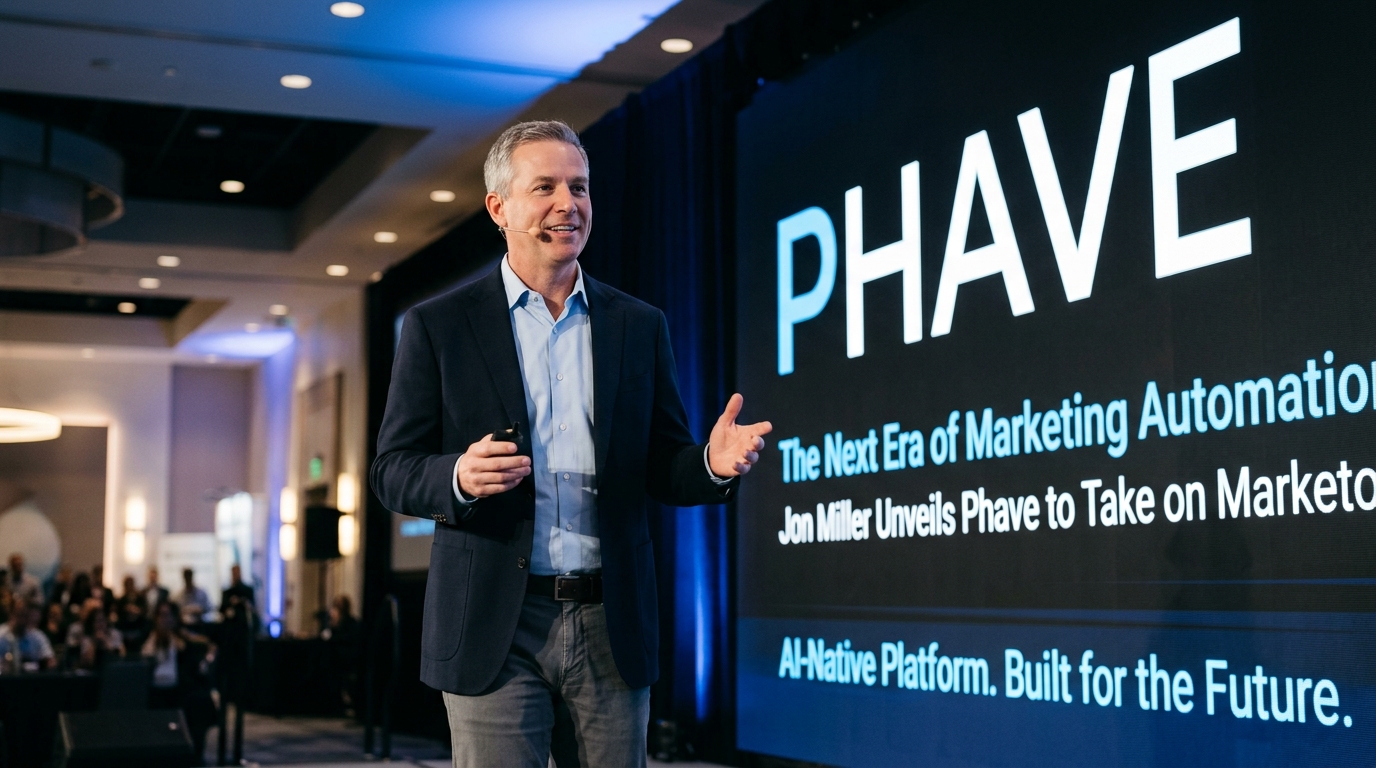
Jon Miller, Marketo’s co-founder, launched Phave—an AI-native marketing automation platform designed to challenge incumbents like Marketo, HubSpot, and Pardot. Unlike legacy systems relying on predefined rules, Phave’s Maestro engine uses AI to compute personalized “Playlists”—optimized touch sequences for each individual while maintaining compliance controls.
Key Points:
- Phave’s Maestro engine computes personalized sequences rather than executing predefined rules—the fundamental architecture shift from legacy platforms
- Priced at $36,000 annually based on monthly active recipients rather than database size, addressing a major pricing pain point
- Backed by FirstMark and Ridge Ventures with enterprise customers including SambaNova and SPS Commerce, entering market just as Salesforce and HubSpot unveil competing agentic tools
Why it matters: This is what the next generation of marketing automation looks like. When Marketo’s co-founder builds a competitor, he’s signaling that rule-based automation is obsolete. The difference between “if/then workflows” and “AI-computed personalization” isn’t incremental—it’s architectural. Phave’s Maestro doesn’t execute your rules; it computes optimal sequences based on individual behavior patterns while you maintain governance controls. The pricing model shift (active recipients vs. database size) also matters—it removes the penalty for keeping historical data and changes how you think about list hygiene. For teams evaluating platforms now, the question isn’t “which CRM integrates best?” It’s “does this platform compute or just execute?” (Read more)
🔗 Why Redo Is Focusing on the Complete Customer Journey (5 minute read)
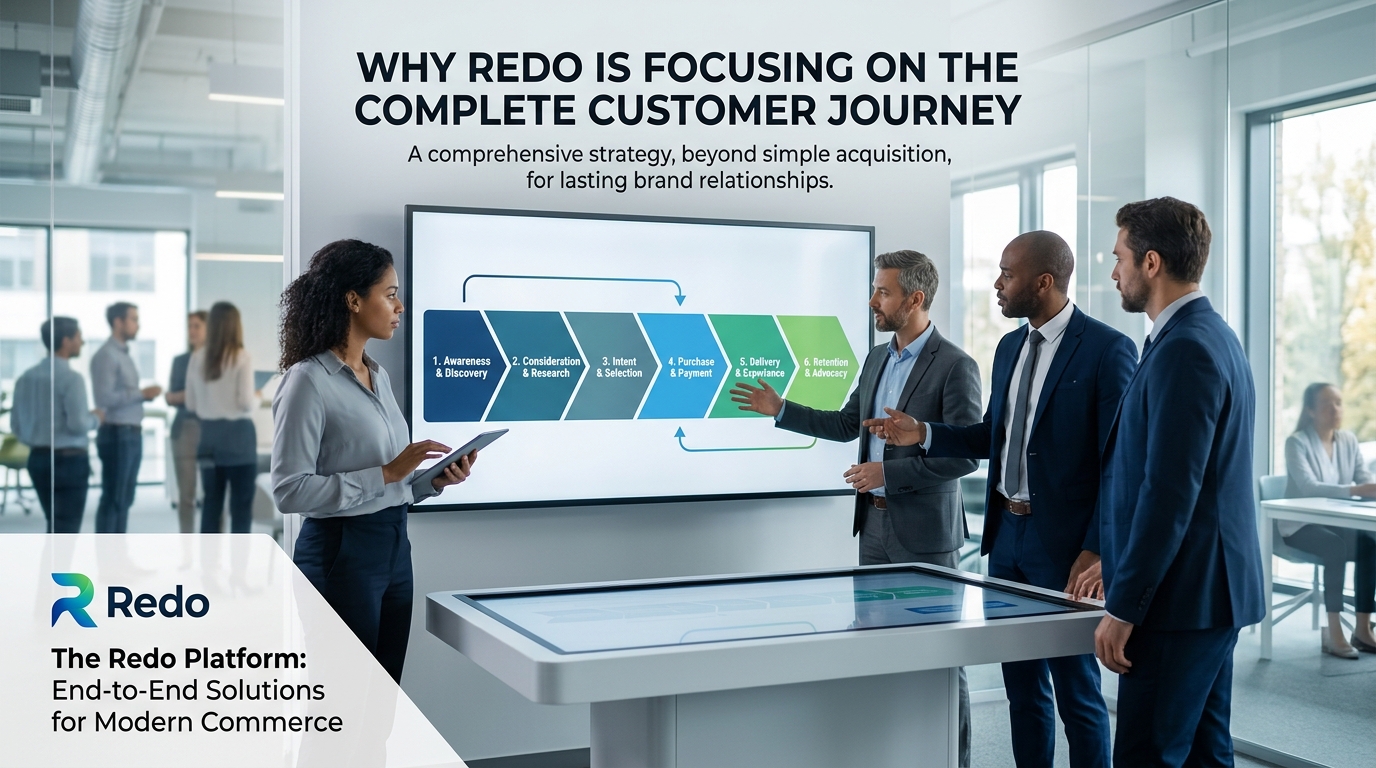
Redo, a commerce technology company with $81 million in Series B funding, is revolutionizing e-commerce by focusing on the complete customer journey rather than just acquisition. The platform keeps customers on brand websites through personalized pre-purchase messaging, customized checkouts, and seamless returns management.
Key Points:
- 85% of customers won’t return after bad delivery experiences—post-purchase determines loyalty, not acquisition
- 5% retention improvement can boost profits by 95%—the math that makes post-purchase optimization the highest-leverage funnel stage
- Redo is developing sophisticated AI agents to provide concierge-level experiences, helping businesses compete with larger retailers through superior customer care
Why it matters: Most funnels end at checkout. That’s the mistake. CEO Sterling Snow’s data is unambiguous: 5% retention improvement drives 95% profit increase. Post-purchase experiences—shipping, support, returns—determine whether someone buys again, and repeat customers have dramatically higher LTV than first-time buyers. This isn’t about “customer success” as a separate function—it’s about treating post-purchase as the most important stage in your funnel. What happens after someone buys determines whether your CAC pays back or burns cash. Email automation, returns management, and delivery experience aren’t support functions—they’re retention levers that directly impact profit. (Read more)
“Customers don’t buy products—they buy the reality surrounding the product. One online store owner increased sales while raising prices simply by repositioning the product’s story, without changing the actual product.”
— Warren Ashbourne, Author of Forbidden Sales Psychology
🎯 The Automation Paradox: 80% Generate More Leads, Only 25% Hit ROI
Automated lead generation is transforming sales and marketing in 2026, with 87% of sales organizations leveraging AI for prospecting, forecasting, and lead scoring. The technology has evolved beyond rigid rules to intelligent systems handling prospect research, campaign optimization, and personalized outreach. Key findings: 80% of businesses using automation generate more leads, while 77% report higher conversions. Email automation remains dominant at 68%, but SMS, social media, and push notifications are rapidly gaining adoption. However, success depends on data quality, human oversight, and proper CRM integration—only 25% of AI projects achieve promised ROI, underscoring execution’s critical importance. (Read more)
🎯 Sales Psychology Case Study: Better Framing Beats More Features
‘Forbidden Sales Psychology’ by Warren Ashbourne explores how desire is created, why people resist buying, and how identity influences purchasing decisions. A key insight backed by real results: customers often buy the reality surrounding a product rather than the product itself. One online store owner increased sales while raising prices simply by repositioning a product’s story—without changing the actual product. The book examines manipulation, frame control, authority, trust, and psychological ownership, challenging readers to reconsider advertising, e-commerce, and their own buying behaviors. The repositioning case validates a core principle: how you frame and story your offer changes conversion without touching the product. (Read more)
🎯 How AI Search Changes Your Funnel Strategy
As AI-powered generative search reshapes customer discovery, brands need specialized guidance to optimize their presence across the entire buyer journey. Generative Engine Optimization (GEO) agencies help companies understand where AI platforms influence research, evaluation, and purchasing decisions. Effective GEO strategy requires mapping visibility to customer intent across stages: from early-stage problem research through mid-funnel comparisons to late-stage decision-making. The shift is fundamental—AI now mediates middle-of-funnel research that used to happen on your website or through sales calls. Brands must ensure they remain visible and relevant throughout the AI-mediated discovery process. (Read more)
🎯 Oracle’s Evolution: From Campaign Execution to Growth Orchestration
Oracle has secured its fourteenth consecutive Leader position in the 2026 Gartner Magic Quadrant for B2B Marketing Automation Platforms. The recognition reflects Oracle’s evolution from campaign execution to ‘agentic growth orchestration’—a connected approach combining marketing automation, AI, and governance. Oracle’s portfolio includes Eloqua Marketing Automation, Fusion Marketing with Unity Data Platform, and AI Agent Studio. This integrated foundation enables marketing teams to identify growth opportunities, coordinate cross-functional action, and connect activities to measurable business outcomes. The concept shift matters: automation platforms are evolving from “send emails” to “orchestrate growth across functions.” (Read more)
🎯 What Best-in-Class Email/SMS Performance Actually Looks Like
ECD Digital Strategy, named Klaviyo Agency Partner of the Year for the Americas, holds rare Master Elite Partner status (only ~35 agencies worldwide) and delivered impressive results: 49% of client revenue through email/SMS, 8.7x ROAS, and 538% YoY growth for some clients. The 49% revenue contribution benchmark is particularly notable—it validates email and SMS as primary revenue channels, not just “nurture” tactics. For teams building retention marketing systems, this is the north-star metric: half of revenue from owned channels rather than paid acquisition. (Read more)
What is your biggest funnel optimization challenge right now?
- A) Lead quality - too many unqualified leads entering the funnel
- B) Automation execution - have the tools but not seeing ROI
- C) Post-purchase retention - acquisition works but customers don’t come back
- D) Mid-funnel conversion - traffic and leads are there but not converting to sales
The execution gap is real. 87% of organizations now use AI for prospecting. 80% generate more leads with automation. But only 25% achieve the ROI they expected. The difference isn’t the platform—it’s data quality, human oversight, and ruthless focus on the metric that actually matters: closed revenue, not lead count.
Three shifts are happening simultaneously: AI-native platforms are replacing rule-based automation, post-purchase optimization is becoming the primary profit lever, and teams are redefining “qualified” based on intent signals rather than form fills. The winners aren’t the ones with the most leads. They’re the ones optimizing for pipeline quality, treating retention as a profit driver, and maintaining human oversight of their automation systems.
For more frameworks, case studies, and tactical breakdowns on funnel optimization and conversion strategy, visit https://www.funnelmarketingguy.com.
Keep optimizing,
Funnel Marketing Systems Editor
📊 How did you like today’s email?
Originally published by Funnel Marketing Guy, your resource for funnel marketing, sales funnels, ClickFunnels, lead generation, conversion optimization, email marketing, marketing automation, and digital marketing strategies.
Continue your journey at https://www.funnelmarketingguy.com.
Enjoyed this issue?
Subscribe to get Funnel Marketing System delivered to your inbox every week.
Join 17 other subscribers • Free forever