
Stop Chasing Leads—Start Engineering Context
The funnel is dead. The context layer is where conversion happens now.
|
Welcome to Funnel Marketing System!
Your funnel needs to win twice now: once with AI agents screening options, then again with the humans who make final decisions. Here’s how the smartest operators are redesigning entry points, measurement systems, and automation infrastructure for that reality.
- 🤖 Why AI agents are now your first conversion point—and what that means for funnel entry design
- 📊 The measurement shift: from cost-per-lead vanity to cost-per-acquisition economics
- 🔧 Context engineering as the new competitive advantage (and why 79% of teams aren’t ready)
- 🎯 Real-time marketing maturity: intelligent suppression beats message volume
- 🔗 The integration imperative: connecting siloed systems to eliminate conversion friction
The Double-Optimization Challenge
You’re no longer optimizing for one decision-maker. You’re optimizing for two.
First, the AI agent screening options on behalf of your prospect. Then the human who makes the final call. This isn’t theoretical—39% of buyers now use generative AI for product research before they ever visit your site. But only 11% trust AI to make the final purchase decision.
That gap is your new funnel. And most teams are still designing for the old one.
The winners in 2026 aren’t just running better ads or writing sharper copy. They’re rebuilding infrastructure: cleaning CRM data so AI can interpret it, connecting pricing systems to marketing automation, and implementing conversion adjustments that teach ad platforms which leads actually close. They’re shifting from “how fast can we send messages” to “which messages should we suppress.”
This issue breaks down the systems, metrics, and integrations that separate operators who adapt from those who get disintermediated.
🔗 The customer journey no longer starts with the customer (7 minute read)

AI systems have become invisible gatekeepers, determining which brands reach consumers before purchase decisions are made. ACAM’s ‘Chosen Twice’ report reveals that 39% of consumers use generative AI for product research, yet only 11% trust AI with final purchase decisions. Marketers must now optimize for both AI algorithms and human customers simultaneously—a fundamental shift in funnel entry points.
Key Points:
- 39% use AI for product research but only 11% trust it for final decisions—revealing a critical conversion gap between discovery and purchase
- ACAM’s Customer Delegation Framework identifies four factors influencing AI trust: capability, value, control, and social acceptance
- 83% of Australian organizations remain at early AI maturity levels, creating competitive opportunity for those who redesign journeys around delegated tasks
Why it matters: Your funnel now has two entry points: the AI agent screening options and the human making the final decision. If you’re only optimizing for the human, you’re invisible before the evaluation even starts. The 28-point gap between AI research usage and purchase trust represents the new middle-funnel—where brands must bridge algorithmic relevance with human confidence.
🔗 Why Context Engineering Is the New Martech Battleground for Marketers (16 minute read)
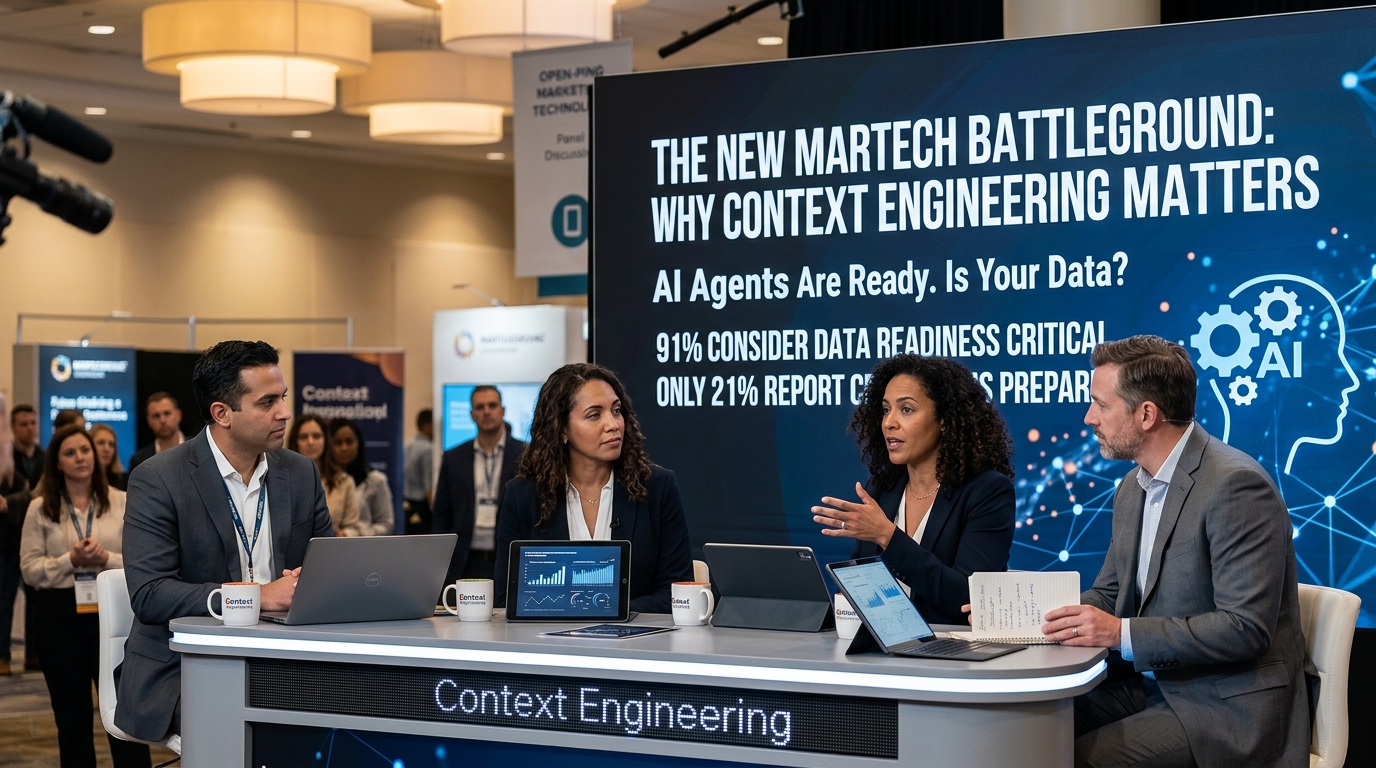
As martech vendors race to add AI agents, marketing teams face a critical infrastructure gap: only 21% report their CRM data is well-prepared for AI, while 91% consider data readiness essential. Unlike humans who develop workarounds for messy data, AI agents can’t inherit institutional knowledge. Context engineering—structuring information and business rules for AI interpretation—is becoming the competitive battleground that determines whether your automation actually executes.
Key Points:
- Only 21% of marketers have AI-ready CRM data, yet 91% consider it essential—a 70-point readiness gap that determines automation effectiveness
- AI magnifies existing data problems: fragmented records, inconsistent definitions, and disconnected systems across CRM, marketing automation, and attribution
- Context engineering requires upstream work: clean data, agreed funnel definitions, and governed data relationships before AI tools can deliver value
Why it matters: Your funnel automation is only as smart as your data structure. Every AI agent, every automated decision, every real-time personalization depends on clean, contextual data. The 79% of teams without AI-ready data aren’t just behind on technology—they’re running automation on a foundation that can’t support intelligent decisioning. Context engineering isn’t a nice-to-have. It’s the difference between automation that optimizes and automation that just sends more messages.
🔗 Growbi Reveals New CPL vs CPA Strategy: Why Precision Beats Lead Volume (9 minute read)
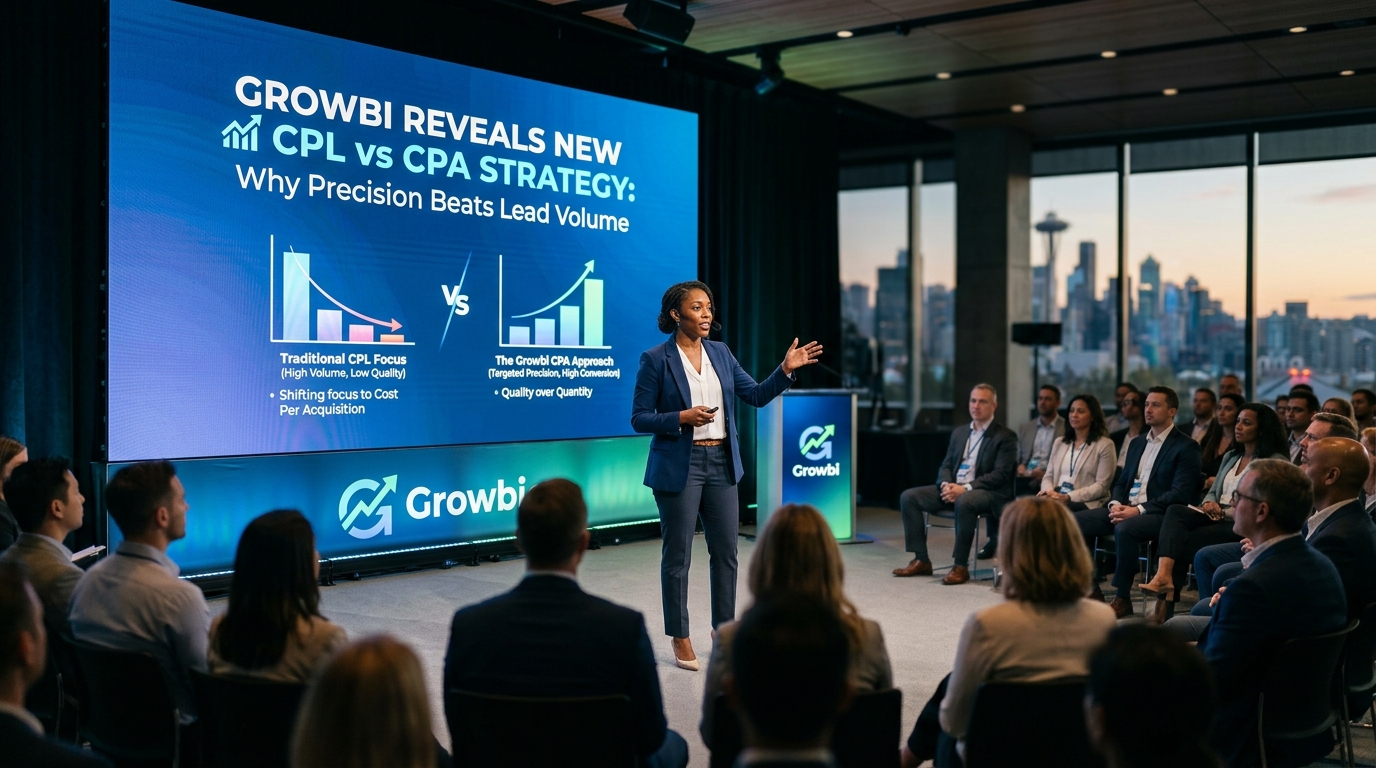
Cheaper leads don’t always convert better—a $30 lead converting at 50% beats a $20 lead converting at 20%. Growbi’s performance marketing strategy prioritizes cost per acquisition (CPA) over cost per lead (CPL) by combining AI-assisted creative testing, CRM-linked measurement, and structured follow-up to optimize the entire customer journey. A med spa case study demonstrated how this approach transformed $16 CPL into meaningful $38.48 cost per patient arrival metrics.
Key Points:
- Cost per lead optimization without conversion tracking destroys funnel economics—a $30 lead at 50% conversion outperforms a $20 lead at 20%
- Connecting advertising directly to real business outcomes (patient arrivals, sales) enables smarter budget decisions than lead volume metrics
- CRM-linked measurement allows optimization toward qualified pipeline rather than form fills, fundamentally changing what ad platforms optimize for
Why it matters: Every dollar you spend optimizing cost per lead without tracking conversion rate is a dollar wasted. The med spa case study proves the point: reducing CPL from $20 to $16 means nothing if conversion rate drops from 50% to 20%. Your real cost per customer went from $40 to $80. Stop celebrating cheaper leads. Start measuring what actually matters: cost per qualified customer in your pipeline.
🎯 Is real-time marketing finally real?
Real-time marketing has matured beyond speed to intelligent decisioning: determining which messages to send, suppress, or hold back in milliseconds. Gartner’s 2026 research identifies six essential capabilities including coordinated decisions, live behavior analysis, omnichannel suppression, actionable predictions, content feedback loops, and AI governance. As AI generates campaigns cheaply, arbitrating between eligible messages becomes critical—winners won’t send the most messages, they’ll know which ones to withhold. (Read more)
🎯 Google Ads conversion adjustments: How to bid toward better leads
Google Ads conversion adjustments let advertisers correct recorded conversions through retractions (removing invalid conversions) or restatements (updating values), improving Smart Bidding with accurate signals about lead quality. A specialty furniture company reduced cost per qualified lead from $200 to $50 by implementing proper conversion adjustments, increasing qualified leads from 4 to 15 monthly. Feed your ad platforms better signals and watch them optimize toward qualified pipeline instead of clicks. (Read more)
🎯 PitchKitchen’s Greg Rosner on AI Search and Your Website
B2B buyers now ask ChatGPT for solutions before searching Google, forcing marketers to shift from traditional SEO to Answer Engine Optimization (AEO). 68% of users trust AI search results as much as Google, yet a scan of 32,574 domains found 24.5% had stale content. The fix isn’t switching CMS platforms—it’s streamlining publishing workflows and keeping website content synchronized with actual business evolution. (Read more)
🎯 Why CRM Admins Are Critical to Marketing Automation Success
CRM administrators create the foundation enabling effective campaigns, yet their role often goes unrecognized. Common friction points include field configuration, security access controls, and integration decisions. Organizations thrive when they involve admins early in planning, define requirements in business terms, and distinguish between routine marketing tasks and system-level changes. The hidden bottleneck in your automation stack is the CRM admin relationship—it determines whether your funnels actually execute. (Read more)
🎯 Optimal Blue Acquires Usherpa To Link Pricing With Borrower Outreach
Optimal Blue acquired Usherpa to create an integrated originator command center connecting product eligibility, pricing intelligence, and borrower engagement—capabilities that traditionally operated in separate systems. The acquisition enables loan originators to identify prospects more effectively, nurture relationships, and determine optimal financing options earlier in the process. Connecting previously siloed systems improves prospect identification and nurture effectiveness. (Read more)
🎯 Fintech’s next play is the whole customer journey
As fintech funding plummets to decade lows, successful fintechs must address entire customer journeys rather than solving single financial problems. OneDome founder Babek Ismayil demonstrates how integrating mortgages, conveyancing, and surveys into one seamless experience improves acquisition costs, conversion, and lifetime value while ensuring accountability. Solving one funnel stage creates friction—complete journey ownership improves CAC, conversion, and LTV simultaneously. (Read more)
“Decisions form emotionally and get justified logically. Most professionals are taught what to present, not how decisions are actually made.”
— Dr. Jeffrey Scott Stanton, Psychology of Sales
Which funnel challenge are you prioritizing in Q2?
- A) Cleaning CRM data for AI readiness
- B) Shifting from CPL to CPA measurement
- C) Optimizing for AI search and AEO
- D) Integrating siloed marketing systems
The pattern across today’s stories is clear: optimization is moving upstream. Away from message volume and toward message quality. Away from lead cost and toward customer acquisition cost. Away from siloed tools and toward integrated systems that make intelligent decisions in real time.
The operators winning in 2026 aren’t running more campaigns. They’re building better infrastructure—clean data, connected systems, and measurement frameworks that optimize for revenue instead of vanity metrics. If you’re still celebrating cheaper leads without tracking conversion rates, or running real-time marketing without intelligent suppression, you’re optimizing the wrong variables.
Start with one system this quarter. Connect your ad platform to CRM conversions. Implement conversion adjustments. Build context into your data model. The compound effect of these foundational improvements will outperform any new tactic.
Keep building,
Funnel Marketing Systems Editor
📊 How did you like today’s email?
Originally published by Funnel Marketing Guy, your resource for funnel marketing, sales funnels, ClickFunnels, lead generation, conversion optimization, email marketing, marketing automation, and digital marketing strategies.
Continue your journey at https://www.funnelmarketingguy.com.
Enjoyed this issue?
Subscribe to get Funnel Marketing System delivered to your inbox every week.
Join 17 other subscribers • Free forever