
ChatGPT Ads Just Hit $1B—Here's Why
Plus: The ad platform shaking up Google's $300B empire
|
Welcome to Funnel Marketing System!
Your funnel math is only as good as the data feeding it—and this week, the industry learned that up to 40% of leads may be fraudulent while ChatGPT Ads hit $1B in under 200 days.
- 🚀 ChatGPT Ads scales to $1B in 200 days—high-intent search traffic with AI-native creation tools
- 🎯 Quality over volume: Why 4X registrations came from optimizing for qualified leads, not form fills
- 🔍 Attribution hygiene crisis: Hidden auction fees and fake leads make your CAC calculations fiction
- 🤖 AI-assisted funnel automation goes mainstream with natural language workflows and journey orchestration
- 💡 Why fake scarcity destroys LTV and what rational customers actually respond to
The New Funnel Channel You Can’t Ignore
ChatGPT Ads reached $1 billion in annualized revenue in under 200 days with 1 billion weekly active users. That’s not a beta test—that’s a structural shift in where high-intent product research happens. The platform now offers conversion matching, product feeds, view-through optimization, and a natural language campaign builder that lets you describe your funnel and watch AI create it.
The implication for funnel operators: ChatGPT overlaps directly with Google Search for purchase-intent queries, but with AI-native ad creation and potentially cleaner attribution. If you’re running search campaigns, you need to be testing ChatGPT Ads against Google to understand where your audience is moving.
But here’s the catch—speed only matters if you’re measuring the right thing. This week also delivered a wake-up call on conversion quality: Anura’s CEO revealed that up to 40% of leads in some verticals may be fraudulent, generated by click farms and bots. Meanwhile, Wpromote proved that connecting CRM data to optimize for qualified conversions instead of form submissions delivered 4X more registrations and 159% more downstream conversions. And the FTC alleged that Amazon secretly inflated ad auction costs for seven years, affecting over 1 million brands.
The pattern is clear: if your attribution is built on fake leads and hidden fees, your funnel math is fiction. The solution isn’t more volume—it’s tighter conversion tracking, CRM-connected optimization, and verification before nurture.
🔗 ChatGPT Ads Hits $1B: Should Google, Meta and Amazon Be Worried? (7 minute read)

ChatGPT Ads achieved a $1 billion annualized revenue run rate in less than 200 days, positioning OpenAI as a serious competitor in the digital advertising market. With over 1 billion weekly active users, ChatGPT is capturing high-intent traffic traditionally dominated by Google Search, Meta, and Amazon.
Key Points:
- ChatGPT overlaps directly with Google Search for product research and purchase-intent queries, creating structural pressure on Google’s core search advertising business
- Google faces the greatest threat due to query overlap, while Meta faces budget-shift risks and Amazon’s integrated commerce ecosystem provides stronger defense
- The platform’s rapid scale and high-intent positioning make it a new top-of-funnel channel for product research and purchase decisions
Why it matters: This isn’t a new social platform or display network—it’s a direct competitor for the highest-intent search traffic in your funnel. If your customers are researching products on ChatGPT instead of Google, your acquisition strategy needs to follow them. The speed of scale (under 200 days to $1B) and the natural language ad creation tools signal that AI-native advertising is moving from experiment to core channel. Funnel operators should be testing ChatGPT Ads against Google Search to understand where their audience is shifting and whether conversion quality holds up.
🔗 Improve lead quality for complex journeys - Think with Google (5 minute read)

Wpromote revolutionized lead generation for Learning Care, an early childhood education provider operating 1,100+ schools across 11 brands. The challenge was a complex, multi-week decision journey that resulted in low-quality leads overwhelming call centers. The solution: connecting CRM data to Google Ads to optimize for qualified leads rather than form submissions.
Key Points:
- By implementing Performance Max, AI Max for Search, and Customer Match with first-party signals, Wpromote achieved 4X increase in student registrations and 159% growth in downstream conversions
- Cost per sales-qualified lead dropped 22% by optimizing for qualified conversions instead of top-of-funnel form fills
- This data-driven approach earned Wpromote the 2026 Google Ads Impact Award for AI Excellence
Why it matters: This is attribution hygiene with a real-world proof point. Most funnel operators optimize for the wrong metric—form submissions, MQLs, or demo requests—instead of the conversions that actually predict revenue. Wpromote’s case proves that connecting CRM data to your ad platform and optimizing for qualified conversions, not vanity metrics, delivers 4X better results. The methodology is simple: map your CRM’s qualified lead definition back to Google Ads, feed first-party signals through Customer Match, and let AI optimize for the conversions that matter. If you’re still optimizing for form fills without CRM validation, you’re scaling noise.
🔗 (Full Ep.) Deserve To Win P. 48: Lead Generation Industry 40% Fraud??? So Says Anura CEO Rich Kahn! (4 minute read)
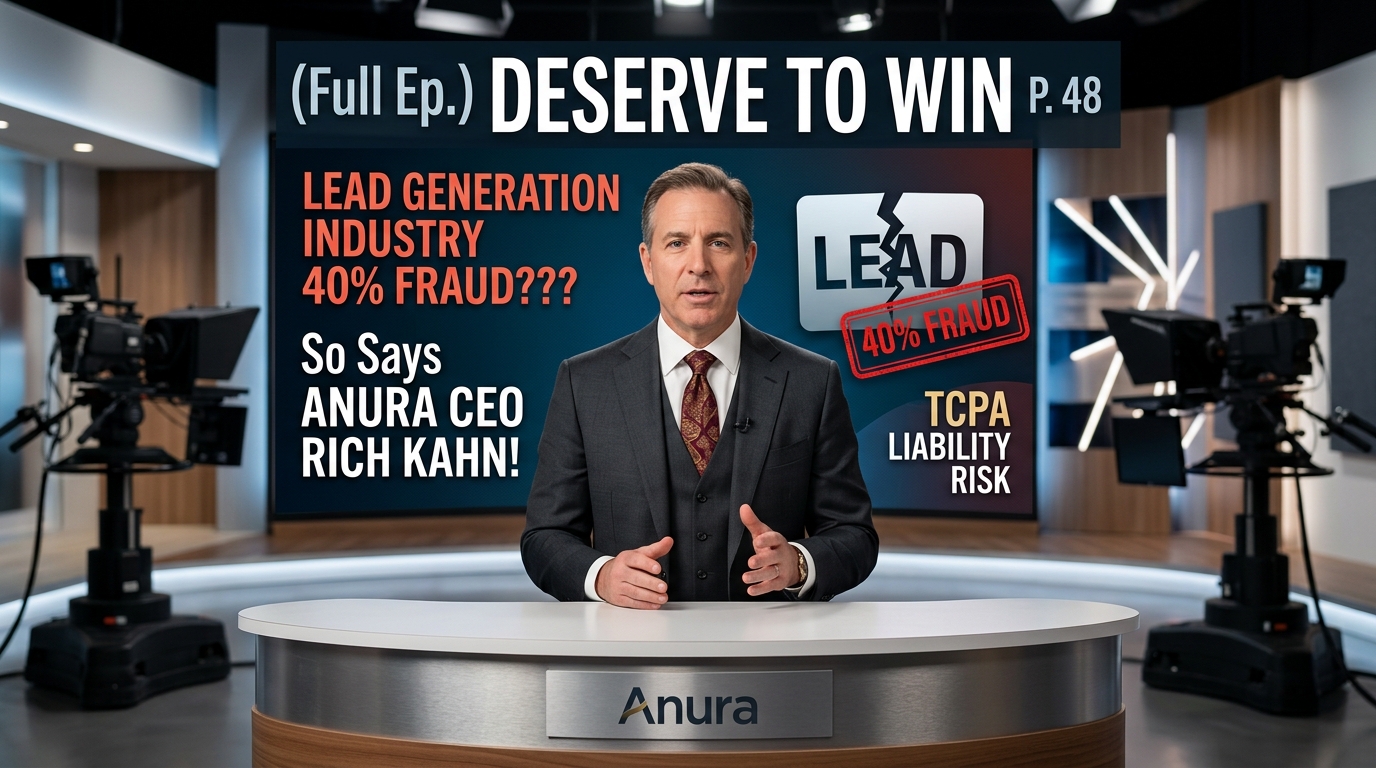
Anura CEO Rich Kahn reveals a crisis in the lead generation industry: up to 40% of leads may be fraudulent, generated by click farms, bots, or malicious actors. This epidemic creates massive TCPA lawsuit exposure for companies purchasing compromised leads and makes conversion optimization unreliable.
Key Points:
- Up to 40% of leads in some verticals are fraudulent, generated by automated systems designed to mimic real user behavior
- Fraudulent leads inflate CAC calculations, destroy attribution accuracy, and create legal liability under TCPA regulations
- Responsible lead generation requires verification platforms and first-party data validation before leads enter nurture workflows
Why it matters: If 40% of your leads are fake, your CAC calculations are fiction and your automation is optimizing garbage. This isn’t a minor data quality issue—it’s a fundamental attribution crisis that makes your entire funnel math unreliable. The solution requires verification before nurture: platforms like Anura, Vereigen’s human-verified engagement model (which delivered 90% MQL conversion with less than 1% replacement rate), and CRM-connected optimization that validates leads against real downstream conversions. The wake-up call: audit your lead sources, implement fraud detection, and optimize for verified conversions instead of volume metrics. Your funnel is only as good as the data feeding it.
🔗 Amazon’s ad auction surcharges secretly bilked brands of billions, FTC alleges (10 minute read)

The FTC and 22 state attorneys general sued Amazon for allegedly concealing hidden surcharges in its search ad auctions for over seven years, affecting more than 1 million brands and generating tens of billions in revenue. Amazon secretly added “soft reserve prices” to second-price auctions starting in 2019, inflating costs especially during peak shopping events like Prime Day.
Key Points:
- Amazon allegedly hid auction surcharges from advertisers for 7+ years, secretly inflating costs while advertisers believed they were paying true second-price auction rates
- Internal documents reveal executives knew disclosure could damage advertiser trust, yet continued the practice across 1 million+ brands
- Amazon’s $70 billion ad business dominates retail media with 75% market share, making it difficult for brands to leave despite concerns about cost transparency
Why it matters: If Amazon was secretly inflating auction costs for seven years, your ROAS calculations on the platform were wrong the entire time. This isn’t just an Amazon problem—it’s a reminder that hidden fees and opaque auction mechanics make attribution unreliable across any platform. When your costs are secretly inflated and your leads may be fraudulent (see the 40% fraud rate above), your entire funnel math collapses. The lesson: trust but verify. Audit your platform costs, implement independent conversion tracking, and optimize for downstream revenue metrics that platforms can’t manipulate. Attribution hygiene starts with questioning whether the numbers you’re seeing are actually real.
🔗 The Best Customer Journey Orchestration Solution: The 2026 CRM Industry Leader Awards (4 minute read)
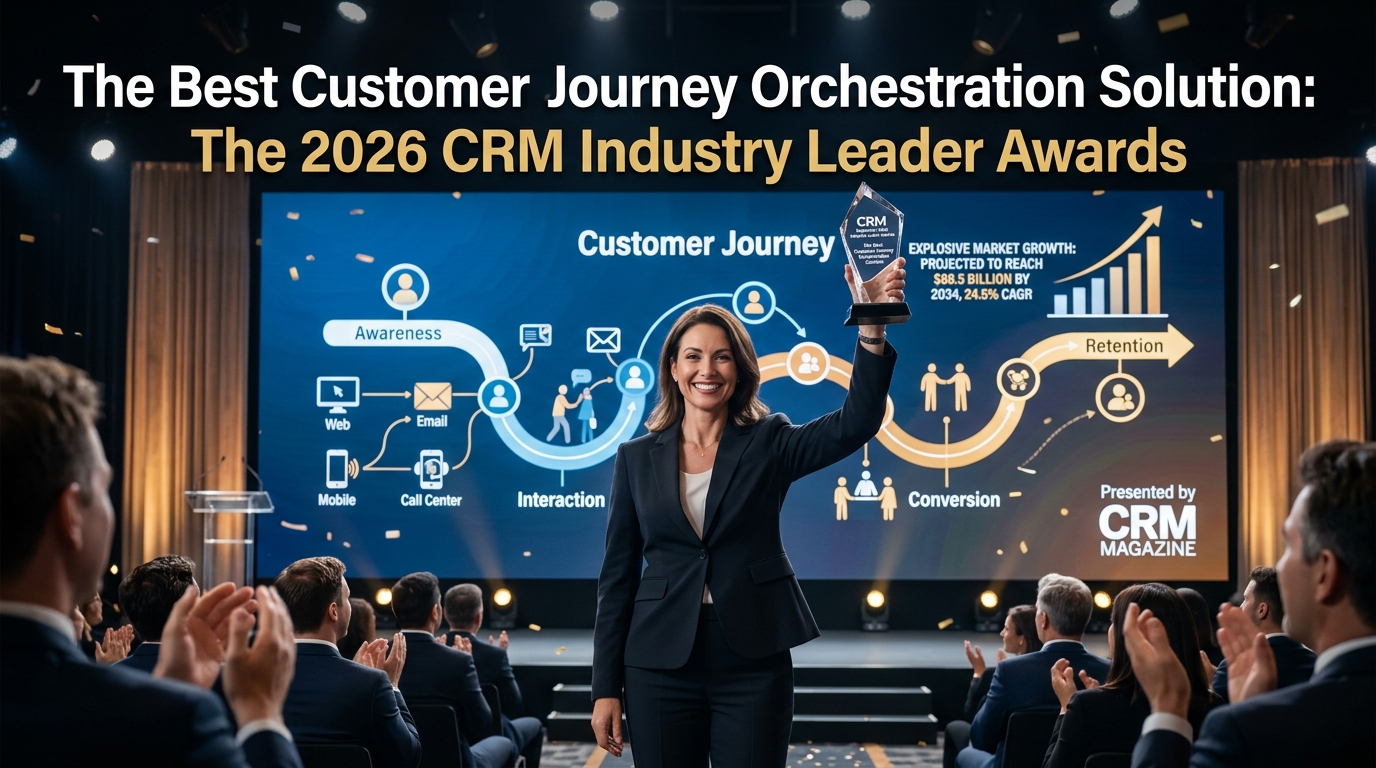
The customer journey orchestration (CJO) market is experiencing explosive growth, projected to reach $88.5 billion by 2034 at a 24.5% compound annual growth rate. CRM Magazine’s 2026 Industry Leader Awards highlight five standout solutions: Adobe Journey Optimizer with emerging agentic capabilities, CSG’s Xponent for mapping and decisioning, Genesys Cloud CX for real-time service orchestration, Medallia Experience Orchestration, and Qualtrics XM Journey Orchestration with superior journey analytics and sentiment detection.
Key Points:
- Customer journey orchestration market hitting $88.5B by 2034 at 24.5% CAGR represents the infrastructure layer for advanced funnel automation
- Leading platforms enable real-time personalization, omnichannel orchestration, and AI-powered decisioning across every customer touchpoint
- Agentic capabilities and sentiment detection represent next-gen features that allow systems to autonomously optimize customer journeys
Why it matters: This is the stack behind AI-assisted funnels. Customer journey orchestration platforms are the infrastructure that enables the real-time personalization, omnichannel coordination, and autonomous optimization that advanced funnel operators need. The $88.5B market projection and 24.5% CAGR signal that this isn’t bleeding-edge experimentation—it’s becoming the operating system for customer experience. The platforms highlighted (Adobe, Genesys, Qualtrics) offer agentic capabilities that can autonomously adjust journeys based on sentiment and behavior, not just execute pre-built sequences. If you’re still running linear email sequences and static landing pages, this is the infrastructure gap you need to close.
🔗 Adobe acquires PeakXV-backed AI startup Rilo to expand marketing automation (6 minute read)

Adobe has acquired Peak XV-backed AI startup Rilo in a strategic move to expand AI-powered marketing automation for enterprise clients. Founded in 2025 by IIT alumni, Rilo built an innovative platform enabling users to create automated workflows through natural language descriptions. The startup rapidly gained traction with 10,000+ users within months, offering applications in lead generation, sales outreach, and content distribution.
Key Points:
- Rilo’s natural-language workflow automation lets users describe their desired funnel or automation in plain English and watch AI build it
- The platform gained 10,000+ users in months with applications in lead generation, sales outreach, and content distribution
- Adobe’s acquisition validates that “describe your workflow in plain English” is becoming real, not vaporware
Why it matters: This is validation that AI-assisted funnel automation is moving from experiment to mainstream product. The ability to describe a workflow in natural language—“send a follow-up email three days after form submission if they haven’t opened the first email”—and have AI build it removes the technical barrier that keeps most marketers stuck in manual processes. Adobe’s acquisition of a startup that gained 10K users in months signals that this capability will be baked into enterprise marketing platforms, not just point solutions. The implication: AI will handle repetitive funnel tasks (lead scoring, email sequences, audience segmentation) while humans focus on strategy, messaging, and creative. If you’re still building every automation manually, you’re about to be outpaced.
“If 40% of your leads are fraudulent and your ad costs are secretly inflated, your funnel math isn’t just wrong—it’s fiction. The solution isn’t more volume. It’s verification, attribution hygiene, and optimizing for conversions that actually predict revenue.”
— Funnel Marketing Systems Editor
What’s your biggest funnel challenge right now?
- A) Lead quality and fraud detection
- B) Attribution accuracy across channels
- C) Scaling automation without losing quality
- D) Testing new channels like ChatGPT Ads
🎯 OpenAI’s ChatGPT Ads Manager Plugin, Audience Updates, Product Feeds & More
OpenAI rolled out significant updates to ChatGPT Ads Manager, including a new plugin enabling campaign creation through natural language, enhanced custom audiences with improved member management, and expanded conversion matching fields supporting hashed phone numbers and names. Shopping results now exclusively feature brands submitting product feeds. The platform introduces carousel ad unit insights, campaign budget pacing, and view-through conversion optimization. ChatGPT Ads are now live across Europe, India, the Middle East, and North Africa, dramatically expanding advertiser reach. (Read more)
🎯 Vereigen Media Wins Gold Stevie® Award for Lead Generation Solution
Vereigen Media won the Gold Stevie® Award for its Verified Content Engagement (VCE) solution at the 23rd Annual International Business Awards. The platform combines first-party data, human verification, and zero-outsourcing methodology to generate higher-quality leads. Supporting 95+ enterprise clients with 110+ million validated contacts, Vereigen delivered measurable results: ServiceNow achieved 90% MQL conversion with less than 1% replacement rate, while AnyDesk generated 8%+ email engagement. This is what clean pipeline looks like when you verify before you nurture. (Read more)
🎯 you’re thinking about sales psychology all wrong and it’s costing you your freedom
Most marketing advice misunderstands consumer psychology by treating people like vending machines with ‘psychological levers’ to manipulate. Emilie Moellenbeck argues that heuristics like scarcity and authority work because they’re rational mental shortcuts, not because people are irrational. When businesses exploit these tactics without genuine value, they destroy trust and customer loyalty. The protein powder example illustrates how fake scarcity backfires—customers make rational choices based on reliable patterns, but feel betrayed when manipulated. True sustainable success requires understanding customers as people, not sales targets. Why fake scarcity kills LTV: customers are rational, and they remember when you lie to them. (Read more)
🎯 Customer Journey: The First Principles Approach to SDLC
Robinhood revolutionizes system reliability by shifting from service-centric monitoring to customer-journey-based models. Rather than treating all service failures equally, the company distinguishes between blocking dependencies (critical to order completion) and non-blocking ones (degrading experience but not stopping transactions). Using LLMs, static code analysis, and production traces, Robinhood built a comprehensive journey catalog mapping every customer action. This model assigns criticality levels based on Maximum Allowable Downtime, enabling targeted resilience investments. The lesson for funnel operators: which steps actually kill conversions versus which just degrade experience? Prioritize your CRO investments accordingly. (Read more)
This week delivered three critical signals for funnel operators: AI-assisted automation is going mainstream with natural language workflow builders and journey orchestration platforms hitting $88.5B market size, attribution hygiene is becoming non-negotiable as fraud rates hit 40% and platforms hide auction costs, and quality-over-volume optimization is proving out with real case studies showing 4X better results.
The pattern is clear—speed only matters if you’re measuring the right thing. ChatGPT Ads can scale to $1B in under 200 days, but if 40% of your leads are fake and your costs are secretly inflated, you’re just scaling fiction. The solution: verification before nurture, CRM-connected optimization, and infrastructure that enables real-time personalization across the entire customer journey.
Stay sharp,
Funnel Marketing Systems Editor
📊 How did you like today’s email?
Originally published by Funnel Marketing Guy, your resource for funnel marketing, sales funnels, ClickFunnels, lead generation, conversion optimization, email marketing, marketing automation, and digital marketing strategies.
Continue your journey at https://www.funnelmarketingguy.com.
Enjoyed this issue?
Subscribe to get Funnel Marketing System delivered to your inbox every week.
Join 17 other subscribers • Free forever