
Automate Smarter: The 4% Problem & How to Fix It
Most teams are failing at automation—here's what the winners do differently
|
Welcome to Funnel Marketing System!
Automation is arriving faster than infrastructure. Here’s how to build systems that actually work.
- 🤖 AI agents now run continuous funnel optimization—but 96% of deployments fail
- 📊 Why more data creates less confidence, and the three-layer measurement fix
- 📺 Google’s YouTube push signals the end of search-only funnels
- 🔧 What to actually prioritize in 2027 marketing automation
The Infrastructure Paradox
Coframe just raised $25 million to automate what you’ve been A/B testing manually. Their AI agents generate, test, and deploy website changes continuously—no waiting for your next sprint. They claim 20% average conversion improvements for clients like Dropbox and Cash App.
Meanwhile, only 4% of organizations achieved their expected AI ROI in customer service, despite spending jumping 38%. The gap isn’t capability. It’s infrastructure.
You’re watching two futures collide: autonomous optimization that works when built on solid foundations, and expensive automation failures that ignore the basics. The difference comes down to what you build before you automate.
Here’s what matters right now.
🔗 Coframe gets $25M for automated website testing (7 minute read)
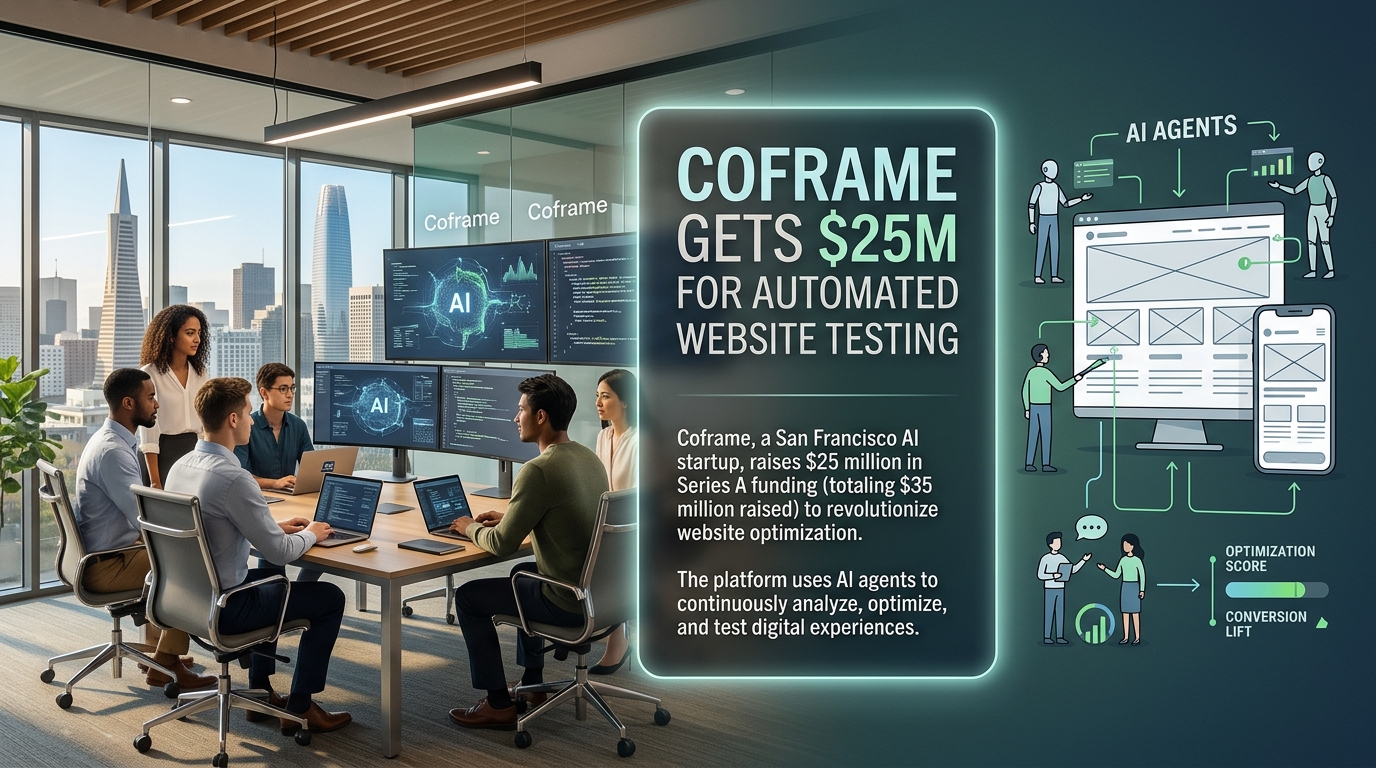
Coframe, a San Francisco AI startup, raised $25 million Series A to move website optimization from manual A/B testing to autonomous, continuous experimentation. The platform uses AI agents to generate variations, run tests, and deploy winners without human intervention in the traditional workflow of analysts, copywriters, designers, and developers.
Key Points:
- Claims over $300 million in incremental customer revenue and 20% average conversion improvements for clients including Dropbox and Cash App
- Automates the entire optimization cycle that typically requires coordinating multiple teams and waiting weeks between test iterations
- Total funding now stands at $35 million with backing from Khosla Ventures and Hanabi Capital
Why it matters: This represents the evolution from manual testing to autonomous optimization—AI agents running your conversion experiments 24/7. But those performance claims remain unverified. Before you hand over funnel control to AI, validate the results independently and understand what infrastructure needs to exist first. The 4% AI ROI stat below shows what happens when you skip that step.
🔗 Just 4% of Customer Service Leaders Hit Their Expected Automation Returns (17 minute read)

Gartner’s research delivers a reality check: only 4% of customer service leaders achieved their expected AI ROI, even as AI spending jumped 38%. Just 21% actually cut agent headcount, and 7% already started rehiring. Organizations rushed to automate before proving value or building the necessary data foundations.
Key Points:
- The failure pattern: cutting costs before validating AI’s value, neglecting critical data infrastructure and knowledge management systems
- Industry shifting from replacement narratives to accountability, requiring two-track customer experience strategies with both AI-led and human-led paths
- Success demands investing in infrastructure first—not headcount reduction targets
Why it matters: This is the counterweight to automation enthusiasm. Ninety-six percent failed because they automated before they had the infrastructure to support it. For funnel marketers considering AI-powered lead nurturing or chatbot deployment, the lesson is clear: your data quality, integration architecture, and measurement systems determine whether automation creates value or expensive chaos. Build the foundation before the features.
🔗 Why modern app marketing demands next-gen marketing mix modeling (4 minute read)
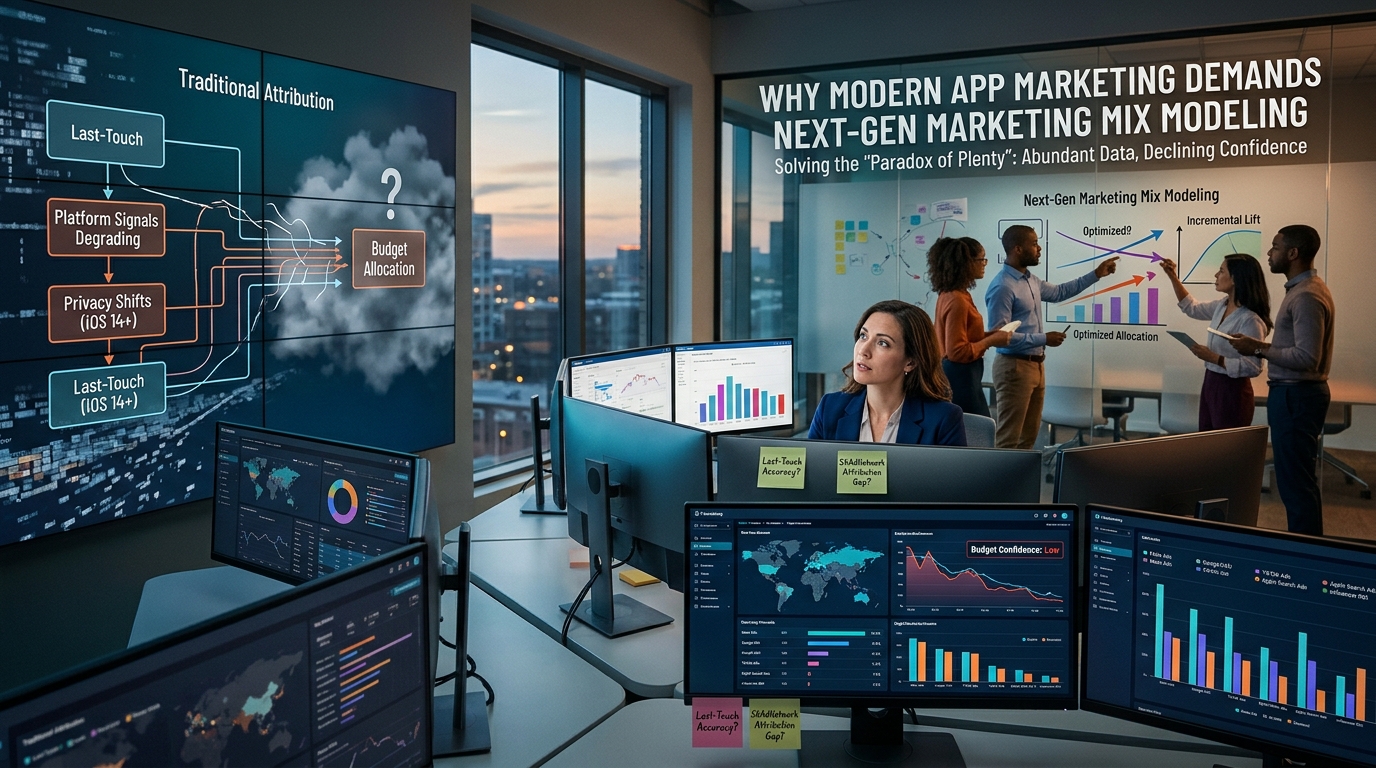
App marketers face a “paradox of plenty”—abundant data but declining confidence in budget decisions. Traditional last-touch attribution fails as privacy changes degrade platform signals, causing teams to overinvest in saturated channels while missing true growth drivers. The solution is methodology triangulation: combining marketing mix modeling for strategic oversight, attribution for tactical optimization, and incrementality testing for validation.
Key Points:
- Kochava’s AIM Essentials democratizes enterprise econometrics, enabling teams to deploy dynamic MMM models in one to two weeks without data science expertise
- Real-world deployments deliver 15-20% performance improvements by identifying over-attribution and eliminating wasted spend
- Three-layer measurement system provides the resilience needed when individual methodologies show conflicting signals
Why it matters: More data creates less confidence when your measurement system can’t reconcile conflicting signals. You need strategic oversight (MMM), tactical optimization (attribution), and validation (incrementality testing) working together. This isn’t about choosing one methodology—it’s about building a measurement system that actually guides budget decisions when privacy changes break your old attribution model. (Read more)
🎯 Why Google’s YouTube push matters for your search strategy
Google is strategically shifting from search-only to full-funnel, emphasizing YouTube, creator partnerships, and brand building. The reason: 68% of Google searches now end without clicks, making upper-funnel investment critical. New measurement tools including conversion studies and view-through optimization help prove YouTube’s ROI, but success requires abandoning siloed budgets and last-click attribution. (Read more)
🎯 Marketing Automation in 2027: What Dynamics Teams Should Prioritize
As marketing automation evolves, prioritize practical efficiency over feature complexity. AI should reduce repetitive work, not create additional processes. CRM integration must support actionable insights, not just data exchange. Customer journey automation should focus on meaningful behavioral triggers. Success comes from choosing technology that matches how teams actually work. (Read more)
🎯 Why Bank Growth Decisioning Needs AI: The Combinatorial Challenge
Banks face exponential complexity: millions of customers, multiple products, numerous channels create combinatorial challenges that rules-based systems can’t handle. AI-powered decision intelligence offers a closed-loop framework—observe customer context, decide on optimal actions using predictive modeling, act through channels, and learn from outcomes. The observe-decide-act-learn model applies directly to e-commerce funnel automation. (Read more)
“Only 4% of customer service leaders achieved their expected AI ROI. The culprit? Organizations rushed to cut costs before proving AI’s value, neglecting critical data and knowledge foundations.”
— Gartner Research, Customer Service & Support Leaders
What’s your biggest barrier to implementing AI in your funnel?
- A) Data quality and integration issues
- B) Lack of clear ROI measurement
- C) Team skills and training gaps
- D) Budget constraints
Conversion optimization is becoming a systems-design problem. The Coframe raise shows where automation is heading. The 4% AI ROI stat shows why most implementations fail. The gap is infrastructure—measurement systems that triangulate truth, data foundations that support intelligent decisions, and workflows that match how teams actually work.
Your next funnel upgrade isn’t a new tool. It’s the measurement layer that tells you which automation to trust, the data integration that makes AI useful instead of expensive, and the strategic framework that connects upper-funnel video to bottom-funnel conversions. Build that before you automate.
Stay systematic,
Funnel Marketing Systems Editor
📊 How did you like today’s email?
Originally published by Funnel Marketing Guy, your resource for funnel marketing, sales funnels, ClickFunnels, lead generation, conversion optimization, email marketing, marketing automation, and digital marketing strategies.
Continue your journey at https://www.funnelmarketingguy.com.
Enjoyed this issue?
Subscribe to get Funnel Marketing System delivered to your inbox every week.
Join 17 other subscribers • Free forever