
AI Search Is Reshaping Your Funnel—Here's Why
Your old playbook won't work when search engines start having conversations.
|
Welcome to Funnel Marketing System!
AI just killed 68% of your paid search traffic. If you’re still running campaigns structured around keywords instead of intent tiers, your CAC is about to explode.
- 🚨 Paid CTR collapsed from 19.7% to 6.34% in 9 months—here’s the campaign restructure
- 🤖 Why AI assistants are solving the wrong problem fast (and what’s missing)
- 🔗 TV advertising just became an automation trigger in your CRM
- 📊 The renewal audit: evaluate before you auto-renew your martech stack
- 💎 How luxury jewelry grew 144% on TikTok with zero ad budget
The Intent Resolution Gap
AI is disrupting every stage of your funnel—but not the way you think.
Google’s AI Overviews answer informational queries directly. ChatGPT solves customer problems without sending clicks. Your shopping assistant recommends products before understanding constraints. The pattern is clear: AI is getting faster at execution while skipping the critical step that determines whether it’s solving the right problem.
Intent resolution—capturing desired outcomes, constraints, and confidence levels before automation takes over—is the missing layer between customer need and AI action. Without it, you’re optimizing toward the wrong conversion. Your campaigns target keywords that no longer generate clicks. Your chatbot recommends products that don’t fit the actual use case. Your attribution model measures engagement that AI has already replaced.
The solution isn’t more automation. It’s better signals: tracking quality, intent resolution, and first-party data that tells you what customers actually want before you build the funnel to deliver it.
🔗 How AI Search Trends Are Changing Performance Marketing Campaign Structures (6 minute read)

Paid click-through rates on queries with Google AI Overviews collapsed from 19.70% to 6.34% between June 2024 and September 2025. AI answers informational queries directly, eliminating the click entirely. Traditional keyword-based campaign structures no longer work when the search engine solves the problem without sending traffic.
Key Points:
- Upper-funnel keywords are dead—AI Overviews handle informational queries without clicks
- Marketers must shift budgets toward high-intent transactional queries and alternative channels like paid social and YouTube
- Brand authority and AI citations now directly impact paid performance, not just organic visibility
- Campaign restructuring requires intent tiers, audience data, and organic authority instead of keyword matching
Why it matters: This isn’t a minor optimization—it’s a fundamental restructuring of how acquisition funnels work. If your campaigns are still built around broad keyword coverage, you’re paying for impressions that will never convert. The new model prioritizes transactional intent, alternative channels, and feeding your brand authority into AI systems that answer questions before customers click. (Read more)
🔗 Why Conversational Commerce Needs an Intent Layer Before More Automation (12 minute read)
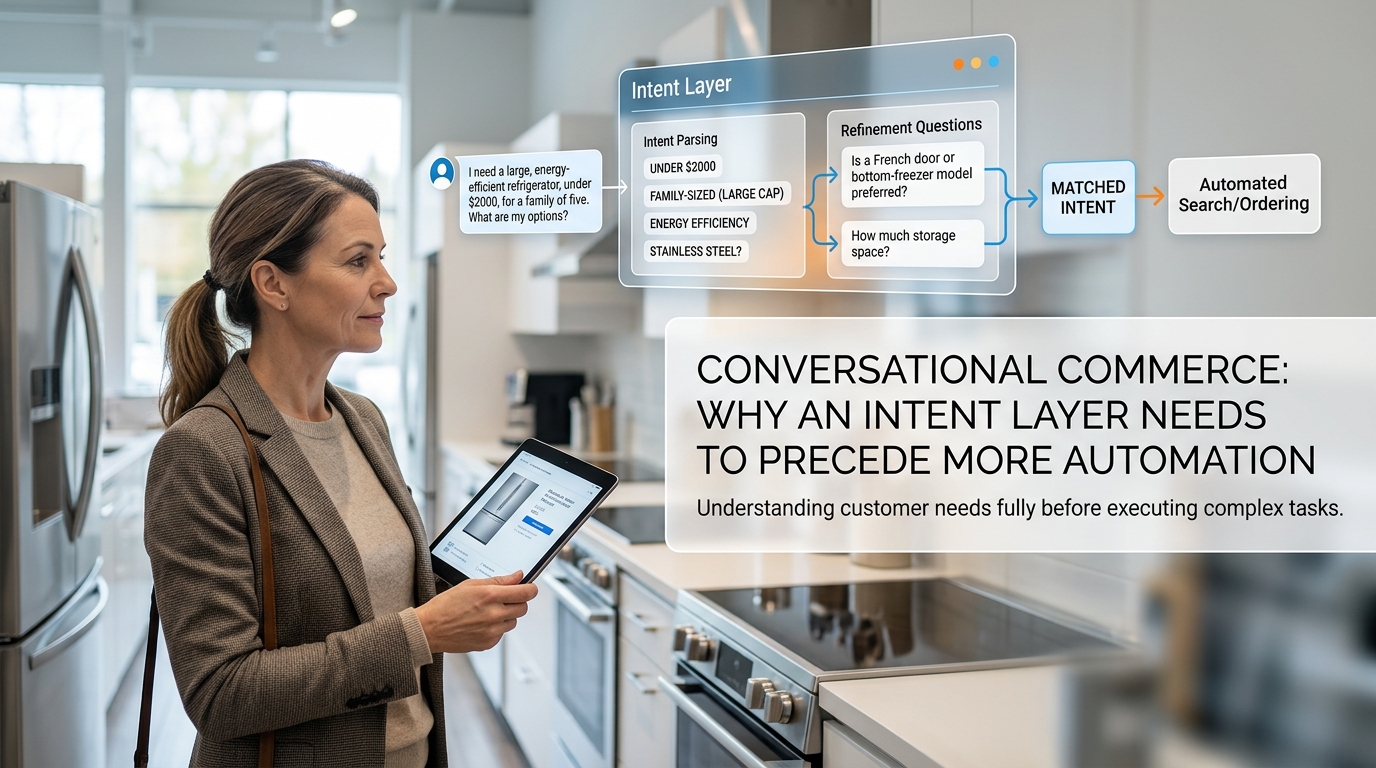
AI shopping assistants are getting smarter at understanding customer needs, but they’re skipping a critical step. When customers express complex requests—like finding a refrigerator under $2,000 that fits a 36-inch space and arrives by Saturday—AI systems often jump straight to recommendations without fully resolving intent.
Key Points:
- Google reports AI queries are three times longer than traditional searches, and 85% of consumers say AI improves shopping
- The missing piece is an intent layer that captures desired outcomes, constraints, and confidence levels before automation takes over
- CX teams must preserve this resolved context across channels to avoid solving the wrong problem fast
- Without intent resolution, AI optimizes toward speed instead of accuracy—recommending products that don’t actually fit the use case
Why it matters: Speed without accuracy destroys conversion rates. Your chatbot might respond in 2 seconds, but if it’s recommending products that don’t meet the customer’s actual constraints, you’ve automated the path to cart abandonment. The intent layer—capturing what success looks like, what’s non-negotiable, and how confident the customer is—needs to happen before you fire the recommendation engine. (Read more)
🔗 How B2B Marketing Teams Can Build AI Workflows Without Breaking Things (11 minute read)
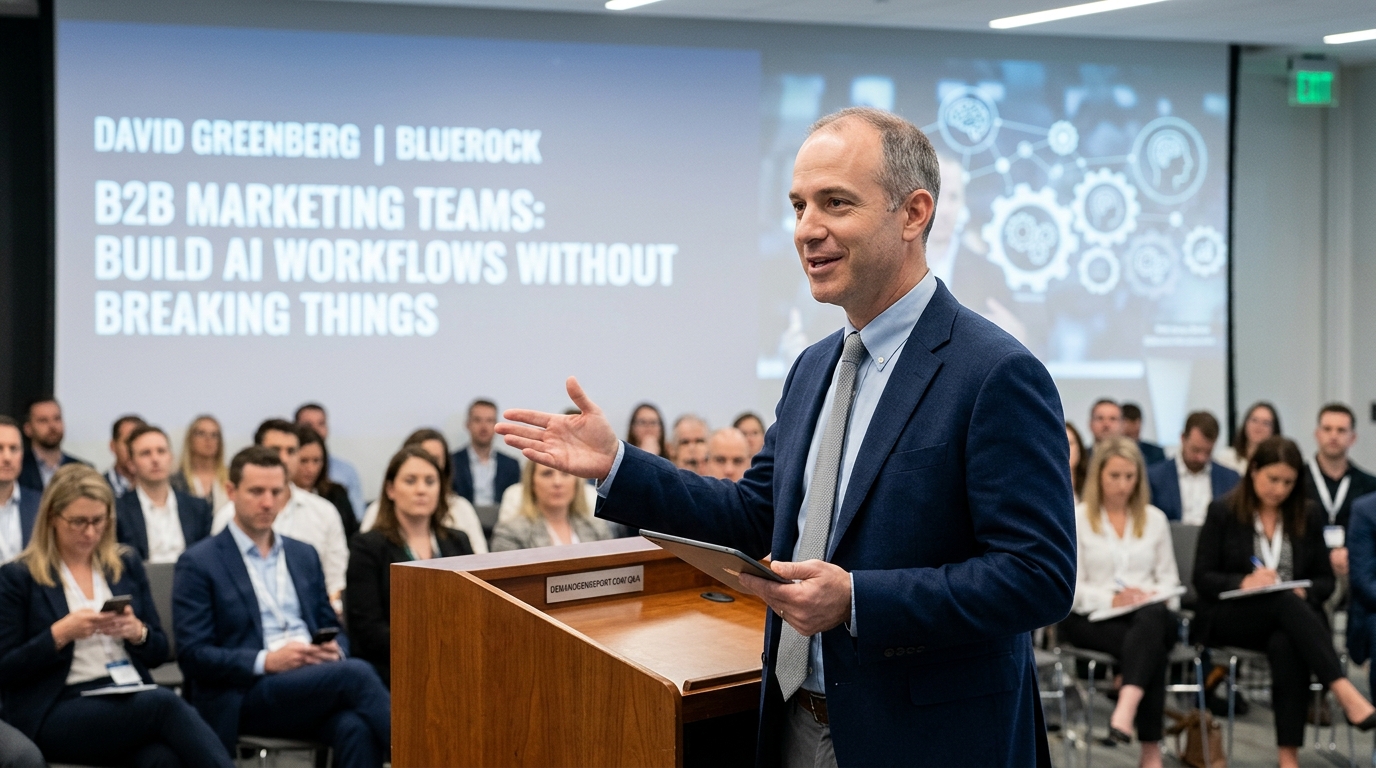
B2B marketers are becoming “citizen developers,” building AI workflows without engineering training—automating research, personalization, and prospect routing. However, this rapid transformation creates hidden risks. BlueRock CMO David Greenberg warns that experiments often become operational software with access to sensitive data and production systems without proper safeguards.
Key Points:
- Marketers are building AI workflows with access to production data, CRM systems, and customer information—without security reviews
- The key challenge: enable speed while preventing data breaches, brand inconsistency, and campaign failures
- Greenberg advocates for secure experimentation environments, real-time visibility into AI behavior, and clear operating boundaries
- Success requires treating AI adoption as responsible software development, not just tool implementation
Why it matters: Your team is moving fast, which is good. But if that speed means AI agents are accessing customer data, sending emails, and routing leads without guardrails, you’re one hallucination away from a compliance disaster. The solution isn’t approval-heavy processes that kill velocity—it’s secure experimentation environments where teams can build and test without production access, then promote to live systems only after validation. (Read more)
“AI is getting faster at execution while skipping the critical step that determines whether it’s solving the right problem.”
— Funnel Marketing Systems Editor
🎯 TV Advertising Just Became an Automation Trigger
Klaviyo and MNTN Performance TV launched an integration that bridges email and television marketing. Brands can now leverage TV ad exposure to automatically trigger personalized email and SMS campaigns, activate high-value audiences like repeat buyers and cart abandoners on Connected TV, and keep audiences synchronized across channels without manual rebuilding. This transforms TV from a conversation starter into an automation trigger within the customer journey. (Read more)
🎯 Luxury Jewelry Grew 144% on TikTok With Zero Ad Budget
British gemologist Sophie Whitelaw’s jewelry brand went viral documenting her engagement ring design on TikTok. Unlike lower-priced categories, luxury jewelry on TikTok functions as a trust-builder driving customers to her DTC site rather than direct checkout. The strategy is working: TikTok drives 45% of new inquiries, revenue grew 144% between 2025-2026, with 125% growth forecasted for 2027. Behind-the-scenes content demystifies an intimidating industry and proves high-value purchases can scale through organic social content alone. (Read more)
🎯 Paris Startup Uses AI to Find the Exact Churn Threshold
Actionable secured $10 million to build predictive customer experience platforms that identify which service elements drive churn and repurchase behavior. A case study with Ouigo railway revealed a 13-minute wait threshold triggering customer dissatisfaction, enabling targeted retention campaigns. Unlike generic LLMs, Actionable creates industry-specific models for transit, energy, and financial services, mapping raw data into actionable insights that shift teams from reactive to proactive customer service. (Read more)
🎯 The Renewal Audit: Evaluate Before You Auto-Renew
Marketing automation renewals shouldn’t be routine. Before renewing, evaluate what’s changed in your organization and technology. Consider whether your team actually needs platform complexity or if simpler solutions suffice. Calculate total cost of ownership beyond license fees. Review integration effectiveness, reporting usefulness, and marketer independence. Ask critical questions about feature utility rather than building feature checklists. Renewal is a strategic checkpoint—if you were choosing today, would you pick the same platform? (Read more)
🎯 Topic Clusters Are Your Authority Signal in AI Search
Topic clusters are interconnected groups of thematically related pages that boost SEO and AI search visibility. Each cluster features a pillar page providing broad topic overview, linked to multiple subpages covering specific subtopics. This structure builds topical authority, helping you rank higher in Google and appear in AI-generated answers on ChatGPT and Google AI Overviews. The five-step creation process involves choosing a core topic, researching keywords, identifying pillar and subpages, creating quality content, and measuring performance. (Read more)
🎯 Digiday Awards Signal Where Infrastructure Investment Is Heading
Digiday announced finalists for its 2026 Technology Awards, recognizing innovation across publishing, commerce, and advertising. Notable finalists include WordPress VIP for AI-ready CMS work, ShopMy for creator-led e-commerce discovery, and Google for privacy-compliant programmatic solutions. This year’s awards highlight industry priorities: AI-ready infrastructure, first-party data strategies, privacy compliance, and operational efficiency. The finalists demonstrate how technology is evolving beyond traditional functions—CMSs becoming AI discovery foundations, commerce platforms strengthening creator-consumer connections, and programmatic tools delivering business value without third-party cookies. (Read more)
What’s the biggest funnel disruption you’re facing right now?
- A) AI search killing upper-funnel traffic
- B) Attribution breaking down across channels
- C) Lead quality dropping despite volume increases
- D) Martech stack complexity vs. team capacity
The pattern across today’s stories is clear: better signals beat more automation.
AI search killed keyword-based campaigns, but the solution isn’t abandoning paid—it’s restructuring around transactional intent and alternative channels. Shopping assistants are fast, but they’re solving the wrong problem because they skip intent resolution. TV and CRM finally talk to each other, turning ad exposure into automated workflows. Before you renew your martech stack or add another tool, audit whether your current systems actually match team needs and business outcomes.
The next frontier isn’t more complexity—it’s channel integration, intent resolution, and first-party data quality that tells you what customers actually want before you build the funnel to deliver it.
Build systems that earn attention,
Funnel Marketing Systems Editor
📊 How did you like today’s email?
Originally published by Funnel Marketing Guy, your resource for funnel marketing, sales funnels, ClickFunnels, lead generation, conversion optimization, email marketing, marketing automation, and digital marketing strategies.
Continue your journey at https://www.funnelmarketingguy.com.
Enjoyed this issue?
Subscribe to get Funnel Marketing System delivered to your inbox every week.
Join 17 other subscribers • Free forever