
AI's Secret to Converting Browsers Into Buyers
Your funnel's broken because you're still thinking like a human marketer
|
Welcome to Funnel Marketing System!
Your funnel map is lying to you. AI assistants are curating shortlists you can’t see, 83% of customer interactions ignore your planned paths, and revenue growth is masking conversion leaks you haven’t diagnosed. This week: where funnels break, how they’re changing, and what works now.
- 🤖 The invisible shelf—AI assistants curate product discovery before customers reach your funnel
- 🗺️ Why 83% of mortgage interactions ignored the planned journey (and what that means for your maps)
- ⚡ AI automation that closes deals, not just qualifies leads
- 📊 Full-funnel integration: connecting brand awareness to post-conversion economics
- 🔍 Hidden profit leaks in e-commerce that mirror funnel conversion inefficiency
The New Top-of-Funnel Reality
Your SEO strategy and paid ads now compete with something you can’t fully see or control: AI assistants curating shortlists before prospects ever visit your site.
IBM research reveals 45% of consumers now use AI during buying journeys, with McKinsey reporting half of US consumers intentionally using AI-powered search. The challenge isn’t just ranking—it’s making your product easy for AI to understand, recommend, and verify. Structured data, consistent information across channels, and verifiable claims are no longer technical nice-to-haves. They’re conversion prerequisites.
The companies winning on this “invisible shelf” aren’t optimizing for human readers alone. They’re aligning facts across every touchpoint so AI can confidently include them in generated recommendations. If your product gets excluded from AI-curated shortlists, you never enter the funnel at all.
🔗 The invisible shelf: Winning a place on the AI-curated shortlist (10 minute read)

AI is reshaping product discovery through what IBM calls the “invisible shelf”—a hidden layer where AI assistants curate recommendations that determine which products customers see before they reach your website. Companies cannot fully control or even see why their products are included or excluded from these AI-generated shortlists, fundamentally changing how top-of-funnel works.
Key Points:
- 45% of consumers use AI during buying journeys, with McKinsey reporting half of US consumers intentionally using AI-powered search
- Success requires structured data, consistent cross-channel information, and verifiable claims that AI can parse and trust
- Companies must align facts across all channels and ensure operational excellence to earn consideration before customers visit their sites
Why it matters: This is the new top-of-funnel reality. Your carefully optimized landing pages and paid search campaigns are now competing with AI assistants curating shortlists you can’t see. Structured data and verifiable authority aren’t technical tasks—they’re conversion prerequisites. If AI excludes you from its recommendations, you never enter the funnel at all. (Read more)
🔗 The Customer Journey Illusion: Stop Mapping and Start Enabling (11 minute read)
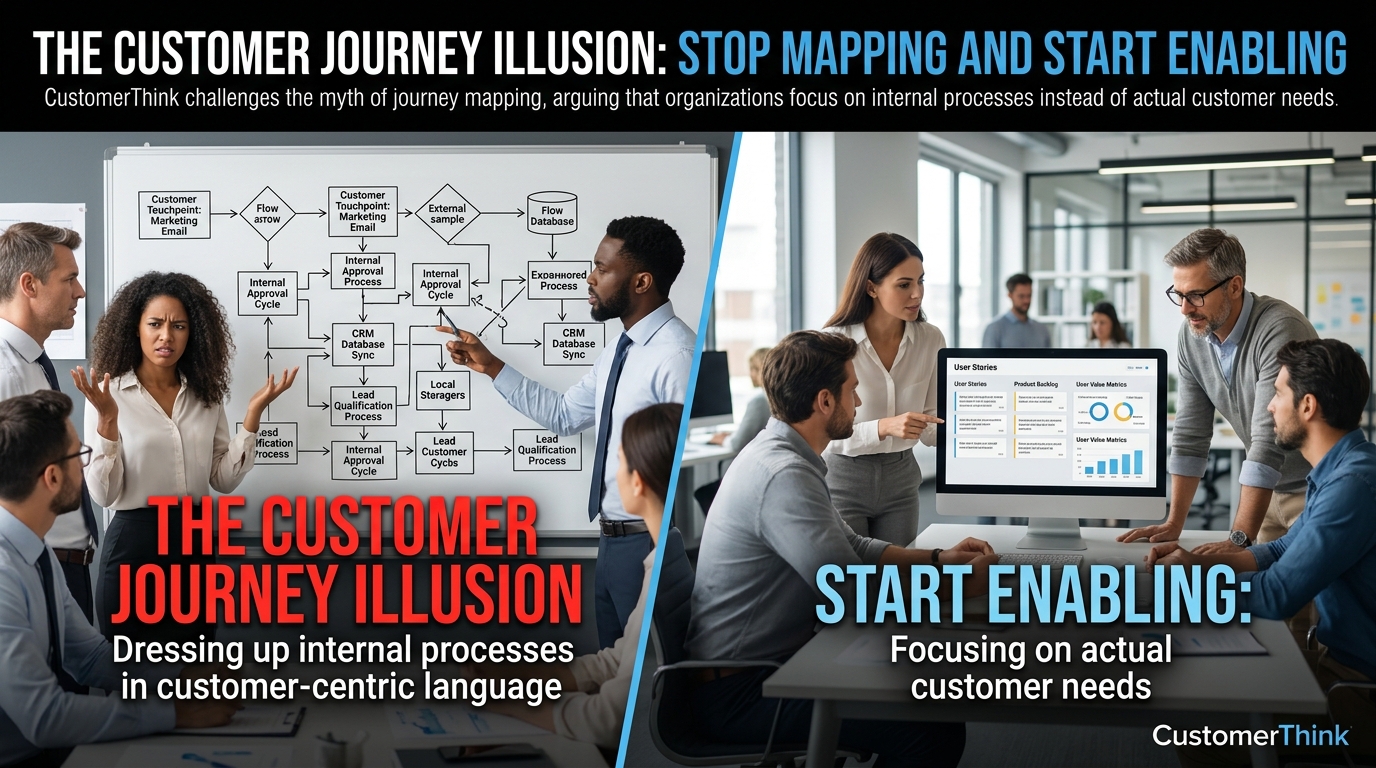
A UK retail bank discovered that only one-sixth of mortgage-related interactions followed their carefully designed customer journey pathway. Five-sixths involved unrelated support requests the bank dismissed as costs rather than recognizing as actual customer needs. The article argues that most journey maps simply dress up internal processes in customer-centric language while forcing customers onto inflexible tracks disconnected from reality.
Key Points:
- Only 17% of interactions followed the intended mortgage pathway—83% involved dynamic customer needs the rigid journey map couldn’t accommodate
- Organizations assume static customer behavior and create predetermined pathways, then blame customers for deviating from them
- Real customers constantly replan based on changing circumstances; true enablement requires dynamic adaptation, not adherence to fixed maps
Why it matters: Your funnel map is lying to you. If 83% of interactions don’t follow your planned journey, you’re optimizing for the minority while ignoring the majority. This isn’t about customers being “difficult”—it’s about rigid journey design failing to match dynamic reality. The fix isn’t better mapping; it’s building systems that adapt to actual customer behavior in real-time rather than forcing prospects onto predetermined tracks. (Read more)
🔗 Plurio: AI-Powered Performance Marketing Automation That Actually Works (9 minute read)
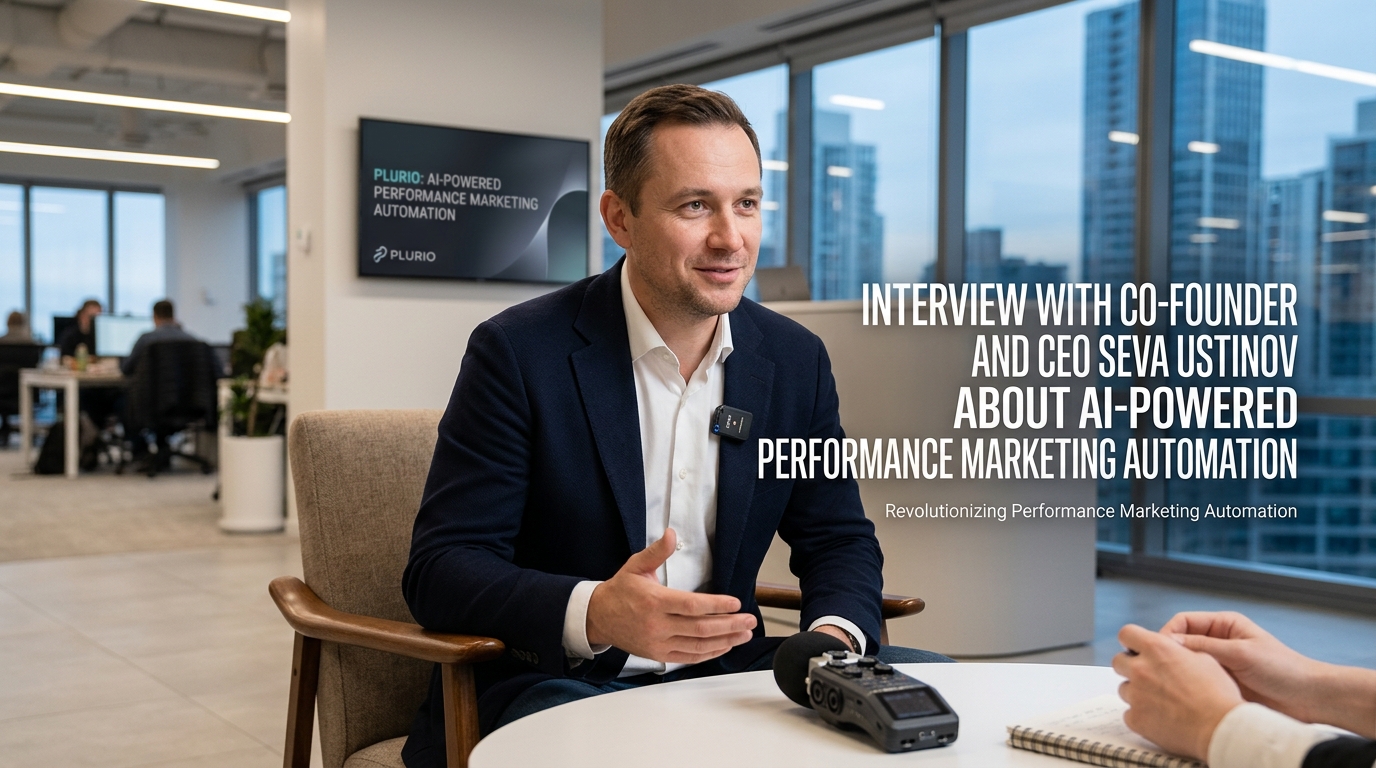
Plurio built an AI agent that automates up to 90% of marketing specialists’ workflows across Meta, Google, and TikTok for teams managing $500K+ monthly ad spend. The platform analyzes performance, forecasts outcomes, and executes approved changes autonomously. With $4.5M in funding and $500M in client ad spend under management, Plurio demonstrates 100% pilot retention, 2x sales growth, and 20% lower customer acquisition costs.
Key Points:
- Automates 90% of performance marketing workflows for teams spending $500K+ monthly across multiple ad platforms
- 100% pilot retention rate with measurable outcomes: 2x sales growth and 20% lower CAC for clients
- Represents evolution from drip campaigns and basic automation to autonomous optimization across channels
Why it matters: This is marketing automation’s next phase—not scheduling emails, but autonomous optimization across your entire paid acquisition stack. The $500K monthly spend threshold signals this is built for serious growth teams, not startups testing channels. 100% pilot retention and 20% CAC reduction aren’t marketing claims—they’re operational proof that AI agents can now handle the tactical execution freeing your team to focus on strategy and creative. (Read more)
🎯 Close O Matic’s AI Sales Closer: From Conversation to Transaction
Close O Matic’s Step Six reveals how their AI sales agent Closora converts conversations into closed deals by eliminating four purchase barriers: affordability, decision-making authority, trust, and product understanding. Rather than waiting for explicit buyer agreement, Closora assumes the sale once initial objectives are met, recognizes smoke-screen objections versus genuine resistance, and proactively closes multiple times while addressing concerns. This shifts sales automation from qualification to actual transaction completion. (Read more)
🎯 Gold Coast Agency Scales Lead Gen from Trades to Luxury Property
Stacy Potts’ Scale Daily Group has driven over $200 million in customer sales by mastering lead generation, CRM systems, and sales automation across plumbing, electrical, and construction sectors. Now expanding into luxury property development, the agency demonstrates how funnel principles scale across price points. Their outcome-based pricing model charges fees based on measurable commercial results rather than activity metrics, aligning agency success directly with client growth. (Read more)
🎯 Pitch CMO Summit Tackles Brand vs. Performance False Choice
The Pitch CMO Summit 2026 features a panel titled “Bridging Brand and Performance: The New Full-Funnel Playbook” with CMOs from MTR Foods, Casagrand, LinkedIn, Schneider Electric, and Licious. They’ll explore integrating brand-building with performance marketing to create cohesive consumer journeys, addressing the tension between long-term brand value and short-term measurable outcomes. The discussion validates what operators already know: brand versus performance is a false choice when you build full-funnel systems. (Read more)
🎯 South Africa’s E-Commerce Profit Crisis Mirrors Funnel Leak Diagnosis
South African e-commerce merchants generate R130-billion in annual turnover with 20% growth, but profit margins are shrinking due to hidden fulfillment costs—not marketing spend. The real drain occurs in last-mile delivery (53% of logistics expenses), failed deliveries, reverse logistics, and unaudited billing errors. This mirrors how marketers obsess over CAC while ignoring MQL-to-SQL drop-off, failed sales handoffs, and unaudited attribution. Revenue growth masks conversion inefficiency until you diagnose where value actually leaks. (Read more)
“The customer journey is not a map we draw. It’s a reality customers live. Our job is to enable their journey, not force them onto ours.”
— CustomerThink Analysis
Which funnel stage needs your attention most right now?
- A) Top-of-funnel: getting found by AI assistants and search
- B) Mid-funnel: qualifying and nurturing leads effectively
- C) Bottom-funnel: converting qualified leads to customers
- D) Post-conversion: retention, expansion, and referrals
This week’s research reveals three critical shifts reshaping how funnels actually work: AI assistants curating discovery before prospects reach you, customer behavior ignoring your carefully mapped journeys, and automation evolving from scheduled workflows to autonomous agents that close deals.
The common thread is dynamic reality versus static planning. Your funnel map assumes customers follow predetermined paths, but 83% don’t. Your SEO strategy assumes customers start at Google, but 45% now start with AI assistants you can’t directly optimize for. Your automation sends scheduled emails, but the winning teams deploy agents that adapt in real-time. The gap between your plan and customer reality is where conversion leaks.
Keep building systems that adapt,
Funnel Marketing Systems Editor
📊 How did you like today’s email?
Originally published by Funnel Marketing Guy, your resource for funnel marketing, sales funnels, ClickFunnels, lead generation, conversion optimization, email marketing, marketing automation, and digital marketing strategies.
Continue your journey at https://www.funnelmarketingguy.com.
Enjoyed this issue?
Subscribe to get Funnel Marketing System delivered to your inbox every week.
Join 17 other subscribers • Free forever