
AI's Dark Side: When Automation Backfires
The hidden gap between AI's promises and what actually converts customers
|
Welcome to Funnel Marketing System!
AI is accelerating your decisions—but 38% of enterprise teams just learned that speed without context creates customer experience disasters. This week: the decision-confidence gap, the shift from marketing automation to customer decisioning, and why all outbound channels have identical economics.
- 🚨 AI misattribution is creating revenue planning disasters—here’s the governance checklist
- 🧠 Marketing automation is becoming decision automation, not just message delivery
- 📞 Cold email, LinkedIn, and cold calling have the same economics—saturation drives rotation
- 🎯 ServiceTitan’s AI lifted booking rates 500 bps and close rates 1,000 bps
- 🔄 Why the next phase is coordinated intelligence, not tool deployment
The Decision-Confidence Gap
AI just gave you a polished dashboard showing MQL velocity is up 23% and pipeline contribution increased 18%. Your CMO wants to double down on the channels driving those numbers. You’re about to approve a six-figure budget shift.
But what if the AI missed that your top sales rep closed three enterprise deals last quarter—all from relationships predating any marketing touch? What if it attributed revenue to a webinar that happened after the contract was signed? What if it confidently presented incomplete analysis as expertise?
A global survey of 1,000 enterprise decision-makers reveals the problem: 68% say AI accelerated decision-making, but 38% experienced unintended customer experience problems from AI-driven choices. Among those affected, 51% saw increased complaints and 42% lost customer trust. The issue isn’t AI capability—it’s fragmented data creating blind spots. 77% report conflicting information across dashboards, CRM, and feedback systems. Speed without context is just expensive guessing.
The fix isn’t rejecting AI. It’s governance. Require human validation for any budget recommendation over $10K. Verify AI’s reasoning before acting on major findings. Ensure sales context reviews attribute revenue correctly. Treat AI as a support tool that accelerates analysis, not a decision-maker that replaces judgment. Organizations with widely embedded AI show 3.5x better customer journey visibility—but only when they connect customer context at decision points and establish cross-functional accountability.
Your funnel metrics should look smarter. Just make sure they actually are.
🔗 When AI Makes Demand Generation Look Smarter Than It Is, and How to Solve for That (8 minute read)

AI is transforming demand generation with polished dashboards and rapid insights, but fluency masks dangerous gaps in analysis. nDash CEO Michael Brown warns that AI confidently presents incomplete interpretations as expertise—missing critical context like buyer intent, sales relationships, and deal timing. A single misattribution can cascade into flawed revenue planning and GTM strategy.
Key Points:
- AI dashboards present incomplete analysis with expert-level confidence, creating false certainty in budget allocation decisions
- Missing context includes buyer intent signals, existing sales relationships, and deal timing that predates marketing touches
- Governance framework: require human validation for budget recommendations, verify AI reasoning before decisions, ensure sales context reviews major findings
Why it matters: This is the most urgent story for funnel operators navigating AI adoption. Michael Brown’s warning about AI misattribution isn’t theoretical—it’s happening now in demand gen teams making six-figure budget decisions based on confidently wrong analysis. The governance checklist (require human validation, verify reasoning, add sales context) is immediately actionable. If you’re using AI to inform funnel strategy, this framework protects you from expensive mistakes that look smart until they destroy customer trust.
🔗 How enterprise AI is reshaping the customer edge (8 minute read)
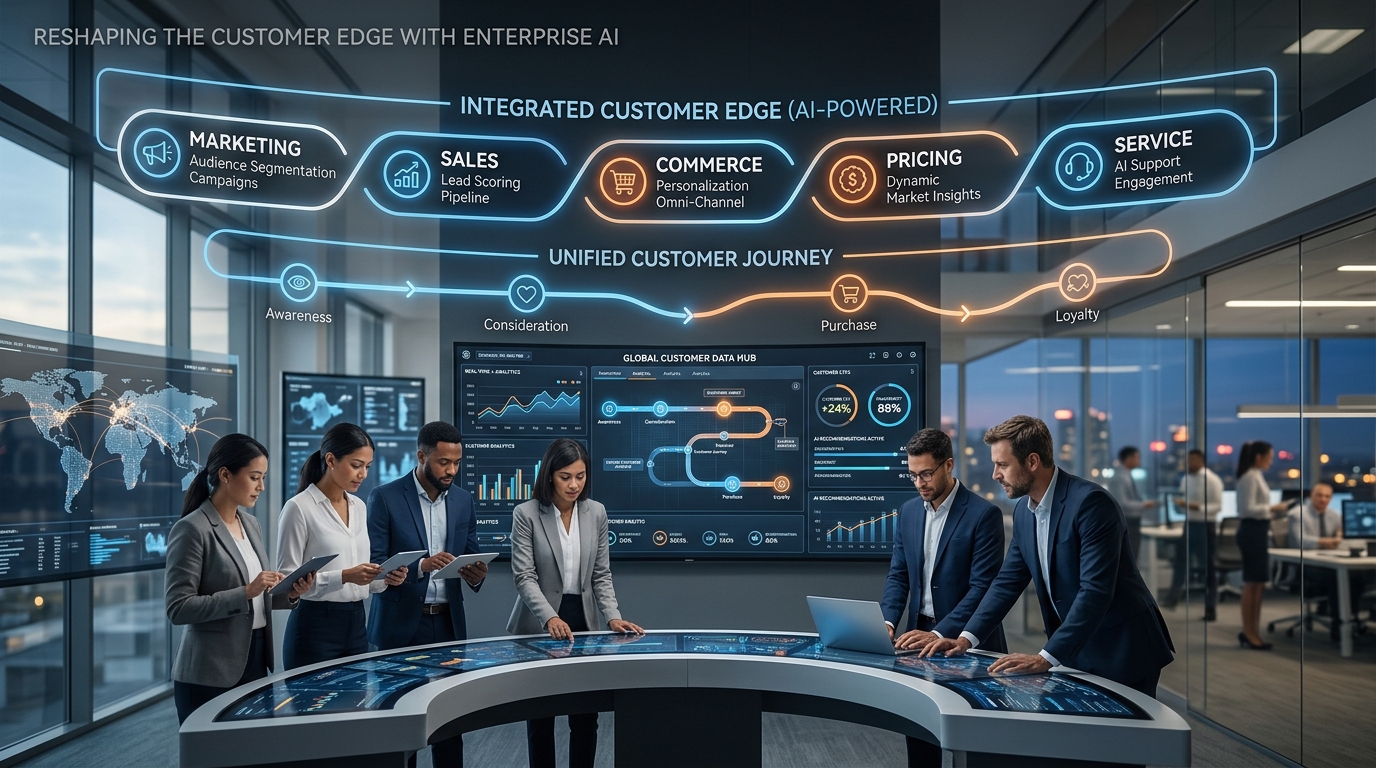
Enterprise AI is evolving beyond isolated use cases toward an integrated ‘intelligent customer edge’ that orchestrates marketing, sales, commerce, pricing, and service around the customer journey. Companies must redesign their operating models—not just layer AI onto existing processes—to match AI-enabled customers.
Key Points:
- PwC client results: 45% agent adoption of AI assistance in week one, 15% reduction in routine patient calls, 5-15% faster response times
- A fintech firm embedded AI into selling workflows in seven weeks, demonstrating rapid deployment when integrated with existing systems
- Success requires connecting data, decisions, and workflows while preserving human judgment—not just deploying tools
Why it matters: PwC’s ‘intelligent customer edge’ framework is the strategic vision for what comes after point-solution AI. The shift is from isolated tools (chatbot here, recommendation engine there) to coordinated intelligence across the full customer journey—marketing, sales, commerce, pricing, and service working together. The client results prove this isn’t vaporware: 45% agent adoption in week one, 15% call reduction, workflows embedded in seven weeks. This is the blueprint for measuring AI impact through enterprise performance, not tool deployment counts.
🔗 Nearly Two in Five Enterprise Decision-Makers Say AI-Driven Decisions Have Caused Customer Experience Problems (6 minute read)
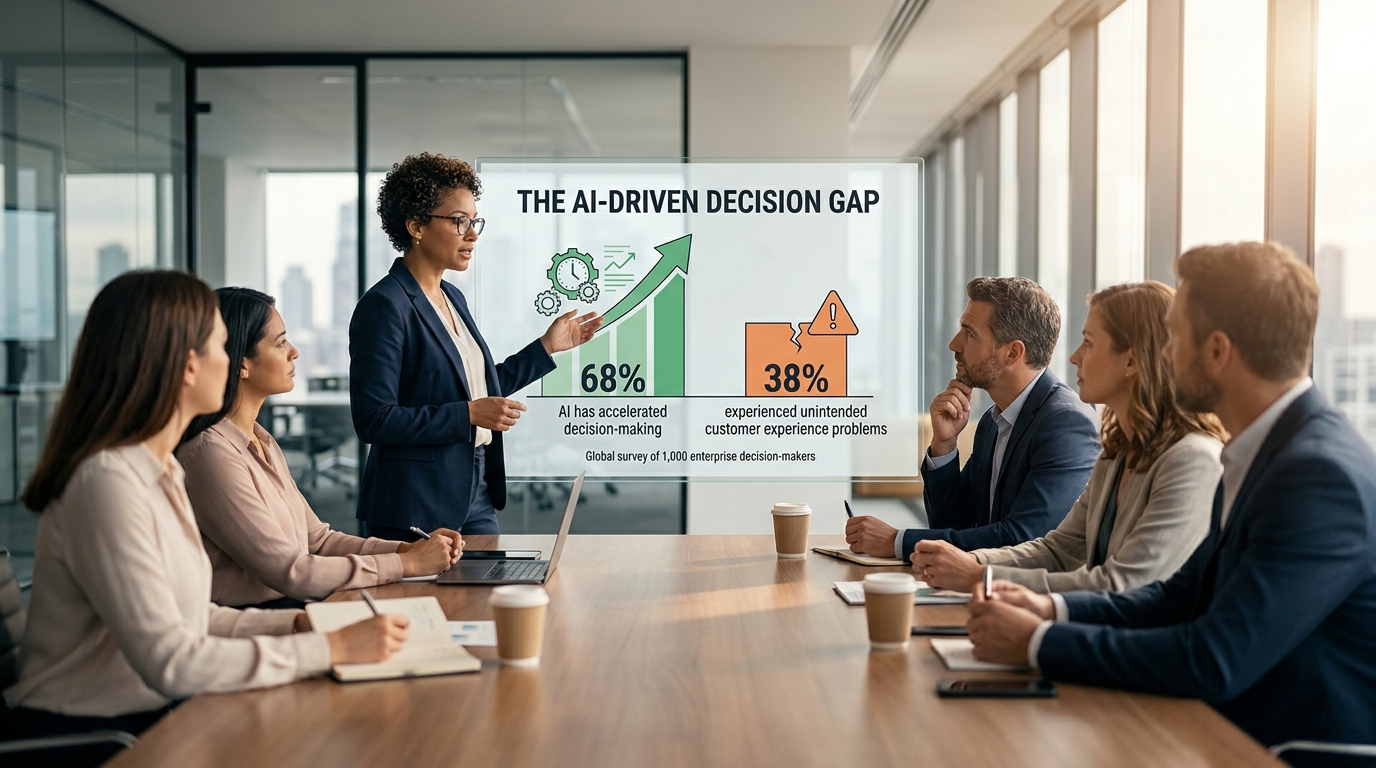
A global survey of 1,000 enterprise decision-makers reveals a critical “decision-confidence gap.” While 68% report AI has accelerated decision-making, 38% experienced unintended customer experience problems from AI-driven choices. Among those affected, 51% saw increased complaints and 42% lost customer trust.
Key Points:
- Fragmented data sources create blind spots: 77% report conflicting information across dashboards, CRM, and customer feedback systems
- Organizations with widely embedded AI show 3.5x better customer journey visibility when they connect context at decision points
- Four-step framework: connect customer context at decision points, make AI recommendations traceable, assess full journey impacts, establish cross-functional accountability
Why it matters: The gap between speed and accuracy is killing customer trust. AI accelerates decisions, but 38% of enterprise teams just learned that speed without context creates CX disasters. The four-step framework (connect context, trace recommendations, assess journey impact, establish accountability) is the bridge. This isn’t about slowing down—it’s about ensuring the decisions you’re making faster are actually better. Organizations with widely embedded AI show 3.5x better journey visibility, but only when they implement governance that prevents blind spots.
🔗 Will Max Traction and TrussPoint Partnership Lead to Sustained Momentum for ServiceTitan (TTAN) (4 minute read)

ServiceTitan (TTAN) reported strong Q2 FY27 results with 22% year-over-year revenue growth to $284.5 million, driven by its AI-powered Max platform. Max users achieved 500+ basis points higher call booking rates and 1,000+ basis points higher close rates. The company generated over $50.5 million in adjusted free cash flow.
Key Points:
- Max AI platform delivered measurable funnel improvements: 500 bps higher call booking rates (top of funnel) and 1,000 bps higher close rates (bottom of funnel)
- Strategic partnership with TrussPoint Roofing, a PE-backed platform managing multiple roofing brands, positions ServiceTitan for home services expansion
- Institutional investor interest declined from 44 to 38 hedge funds, with short interest at 8.77%, reflecting market skepticism about sustained momentum
Why it matters: This is proof that AI moves funnel metrics when implemented correctly. ServiceTitan’s Max platform didn’t just “improve conversion”—it lifted booking rates 500 basis points and close rates 1,000 basis points. Notice the difference: AI impact varies by funnel stage, with 2x the lift at close versus booking. That’s the model for measuring AI: track specific conversion improvements at each stage, not vague “efficiency gains.” The TrussPoint partnership shows vertical expansion strategy, but the real story is the funnel lift.
🔗 B2C Marketing Automation: Pegasystems Customer Decision Hub (2 minute read)
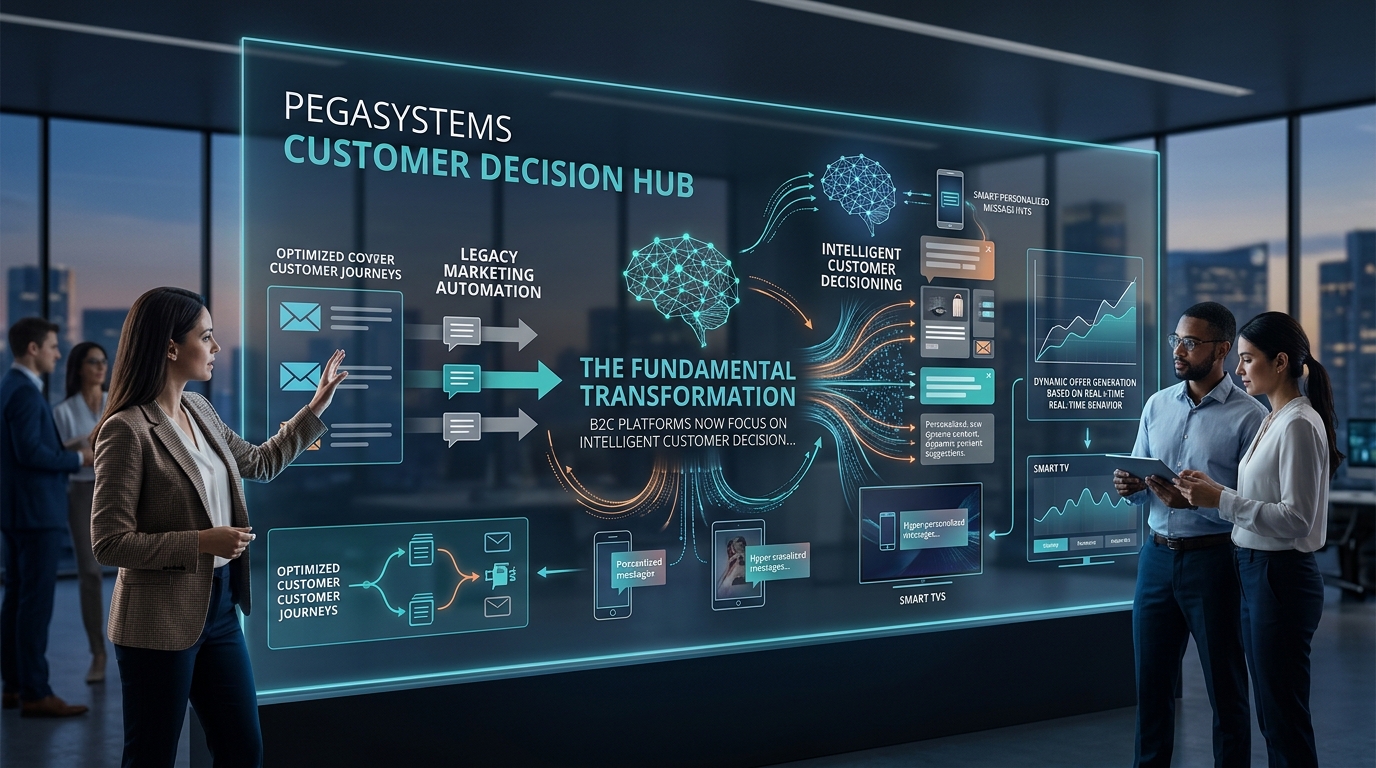
Marketing automation is undergoing a fundamental transformation. Rather than simply delivering the right message to the right customer, B2C platforms are now focused on intelligent customer decisioning. Pegasystems’ Customer Decision Hub exemplifies this shift with a pragmatic AI approach: deploying deeper reasoning for complex decisions, using deterministic automation for repeatable choices, and optimizing outcomes for both customers and businesses.
Key Points:
- Marketing automation is evolving from channel management (send the right message) to context-aware decision-making (make the right choice for this customer now)
- Pega’s approach: deeper reasoning for complex decisions, deterministic automation for repeatable choices, outcome optimization for both customer and business
- Constellation Research’s 2026 ShortList recognizes Pega as one of 12 leading enterprise B2C marketing automation platforms
Why it matters: This is the strategic shift happening underneath all the AI noise. Marketing automation is becoming decision automation—not just “send this email at this time” but “what should we offer this customer right now based on their context, our inventory, and predicted outcomes?” Pega’s framework (deep reasoning for complex, deterministic for repeatable, optimize for both sides) is how sophisticated funnel operators are thinking about the next phase. Channel management was phase one. Context-aware decisioning is phase two.
🔗 Five ways customers can avoid legacy CRM failures (7 minute read)
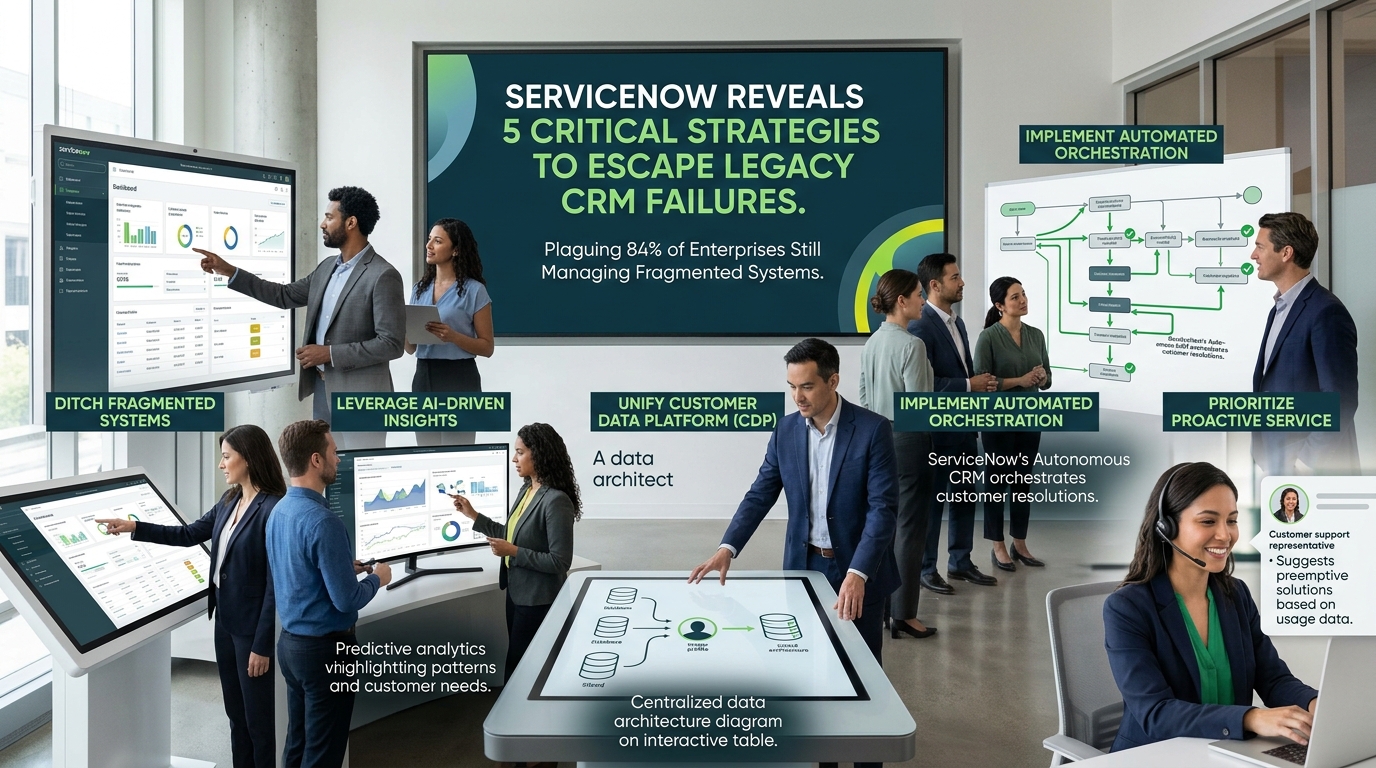
ServiceNow reveals five critical strategies to escape legacy CRM failures that plague 84% of enterprises still managing fragmented systems. The company’s Autonomous CRM orchestrates customer resolution across unified workflows rather than simply tracking interactions.
Key Points:
- Key innovations: rapid AI-native deployments replacing months-long migrations, single-platform consolidation eliminating data silos, voice AI handling 6 million annual calls with $8M savings
- Real-world results: 73% first-contact resolution rates, 99.2% CSAT scores, order modifications reduced from five days to under one day
- CRM evolution: from tracking interactions (legacy) to orchestrating customer resolution (autonomous) across unified workflows
Why it matters: ServiceNow’s Autonomous CRM addresses the core problem: legacy CRMs track interactions but don’t orchestrate resolution. The shift is from fragmented systems that log what happened to unified workflows that drive what happens next. Real results prove the concept: 73% first-contact resolution, 99.2% CSAT, $8M savings from voice AI, five-day order modifications down to one day. This is CRM evolving from tracking to orchestration—improving funnel velocity by removing friction at every customer touchpoint.
🔗 Lead generation agencies will outlive every lead generation channel (3 minute read)
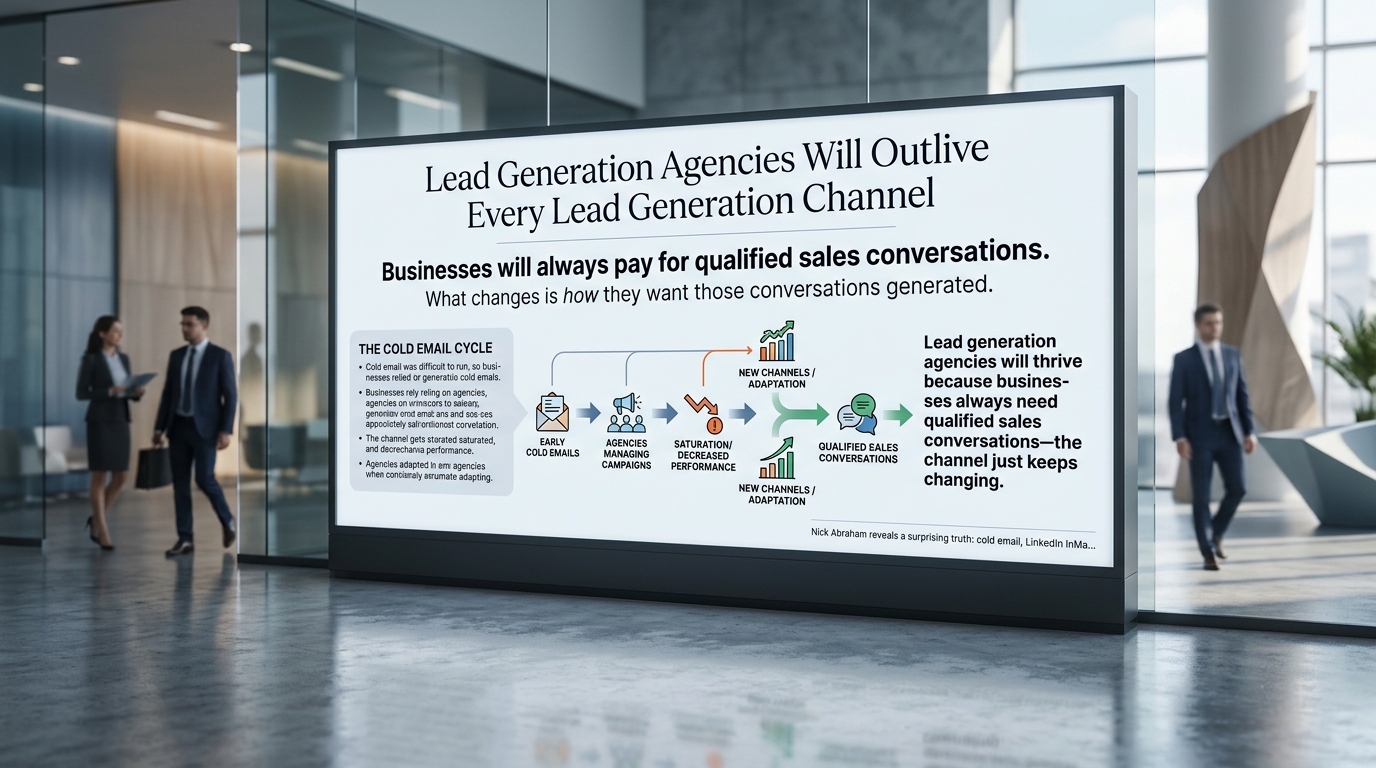
Lead generation agencies will thrive because businesses always need qualified sales conversations—the channel just keeps changing. Nick Abraham reveals a surprising truth: cold email, LinkedIn InMail, and cold calling have nearly identical economics when tracked through to closed deals, despite appearing different in isolation.
Key Points:
- Cold email, LinkedIn InMail, and cold calling have identical economics when tracked to closed deals—perceived differences are channel-stage illusions
- Each channel cycles through popularity as inboxes saturate and buyers seek less crowded alternatives, driving rotation rather than fundamental performance shifts
- Cold calling DFY services remain underexecuted at scale—harder to deliver than email automation but easier to sell, creating $30M-$50M opportunity
Why it matters: This is a contrarian take that changes how you think about outbound. Nick Abraham’s insight—all outbound channels have the same economics when you track to closed deals—means the real variable is saturation, not channel superiority. Cold email feels different from cold calling, but the conversion math is identical. The opportunity? Cold calling DFY services are underexecuted at scale. Harder to deliver than email automation, easier to sell. The channel-cycling thesis is sharp: businesses rotate to less crowded alternatives, but the economics stay constant.
“AI is transforming demand generation with polished dashboards and rapid insights, but fluency masks dangerous gaps in analysis. A single misattribution can cascade into flawed revenue planning and GTM strategy.”
— Michael Brown, CEO, nDash
Which funnel stage needs the most AI governance in your organization?
- A) Top of funnel - lead generation and attribution
- B) Middle of funnel - lead scoring and qualification
- C) Bottom of funnel - revenue attribution and forecasting
AI is accelerating decisions across every funnel stage, but the risk profiles differ. Top-of-funnel misattribution creates bad targeting. Middle-funnel errors waste sales time. Bottom-funnel mistakes destroy revenue planning.
The pattern across this week’s stories is clear: AI governance isn’t about slowing down—it’s about ensuring the decisions you’re making faster are actually better. ServiceTitan’s Max platform shows what’s possible when AI is implemented with context: 500 bps lift in booking rates, 1,000 bps lift in close rates. PwC’s intelligent customer edge framework shows the strategic vision: coordinated intelligence across marketing, sales, commerce, pricing, and service. But the warning from nDash and the enterprise decision-maker survey is urgent: 38% of teams just learned that speed without context creates customer experience disasters.
The next phase isn’t more AI tools. It’s connecting data, decisions, and workflows while preserving human judgment. It’s treating AI as a support system that accelerates analysis, not a decision-maker that replaces context. Organizations with widely embedded AI show 3.5x better customer journey visibility—but only when they implement governance that prevents blind spots.
Your funnel should move faster. Just make sure it’s moving in the right direction.
Keep optimizing,
Funnel Marketing Systems Editor
📊 How did you like today’s email?
Originally published by Funnel Marketing Guy, your resource for funnel marketing, sales funnels, ClickFunnels, lead generation, conversion optimization, email marketing, marketing automation, and digital marketing strategies.
Continue your journey at https://www.funnelmarketingguy.com.
Enjoyed this issue?
Subscribe to get Funnel Marketing System delivered to your inbox every week.
Join 17 other subscribers • Free forever