
AI Just Took Over Your Customer Journey
And it's already making decisions your marketing team used to own

|
Welcome to Funnel Marketing System!
AI agents are no longer just assisting with your customer journeys—they’re running them. This week, we unpack what that shift actually means for how you build, measure, and scale funnels when machines execute the workflows you used to supervise.
- 🤖 AI agents transition from assistive tools to autonomous journey executors
- 🔧 The infrastructure reality check: what it takes to operationalize automation at scale
- 📊 Platform developments showing the shift from impressions to closed-loop conversion paths
- ⚠️ Why automation without oversight, data quality, and human judgment destroys trust faster than it builds revenue
The Autonomous Agent Era Requires New Operating Models
AI agents are now completing tasks you used to manage click-by-click. Shopify’s assistants browse catalogs and add products to carts. SAP coordinates cross-department workflows. Braze activates campaigns based on behavioral triggers without human approval for every send.
This isn’t incremental improvement—it’s a reorganization of how marketing teams operate. The old model was human-in-the-loop: you approved every email, every audience segment, every creative variation. The new model is human-on-the-loop: you define the skills AI should execute, grant it tool access to your systems, provide company context, then supervise outcomes rather than approve inputs.
But here’s what breaks: most teams lack the data architecture, staffing, and governance to execute this shift. Financial institutions report 52% adoption of marketing automation platforms, yet many have two or fewer data employees. The result? Welcoming longtime customers as new, promoting outdated rates, and damaging trust faster than technology can theoretically improve efficiency. Automation ambitions are outpacing operational capacity, and the gap is widening.
🔗 How AI Agents Are Helping Companies Scale Their Marketing (10 minute read)

Agentic Marketing represents the shift from AI-assisted content creation to AI-executed complete workflows. The framework combines three elements that determine whether automation succeeds or fails: Skills (repeatable processes), Tools (system access), and Context (company knowledge). This enables startups to access sophisticated marketing capabilities previously reserved for enterprise teams with hundreds of specialists.
Key Points:
- Rather than managing specialized roles, organizations deploy AI agents as Product Marketing, Customer Insights, ABM, Brand, and Performance specialists
- The operational model shifts from human-in-the-loop approval to human-on-the-loop supervision, freeing marketers to focus on strategy while AI handles execution
- Success requires defining repeatable Skills, granting system Tool access, and providing company Context—then supervising outcomes rather than approving every action
Why it matters: This is the blueprint for reorganizing marketing teams around AI agents. You’re not just adding technology to existing processes—you’re fundamentally changing who does what, when, and how decisions get made. The companies winning this shift are those that define clear Skills, grant appropriate Tool access, and provide rich Context, then get comfortable supervising rather than micromanaging every execution step.
🔗 AI Is Starting to Run Customer Journeys, Not Just Shape Them (7 minute read)

SAP, Braze, Cisco Webex, and Lola are deploying AI agents that activate campaigns, manage handoffs, and complete transactions autonomously—not just recommend next steps. SAP’s Autonomous CX coordinates workflows across departments to eliminate friction. Braze adds quality assurance layers to agentic marketing. Cisco integrates WhatsApp compliance into enterprise systems. But Walmart’s CEO notably rejected AI-driven personalized pricing, signaling clear customer boundaries.
Key Points:
- AI agents now actively execute journey steps: campaign activation, cross-system handoffs, transaction completion—moving beyond recommendation engines
- Trust mechanisms determine success: Braze’s QA layers and SAP’s cross-department coordination show the control infrastructure required
- Customer boundaries matter: Walmart’s rejection of AI pricing demonstrates that technological capability doesn’t equal customer acceptance
Why it matters: The shift from AI-assisted to AI-autonomous journeys changes your measurement framework, staffing model, and customer expectations. You need control mechanisms (quality assurance, approval thresholds, override capabilities) before deploying agents that execute without human confirmation. The real test isn’t whether your AI can personalize pricing—it’s whether customers trust you enough to let it.
🔗 Reverse ETL, Real-Time Activation, and the New Martech Data Layer (13 minute read)
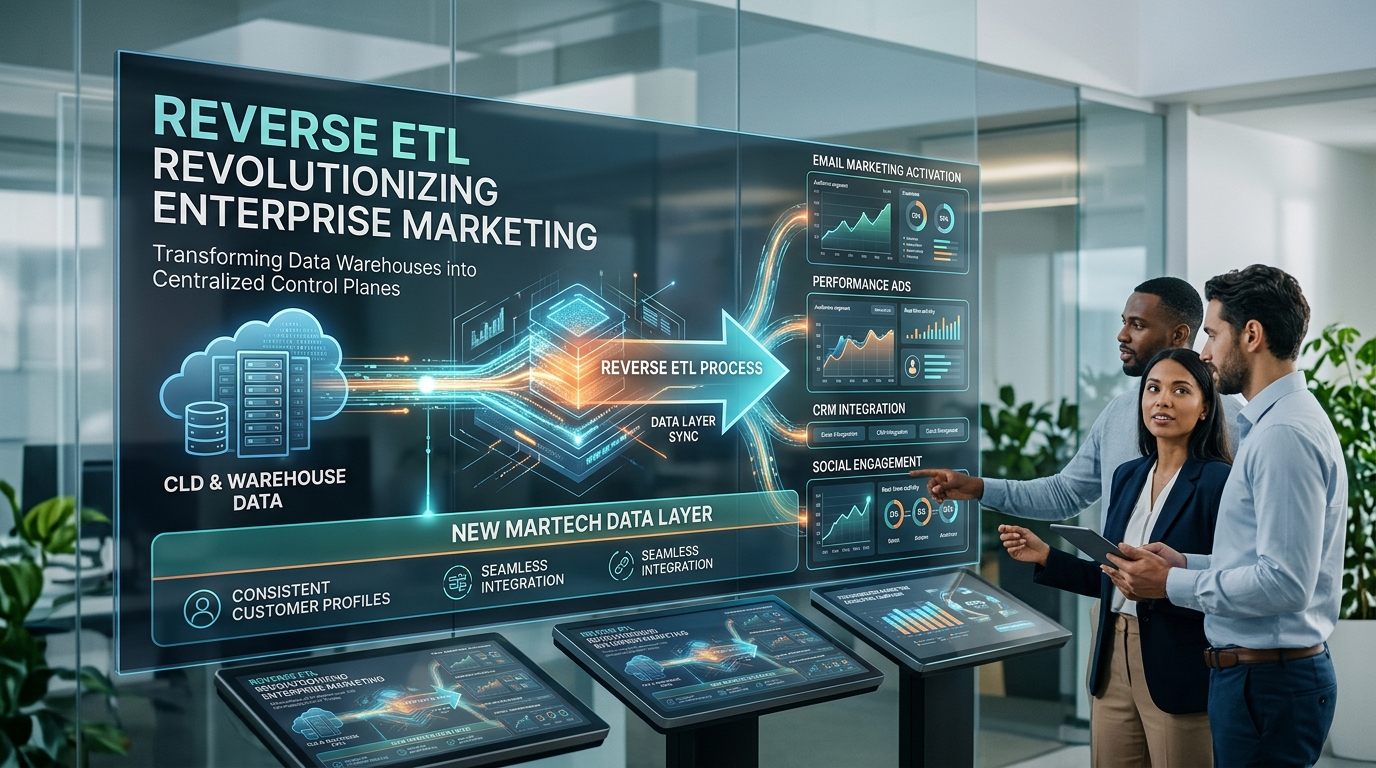
Reverse ETL transforms data warehouses into centralized control planes, activating trusted customer intelligence directly to operational systems like CRMs and advertising platforms. Rather than duplicating customer data across multiple marketing platforms, this approach eliminates data silos, reduces governance complexity, and enables real-time personalization without recreating customer records in every tool.
Key Points:
- Centralize customer truth in the warehouse, activate it everywhere instantly, eliminate governance complexity from data duplication
- As AI models proliferate, activation becomes critical—predictions only matter when delivered to decision-makers instantly
- The shift fundamentally changes marketing-data team relationships and challenges traditional marketing clouds to compete on activation capabilities rather than data ownership
Why it matters: This is the infrastructure shift enabling AI-driven funnels. When your agents need real-time access to customer context, product inventory, and behavioral signals across systems, Reverse ETL provides the activation layer that makes autonomous execution possible. Without it, you’re building sophisticated AI on top of fragmented, stale data—and wondering why performance doesn’t match promise.
“The real test isn’t technological sophistication—it’s whether AI reduces customer effort while respecting consent and delivering genuine value.”
— CX Today Analysis
What’s the biggest blocker to implementing AI agents in your funnel?
- A) Data quality and integration infrastructure
- B) Lack of clear ownership and governance processes
- C) Trust and customer acceptance concerns
- D) Insufficient staffing to supervise autonomous systems
🎯 Reddit Pushes Lead Generation Closer To The CRM
Reddit is integrating lead generation directly into CRM workflows with custom landing pages, form submissions, automated Max campaigns, and in-market audience targeting for users actively researching purchases. New beta features include Enterprise AI and cybersecurity audience segments showing 7% CPA improvements. The platform now integrates with Bombora, Demandbase, Clay, G2, and HubSpot for attribution tracking. Huntress demonstrated 50% CPA reductions and 40% sales conversion rates from Reddit-sourced leads. (Read more)
🎯 OpenAI Adds Bulk Product Campaigns and Deeper Reporting to ChatGPT Ads
OpenAI rolled out operational upgrades to ChatGPT Ads: bulk product campaign creation via spreadsheet uploads, visible product review status with rejection reasons, enhanced Insights API reporting for multi-event attribution, and separate management of internal, brand, and legal account names. The platform expanded to seven Southeast Asian markets and Taiwan with self-service access. These infrastructure improvements signal ChatGPT Ads maturing from experimental to production-ready for ecommerce at scale. (Read more)
🎯 Google Changes What Counts as a View in Demand Gen Display Ads
Google lowered the threshold for view-through conversions (VTC) in Demand Gen Display ads. Previously, Active View required at least half an ad visible for one continuous second. Now, a single pixel on-screen for any duration qualifies. This measurement update—not a feature change—will automatically roll out over coming weeks, potentially inflating VTC numbers without actual performance improvements. Document baseline metrics now, separate pre/post-change data, and recognize that rising VTC numbers may reflect methodology changes rather than optimization wins. (Read more)
🎯 Classic marketing automation is dead: What’s next?
Rule-based marketing automation is obsolete. ActiveCampaign’s Chai Atreya argues that superficial AI layers no longer suffice—modern platforms must leverage deep customer context and human-in-the-loop design. The shift requires moving beyond internal metrics to monitor external signals, solving data quality challenges, and recognizing that AI integration doesn’t automatically deliver personalization. Truly autonomous marketing means context-aware systems with external signal monitoring and human oversight—not just workflow triggers. (Read more)
🎯 When marketing automation moves too fast
Marketing automation’s obsession with speed is backfiring. Hyper-efficient funnels boost short-term metrics like form fills and cost-per-lead but erode customer trust when systems move faster than users can think. The solution: automate backend mechanics—data enrichment, lead routing, CRM hygiene—while human judgment guides customer-facing touchpoints. True brand value comes from deliberate human interactions, not automated volume. Balance technical efficiency with relational intentionality to build lasting relationships and sustainable growth. (Read more)
🎯 What It Really Takes to Successfully Automate Accountholder Communications
Financial institutions show the gap between automation ambitions and operational capacity. 52% now use marketing automation platforms, but many lack staffing and oversight to execute effectively. Real-world failures—welcoming longtime customers as new, promoting outdated rates—demonstrate automation’s risks. Success requires clear ownership, regular message reviews, robust data architecture, and human oversight of AI-generated content. With nearly half of institutions having only two or fewer data analytics employees, banks must reassess whether they have the people, processes, and governance to deliver promised ROI. (Read more)
The autonomous agent era isn’t coming—it’s here. AI is executing complete workflows, activating campaigns, and running customer journeys without waiting for your approval on every step. But the infrastructure, measurement frameworks, and governance processes required to make this work are lagging behind the technology itself.
The winners won’t be those who deploy the most sophisticated AI first. They’ll be the ones who build the data architecture, establish clear ownership, implement quality assurance layers, and maintain human oversight of customer-facing decisions. Automation alone doesn’t create growth—customer data quality, revenue-based measurement, and strategic judgment do. For more frameworks on building funnels that convert at scale, visit https://www.funnelmarketingguy.com.
Keep optimizing,
Funnel Marketing Systems Editor
📊 How did you like today’s email?
Originally published by Funnel Marketing Guy, your resource for funnel marketing, sales funnels, ClickFunnels, lead generation, conversion optimization, email marketing, marketing automation, and digital marketing strategies.
Continue your journey at https://www.funnelmarketingguy.com.
Enjoyed this issue?
Subscribe to get Funnel Marketing System delivered to your inbox every week.
Join 17 other subscribers • Free forever