
AI Just Changed How Buyers Decide—Here's Why

|
Welcome to Funnel Marketing System!
77% of mobile searches never click through to a website. If your funnel metrics start with “traffic,” you’re measuring the wrong thing.
- 🔍 Why zero-click journeys killed traditional funnel attribution
- 🧪 The four-phase CRO framework that doubles revenue without ad spend increases
- 🏗️ Technical infrastructure that determines whether you exist in AI-driven discovery
- 📊 Behavior-driven optimization across paid, organic, and email channels
- 🎯 30-day implementation roadmap with quick-win strategies
The Funnel Metrics You’re Tracking Are Already Obsolete
60% of global searches now generate zero clicks. On mobile, that jumps to 77%. Users discover your brand, evaluate alternatives, and make purchasing decisions inside ChatGPT, Gemini, and Perplexity—without ever visiting your website.
This isn’t a future trend. It’s happening now. And it means every funnel metric built on traffic, clicks, and session-based attribution is measuring a journey that no longer exists. The replacement isn’t another analytics dashboard—it’s a fundamental shift to influence and visibility as success indicators, paired with systematic optimization that scales revenue without proportional spend increases.
Today’s issue shows you what replaces the old playbook: behavior analysis that informs targeting across channels simultaneously, structured content that surfaces in AI responses, and technical infrastructure that determines competitive advantage. You’ll walk away with a testing framework, a 30-day roadmap, and the infrastructure priorities that matter in 2026.
🔗 Zero-click customer journey: the impact of AI on decision-making (7 minute read)
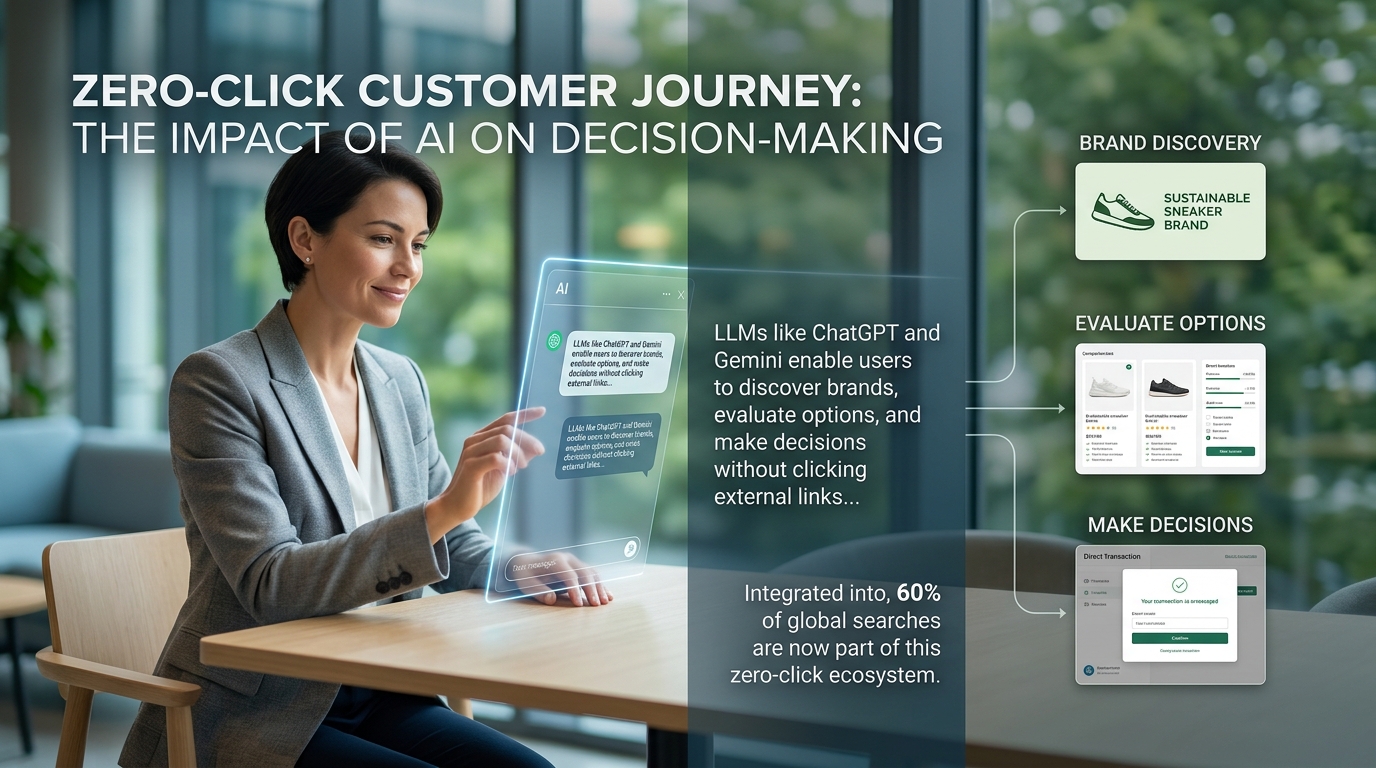
Large language models like ChatGPT and Gemini enable users to discover brands, evaluate options, and make decisions without clicking external links. 60% of global searches now generate zero clicks, rising to 77% on mobile. This “zero-click customer journey” means traditional funnel metrics are obsolete—purchasing decisions increasingly happen before users ever visit your website.
Key Points:
- Companies can no longer rely on traffic and clicks as success indicators; influence and visibility in AI responses are the new metrics
- The shift demands clear, well-structured content that appears in AI-generated answers rather than content optimized for click-through
- Measurement approaches must focus on brand authority and presence in AI discovery rather than session-based attribution models
Why it matters: If three-quarters of mobile searches never generate a click, your entire attribution model is tracking a minority behavior. The funnel doesn’t start when someone lands on your site—it starts when an LLM decides whether to mention you in its response. Your competitive advantage now depends on whether AI systems recognize your authority and surface your content in zero-click answers. Traffic-based KPIs aren’t just incomplete; they’re actively misleading you about where purchase decisions actually happen.
🔗 How CRO Drives Ecommerce Longevity (3 minute read)

Conversion Rate Optimization creates a multiplier effect across paid advertising, organic search, and email marketing by analyzing visitor behavior to inform strategy across all channels simultaneously. Rather than relying on single traffic sources, successful brands diversify and use CRO principles to improve ad targeting, boost quality scores, align with SEO and generative AI optimization through structured content, and power personalized email segmentation.
Key Points:
- Analyzing visitor behavior improves ad targeting and quality scores, increasing ROI without additional spend
- CRO principles align with SEO and generative AI optimization through structured content and clear site architecture
- Email marketing gains power when segmented audiences receive personalized messages matching their interests, informed by on-site behavior data
Why it matters: This is the practical answer to what replaces obsolete funnel metrics. Instead of tracking traffic in isolation, you’re using behavior analysis to create a feedback loop across every channel. When you understand why visitors convert (or don’t), that insight improves your ad hooks, informs your content structure for AI discovery, and sharpens your email segmentation. The result is revenue growth without proportional increases in ad spend—you’re optimizing the system, not just buying more traffic.
🔗 Infintech Designs Publishes Conversion Rate Optimization Guide With Four-Phase Testing Framework, Eight Data-Backed Strategies, and 30-Day Implementation Roadmap (7 minute read)
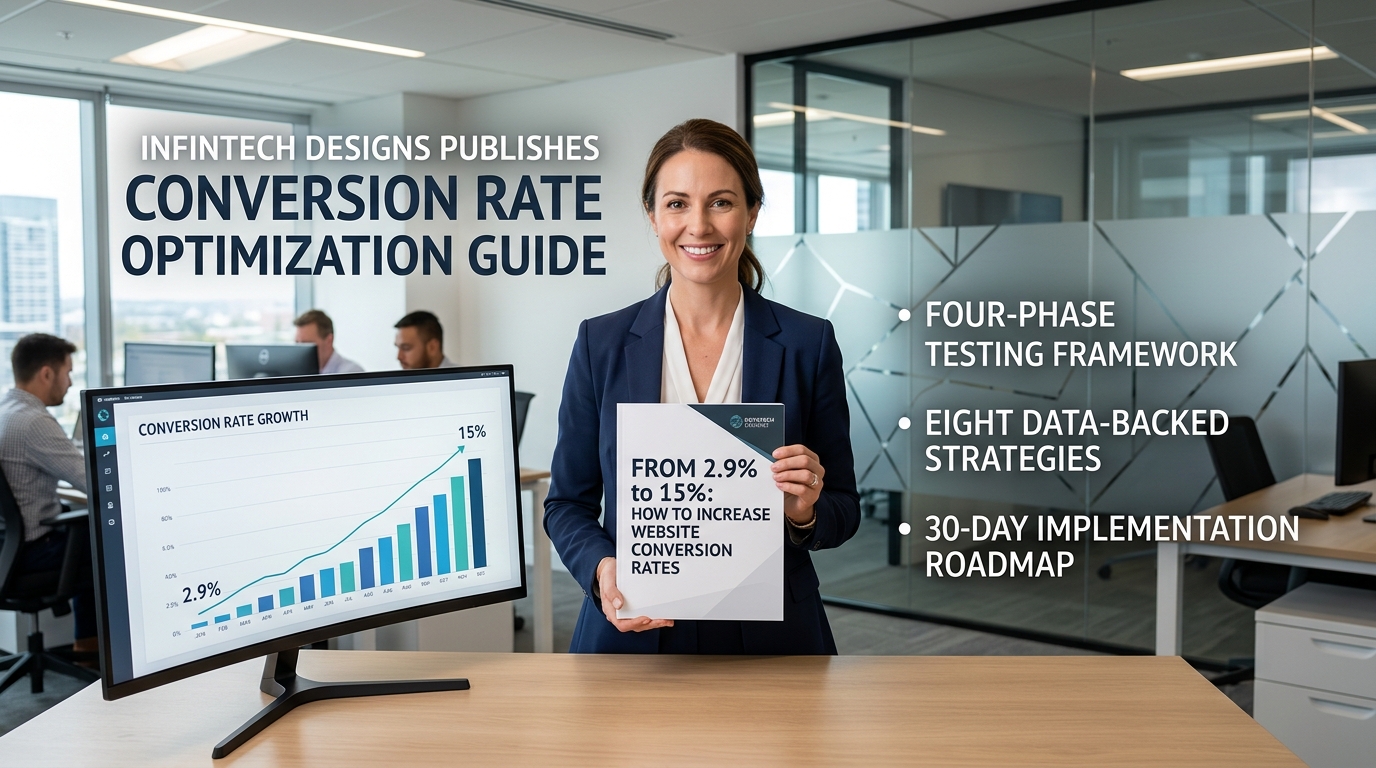
Doubling conversion rates from 2% to 4% doubles revenue without additional advertising spend—the math is simple, but execution requires systematic testing. This comprehensive guide presents a four-phase framework (identifying opportunities, ICE scoring, statistical significance, deployment) and eight data-backed strategies including value proposition clarity, form simplification, page speed, social proof, CTA optimization, mobile experience, personalization, and authentic urgency.
Key Points:
- Companies using systematic testing achieve 49% average year-over-year improvements in conversion rates
- The four-phase testing framework provides structure: identify opportunities, prioritize with ICE scoring, test to statistical significance, deploy winners
- A 30-day implementation roadmap with quick wins can potentially deliver 15-30% initial improvement before deeper optimization begins
Why it matters: Here’s your tactical playbook. After understanding why traffic metrics are broken and how behavior analysis creates cross-channel leverage, you need a systematic approach to implementation. The four-phase framework gives you that structure, and the 30-day roadmap means you can start seeing results this month. The 49% YoY improvement isn’t theoretical—it’s what happens when you stop guessing and start testing with statistical rigor. This is how you scale revenue without scaling ad spend proportionally.
🔧 Trending Tools & Resources
-
Custom Web Development for Lead Generation: Modern search engines now evaluate content depth, structure, credibility, and semantic relationships with greater sophistication, making custom development a competitive necessity
-
Integrated Marketing Frameworks: Case study demonstrating systematic funnel execution scaling ecommerce from $200K to $10M annually through data-informed methodology
-
Schema Markup and Topic Clusters: Content architecture built around topic clusters strengthens authority while guiding visitors through conversion pathways optimized for AI-driven indexing
📰 Quick Hits
🎯 AI-Driven Search Requires Structured Content Architecture
Companies must build authority through clear, well-structured content that appears in AI responses rather than optimizing solely for click-through. The shift from traffic-based to influence-based measurement means your content needs to answer questions completely and authoritatively within AI-generated responses. (Read more)
🎯 CRO Principles Power Email Segmentation
Real-world examples—from ingredient-focused ad hooks to interactive product quizzes—demonstrate how data-driven optimization increases conversions and customer lifetime value across all channels. Email marketing gains power when segmented audiences receive personalized messages matching their interests, informed by on-site behavior analysis. (Read more)
🎯 Technical Performance Directly Impacts Conversion Rates
Page speed and mobile responsiveness directly impact user retention and conversion rates in 2026. Custom websites leverage geo-targeted landing pages, optimized schema markup, and AI-driven indexing to improve discoverability while technical performance determines whether visitors stay long enough to convert. (Read more)
🎯 ICE Scoring Framework Prioritizes Testing Opportunities
The four-phase testing framework uses ICE scoring (Impact, Confidence, Ease) to prioritize which optimization opportunities to test first. This systematic approach ensures you’re allocating resources to tests with the highest potential return rather than chasing random improvements. (Read more)
“The shift demands new measurement approaches focused on influence and visibility rather than clicks, as purchasing decisions increasingly happen before users ever visit a website.”
— Telefonica Research, Zero-Click Customer Journey Analysis
Which CRO strategy would deliver the biggest impact for your funnel right now?
- A) Value proposition clarity and messaging
- B) Page speed and mobile experience
- C) Form simplification and CTA optimization
- D) Social proof and personalization
The funnel you built around traffic and clicks is measuring a journey that no longer represents how most buyers make decisions. 77% of mobile searches end without a click, which means your attribution model is tracking a minority behavior while the majority of your market evaluates you inside AI interfaces you can’t see.
What replaces the old playbook isn’t more sophisticated analytics—it’s systematic optimization across the actual buyer journey. Behavior analysis that informs targeting across paid, organic, and email simultaneously. Structured content that surfaces in AI responses. Technical infrastructure that determines whether you exist in generative search results. And a testing framework rigorous enough to deliver 49% year-over-year improvements without proportional increases in ad spend.
The companies winning in 2026 aren’t working harder. They’re working systematically.
Stay sharp,
Funnel Marketing Systems Editor
📊 How did you like today’s email?
Enjoyed this issue?
Subscribe to get Funnel Marketing System delivered to your inbox every week.
Join 17 other subscribers • Free forever