
AI Assistants Are Crushing Conversion Goals
Real brands share what's actually working (and the metrics that matter)
|
Welcome to Funnel Marketing System!
AI isn’t just analyzing your funnel anymore—it’s running it. And the companies tracking the right metrics are seeing 9x revenue multipliers while everyone else celebrates vanity wins.
- 🚀 Williams-Sonoma’s AI assistants deliver 9x revenue per visit (not a typo)
- 💰 Why cost per lead is a lie and cost per closed deal tells the truth
- 🎯 Amazon and Walmart’s bottom-of-funnel strategy that kills competitors
- 🔗 Klaviyo’s acquisition proves the funnel doesn’t end at checkout
- 📊 $95.90B bet on customer journey analytics by 2035
The Shift from Analysis to Execution
You’ve been measuring your funnel for years. Tracking drop-off rates, optimizing landing pages, running A/B tests. But here’s what changed in the last 12 months: AI stopped being a reporting tool and became an execution engine.
Williams-Sonoma just proved it with numbers that matter. Their AI assistants don’t just recommend products—they drive personalized experiences that generate nine times more revenue than average visits. That’s up from 2x last year. Not 10% better. Not “statistically significant improvement.” Nine times.
The companies winning right now aren’t the ones with the best dashboards. They’re the ones who shifted from vanity metrics to revenue metrics, from top-of-funnel volume to bottom-of-funnel control, and from siloed tactics to integrated orchestration. The rest are still celebrating cost per lead while their CAC quietly destroys their unit economics.
This isn’t theory. The market is betting $95.90 billion on customer journey analytics by 2035. Platforms like Klaviyo are acquiring post-sale infrastructure because they know the funnel doesn’t end at purchase. And agencies are restructuring their entire service model around full-funnel integration because siloed tactics died when paid channels matured.
If you’re still optimizing for speed-to-lead instead of cost-per-closed-deal, you’re playing the wrong game.
🔗 Williams-Sonoma AI assistants drive customer engagement — and conversions (7 minute read)

Williams-Sonoma deployed AI assistants across its brand portfolio with results that redefine what “AI-powered conversion optimization” actually means. Olive on Williams Sonoma and Otto across Pottery Barn drive three times higher conversion rates, with over 70% of Otto interactions resolving without human intervention. But the headline number is this: personalized experiences now generate nine times more revenue than average visits, up from two times last year.
Key Points:
- AI assistants (Olive and Otto) deliver 3x higher conversion rates across Williams Sonoma and Pottery Barn properties
- Personalized experiences generate 9x more revenue per visit compared to average sessions, up from 2x the previous year
- Over 70% of Otto interactions resolve without human intervention, reducing support costs while improving customer experience
Why it matters: This is the clearest real-world example of AI moving from analysis to execution in the funnel. Most companies are still using AI to generate reports about their conversion rates. Williams-Sonoma is using it to multiply revenue per visitor by 9x. The shift from 2x to 9x in one year shows exponential improvement, not incremental gains. When AI handles product recommendations, design tools, and customer service simultaneously, it doesn’t just optimize one step—it orchestrates the entire journey from browse to buy.
🔗 Cost per lead is easy, cost per closed deal tells the truth (12 minute read)

Real estate teams obsess over 90-second response times, but speed alone doesn’t close deals. This analysis challenges the industry’s fixation on vanity metrics, revealing that fast responses mean nothing without qualified leads and proper follow-up. The real metric that separates winners from dashboard watchers? Cost per closed deal, not cost per lead.
Key Points:
- Response time metrics are vanity—teams should track time-to-qualified-appointment instead of speed-to-dial
- Cost per closed deal reveals true marketing efficiency, exposing lead sources that look cheap but convert poorly
- Winners in 2026 focus on rigorous qualification before agent contact, 24/7 coverage, and actual listings signed
Why it matters: Most teams optimize for lead volume or response time because those metrics are easy to measure and make dashboards look good. But cost per lead hides the truth about which channels actually drive revenue. A $50 lead that never converts costs more than a $200 lead that closes. This is the funnel KPI that separates serious operators from people who celebrate MQL volume while their CAC quietly destroys unit economics. The shift from lead-based to deal-based metrics forces you to track the entire funnel, not just the top.
🔗 Amazon, Walmart lean into onsite ads for bottom-of-funnel sales (4 minute read)
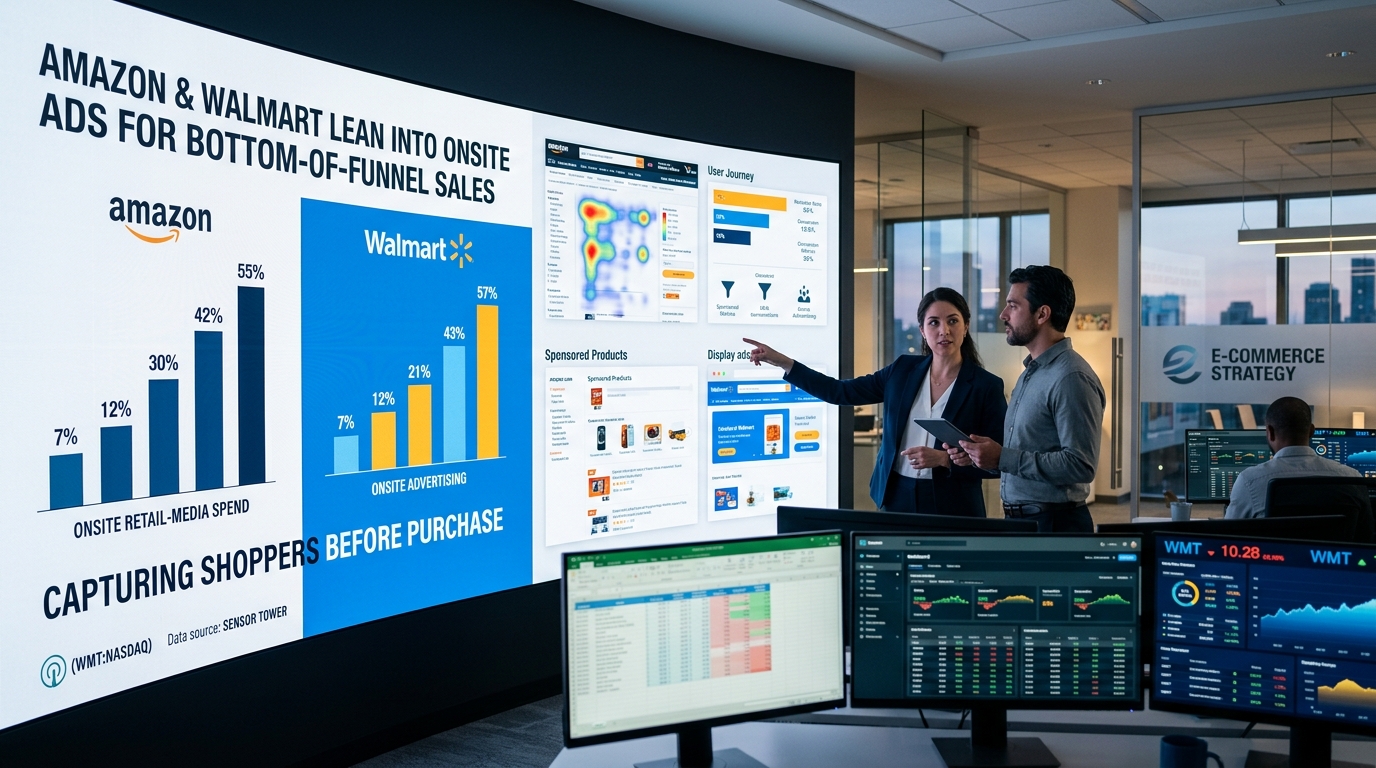
Amazon and Walmart are strategically shifting their retail-media networks to prioritize onsite advertising, capitalizing on shoppers at the critical moment before purchase. According to Sensor Tower analysis, these e-commerce giants leverage their own digital platforms more heavily than competitors, who rely on external advertising channels.
Key Points:
- Amazon and Walmart prioritize onsite advertising over external channels, capturing high-intent customers at the moment before purchase
- This bottom-of-funnel approach maximizes conversion rates by owning the decision point, not just awareness
- Competitors who rely on external advertising lose control of the final conversion moment and pay more for lower-intent traffic
Why it matters: Owning the bottom of the funnel is more valuable than controlling top-of-funnel volume. Amazon and Walmart win because they own the moment before purchase—the highest-intent, highest-conversion point in the entire customer journey. While competitors spend on Facebook and Google to drive awareness, Amazon and Walmart monetize the final decision. This is why platform consolidation matters: whoever controls the conversion moment controls the economics. If you’re driving traffic to someone else’s platform, you’re paying to fill their funnel, not yours.
🔗 Klaviyo is buying Agency to add returns, order tracking and AI support to its marketing tools (10 minute read)
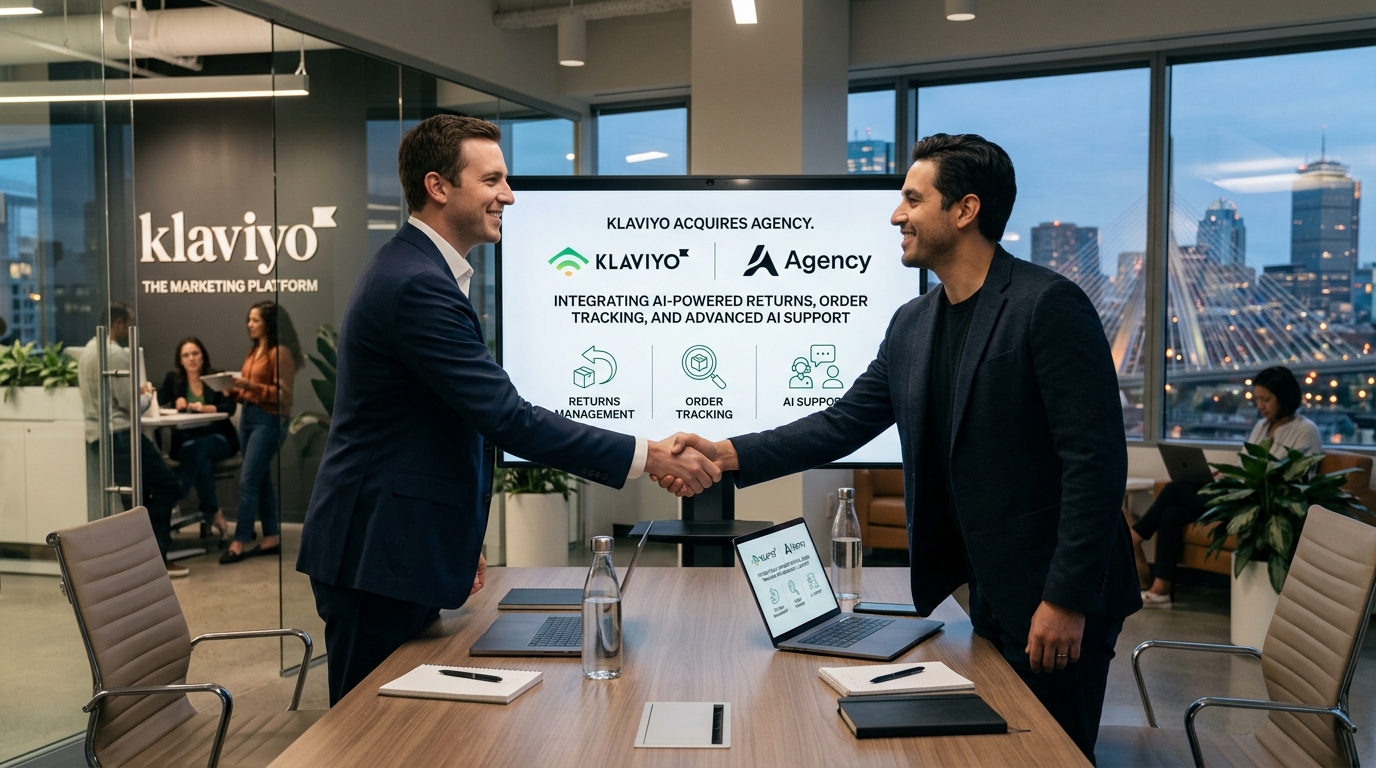
Klaviyo is acquiring Agency, an AI-powered customer-success startup founded by Elias Torres, to integrate returns management, order tracking, and advanced AI support into its marketing platform. Elias Torres will become Klaviyo’s chief product officer, bringing his 25-person team into the company. This strategic move reflects the growing importance of AI agents in ecommerce post-sale support.
Key Points:
- Klaviyo is bundling returns management, order tracking, and AI support into its marketing platform through the Agency acquisition
- The acquisition consolidates three separate buying processes—marketing automation, customer service, and returns technology—into one integrated solution
- Post-sale experience drives lifetime value and repeat conversion, making it a critical part of the funnel, not an afterthought
Why it matters: Smart platforms understand that the funnel doesn’t end at purchase—it extends through delivery, returns, and support because post-sale experience drives LTV and repeat conversion. Most companies treat marketing automation, customer service, and returns as separate systems with separate vendors. Klaviyo is betting that integration wins because friction kills conversion at every stage, including post-purchase. When returns are easy, order tracking is automatic, and support is instant, customers come back. That repeat purchase is the highest-converting, lowest-CAC sale you’ll ever make, but only if you own the entire journey.
🔗 Customer Journey Analytics Market to Surge at 17.10% CAGR, Anticipated to Reach USD 95.90 Billion by 2035 (9 minute read)
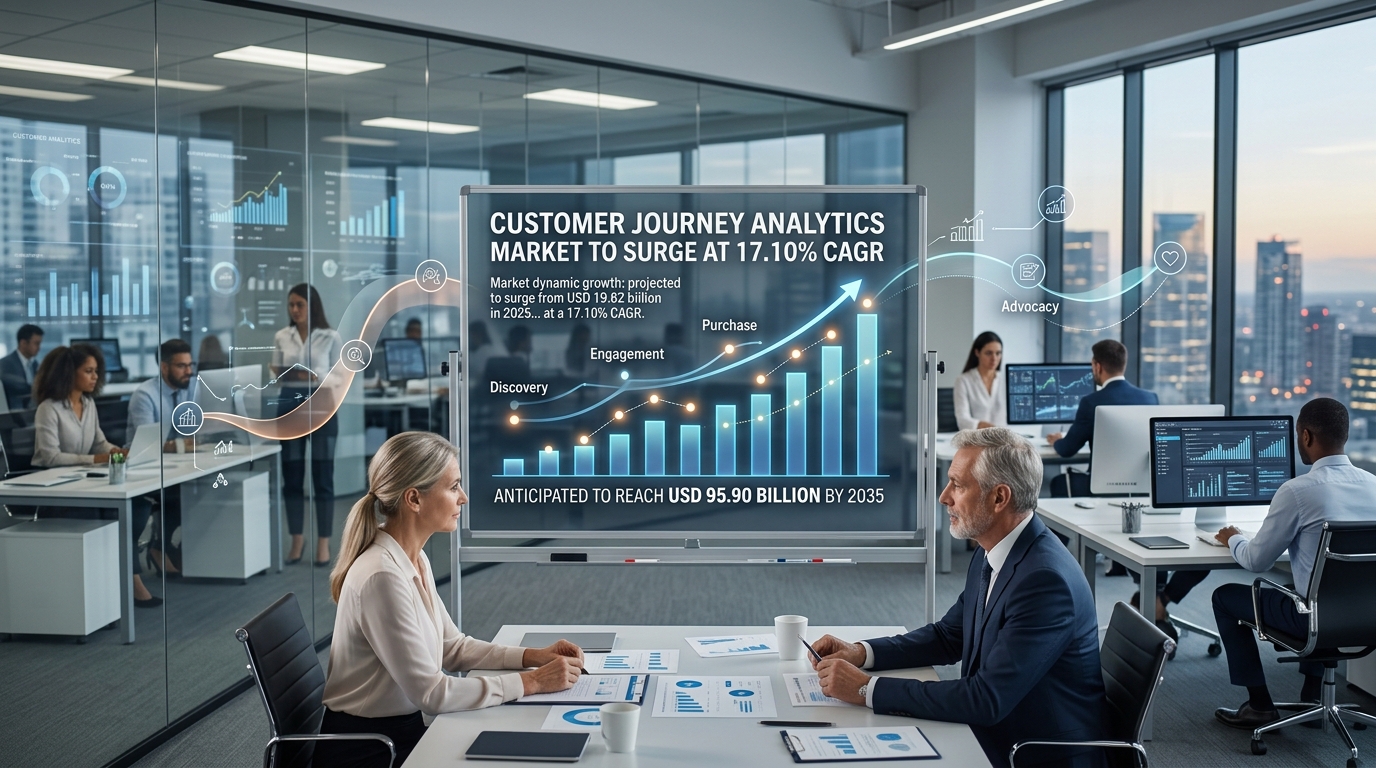
The Customer Journey Analytics Market is experiencing explosive growth, projected to surge from USD 19.62 billion in 2025 to USD 95.90 billion by 2035 at a 17.10% CAGR. Businesses are increasingly adopting AI-powered analytics to understand customer behavior across omnichannel touchpoints, enabling personalized experiences and data-driven decisions.
Key Points:
- Market growing from $19.62B in 2025 to $95.90B by 2035, representing 17.10% annual growth
- North America contributed $7.77 billion in 2025, while Asia-Pacific leads growth at 23.5% CAGR
- Real-time insights, predictive analytics, and advanced personalization are key drivers of adoption
Why it matters: This is market validation for why funnel analytics infrastructure matters now. Companies are betting billions on understanding the customer journey because the winners in every category are the ones who can predict behavior, personalize at scale, and optimize in real-time. The $95.90B projection by 2035 signals that systematic funnel optimization isn’t a nice-to-have—it’s the competitive moat. If you’re not investing in understanding your customer journey now, you’re falling behind companies that are spending billions to figure it out first.
🎯 The Remarkable Agency Expands Full-Funnel Growth Services for SaaS, AI and Subscription Companies
The Remarkable Agency restructured its services into an integrated full-funnel growth system, combining paid acquisition, performance creative, search optimization, conversion optimization, lifecycle marketing, and fractional CMO services as one cohesive model. The shift reflects market realities: paid channels have matured and become expensive, while AI has democratized software development, making differentiation and strategic positioning critical. This is evidence that the market is consolidating around full-funnel thinking—agencies are restructuring because siloed tactics no longer work when CAC is high and differentiation is hard. (Read more)
“The companies winning right now aren’t the ones with the best dashboards. They’re the ones who shifted from vanity metrics to revenue metrics, from top-of-funnel volume to bottom-of-funnel control.”
— Alex Chen, Funnel Marketing Systems Editor
What metric matters most in your funnel right now?
The shift is already happening. Williams-Sonoma proved AI can multiply revenue per visitor by 9x. Amazon and Walmart proved that owning the bottom of the funnel beats controlling the top. Klaviyo proved that post-sale experience is part of conversion, not separate from it.
The question isn’t whether to integrate your funnel—it’s whether you’ll do it before your competitors do. Because the companies betting billions on customer journey analytics aren’t doing it for better dashboards. They’re doing it because systematic funnel optimization is the new moat.
Keep optimizing,
Funnel Marketing Systems Editor
📊 How did you like today’s email?
Originally published by Funnel Marketing Guy, your resource for funnel marketing, sales funnels, ClickFunnels, lead generation, conversion optimization, email marketing, marketing automation, and digital marketing strategies.
Continue your journey at https://www.funnelmarketingguy.com.
Enjoyed this issue?
Subscribe to get Funnel Marketing System delivered to your inbox every week.
Join 17 other subscribers • Free forever