
AI Agents Are Here—Is Your Funnel Ready?
The playbook for surviving (and thriving in) the agentic era
|
Welcome to Funnel Marketing System!
Your CRM is becoming an autonomous system, and AI shopping agents are rewriting the customer journey. Here’s what you need to know to stay ahead.
- 🤖 AI agents transforming CRM from static storage into autonomous revenue engines
- 📊 The new CAC playbook: why 50% of your spend is unmeasurable and what to do about it
- 🛒 Agentic commerce ecosystems—positioning your funnel for AI-mediated buying journeys
- 🔧 Platform consolidation: choosing unified operating systems over fragmented point solutions
- 📈 Data infrastructure requirements for AI-era automation
The Funnel Is No Longer Yours to Control
Your funnel used to be a sequence you built, optimized, and controlled. You chose the touchpoints. You wrote the emails. You decided when a lead was ready for sales.
That era is ending.
AI agents are now operating inside your CRM, making autonomous decisions about campaign execution, lead routing, and customer engagement. McKinsey estimates agentic AI will accelerate campaign development 10-15x faster than traditional workflows. Meanwhile, Morgan Stanley projects AI shopping agents will influence $190-385 billion in US e-commerce by 2030.
The shift isn’t just faster execution—it’s a fundamental change in who controls the customer journey. Funnels are evolving from marketer-controlled sequences into AI-operated ecosystems where your brand must earn discoverability, credibility, and preferred positioning across multiple agent protocols.
The operators who win will master three things: measurement infrastructure that feeds AI systems accurate signals, data readiness that makes your inventory machine-readable, and strategic positioning across buyer-side and seller-side agent ecosystems.
Here’s what changed this week.
🤖 How AI Agents Will Reshape CRM, MAPs, CDPs, and Marketing Operations (11 minute read)
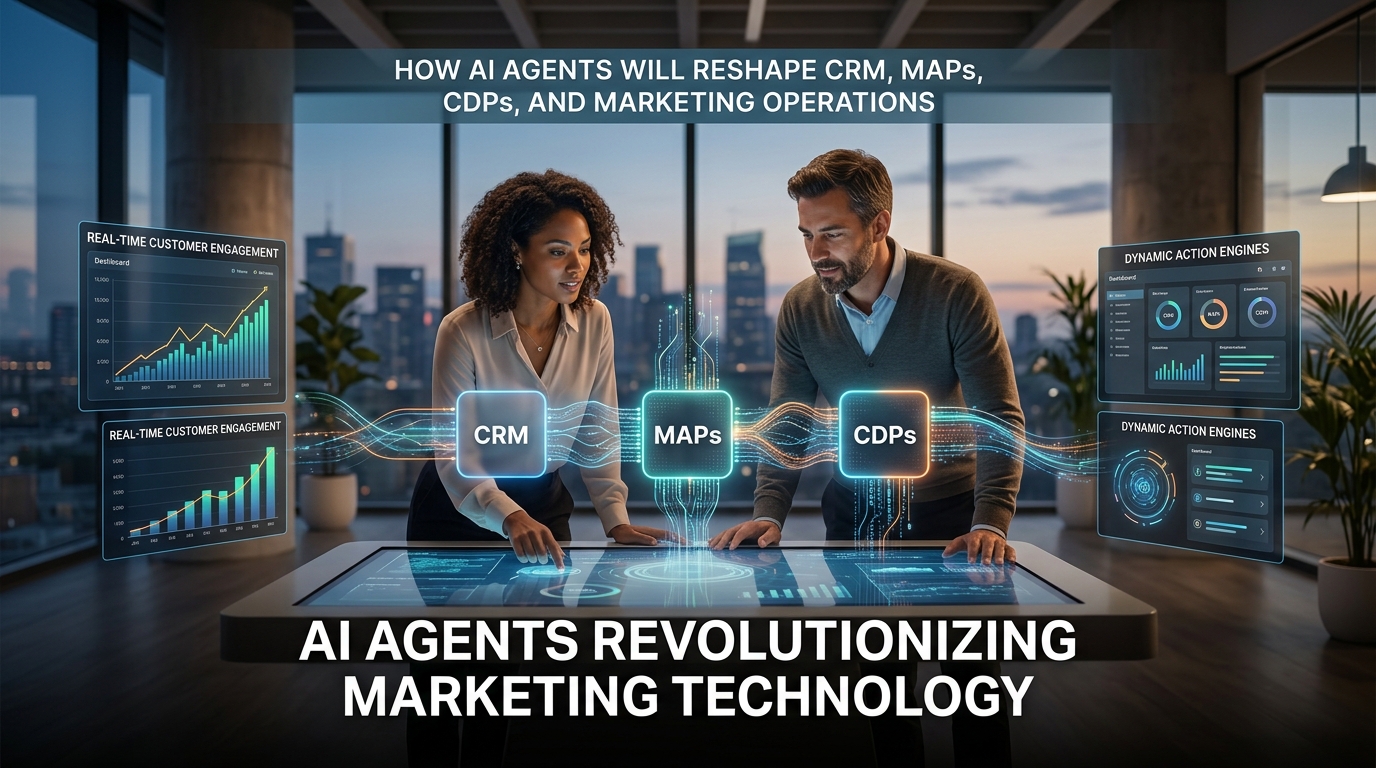
Your CRM is no longer a database. It’s becoming an autonomous decision-making system. AI agents are transforming marketing technology platforms from static storage into dynamic action engines that interpret context, make independent decisions, and continuously optimize campaigns without predetermined workflows.
Key Points:
- Salesforce’s Data 360 architecture and Adobe’s Agent Orchestrator enable coordinated decision-making across CRM, MAPs, and CDPs without human intervention
- McKinsey estimates agentic AI accelerates campaign development 10-15x faster than traditional workflow-based systems
- Success requires robust governance frameworks including clear agent ownership, escalation paths, data access controls, and measurable performance metrics tied to revenue outcomes
Why it matters: AI agents are turning your CRM into an autonomous revenue system—but governance determines whether you scale profit or chaos. Without clear ownership models, escalation protocols, and performance metrics tied to actual revenue outcomes, you’re automating decision-making without accountability. The operators building governance frameworks now will control the systems; those who don’t will be controlled by them.
📊 Breaking Down the New Customer Acquisition Playbook (6 minute read)
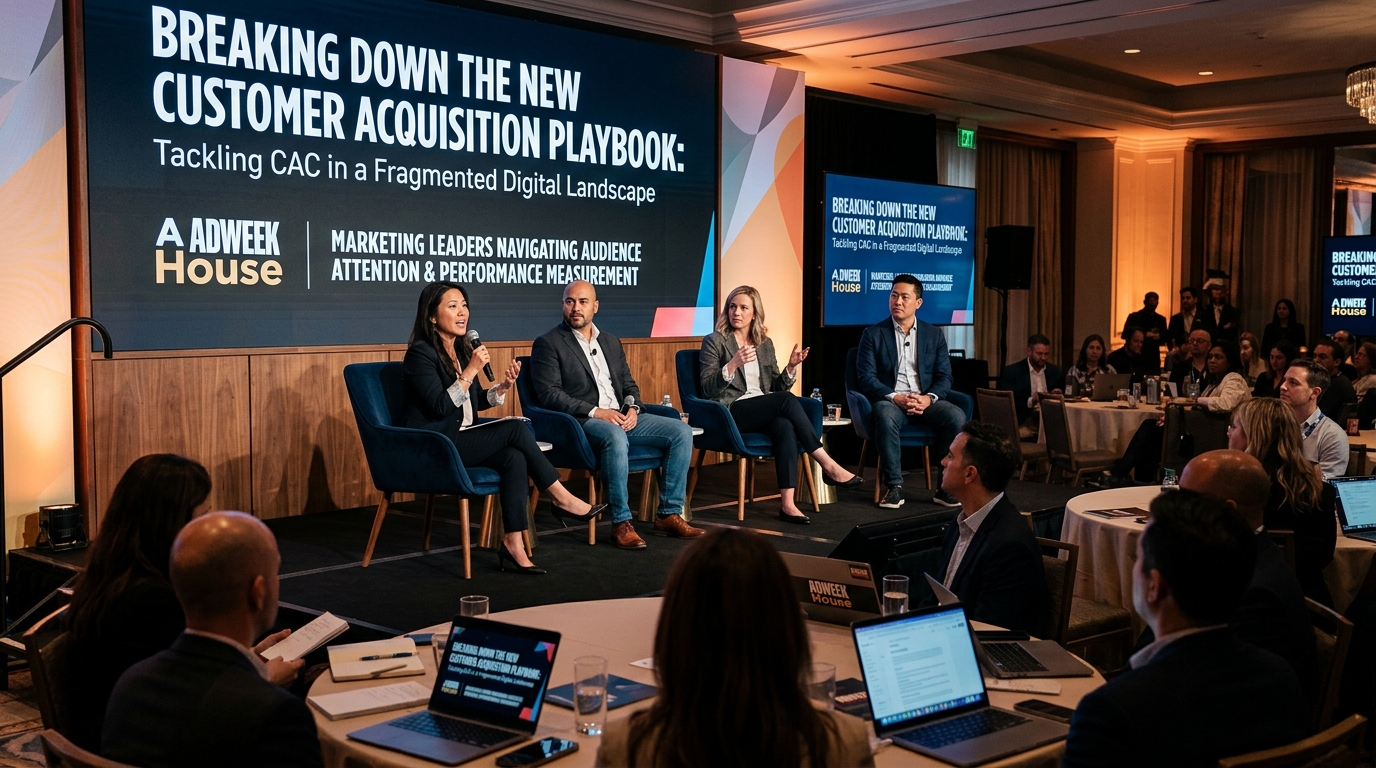
Customer acquisition cost is getting harder to measure, not easier. Marketing leaders at ADWEEK House revealed that 50% of marketing spend remains unmeasurable despite new attribution tools. The fragmentation across channels, platforms, and AI-mediated touchpoints means CAC calculations must be tailored to specific business goals rather than relying on universal formulas.
Key Points:
- Successful operators distinguish between new customer acquisition costs and repeat customer costs, excluding past customers from paid acquisition channels entirely
- Lifetime value focus replaces single-transaction CAC optimization, with testing budgets allocated to emerging platforms like ChatGPT and AI search
- The consensus: balance data-driven decisions with intuition, create standout creative that cuts through noise, and measure across multiple touchpoints rather than last-click attribution
Why it matters: The new CAC playbook requires measurement infrastructure, attribution strategy, and testing discipline in fragmented channels where half your spend is invisible. If you’re still optimizing for last-click attribution or treating all customers the same in CAC calculations, you’re making decisions on incomplete data. The shift to lifetime value focus and platform experimentation separates operators who understand unit economics from those guessing at profitability.
🛒 Four Strategies to Nailing Agentic Commerce Ecosystems (8 minute read)
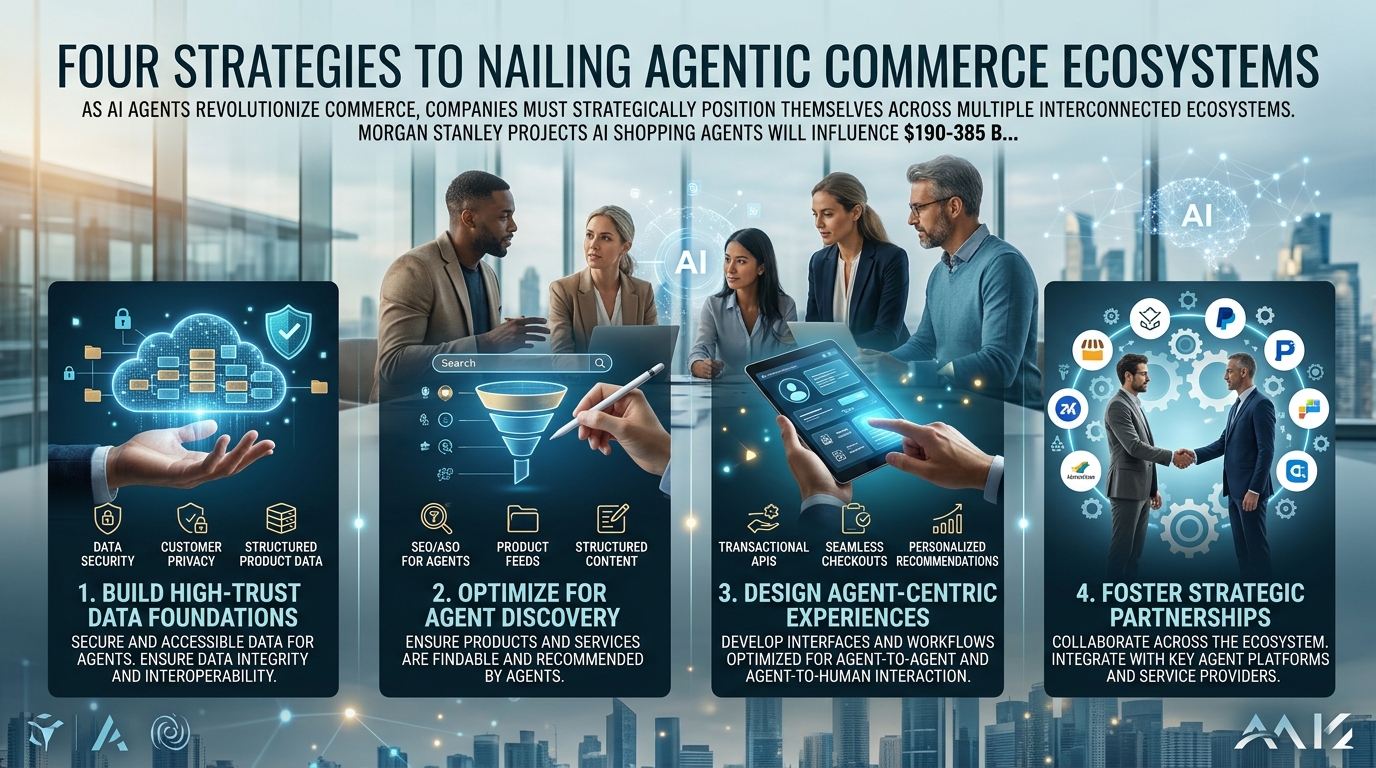
AI shopping agents are rewriting the customer journey, and your funnel must now position itself across buyer-side and seller-side agent ecosystems. Morgan Stanley projects AI agents will influence $190-385 billion in US e-commerce by 2030. The challenge: managing competitive tensions between ecosystems while becoming an indispensable partner to multiple agent orchestrators.
Key Points:
- Four winning strategies: bring your entire ecosystem to the table, control critical bottlenecks like trust verification, pursue acquisitions for ecosystem synergies, and shape emerging protocol standards
- Success requires treating your ecosystem as tradeable currency to negotiate preferred access, visibility, and co-development opportunities with agent platforms
- Companies must strategically position themselves across multiple interconnected ecosystems rather than betting on a single agent platform
Why it matters: AI agents are rewriting the customer journey—your funnel must now earn preferred positioning in buyer-side and seller-side ecosystems, not just rank in search results. Brand authority, structured product data, and protocol participation determine whether AI agents recommend you or route customers to competitors. The operators building ecosystem relationships and shaping protocol standards now will control discovery; those waiting will be invisible.
🔧 Digital.Marketing Launches AI-Enabled Marketing Operating System (7 minute read)

The funnel is becoming an operating system, not a collection of point solutions. Digital.Marketing unveiled an AI-enabled platform that integrates strategy, automation, analytics, and full-stack digital marketing into a unified model, eliminating fragmentation caused by multiple disconnected vendors.
Key Points:
- Platform combines human expertise with AI-powered automation across SEO, paid media, content creation, and generative engine optimization
- CEO Nate Nead emphasizes the company isn’t accelerating traditional marketing—it’s fundamentally reimagining service delivery through unified systems
- Recent client additions in travel and AI sectors reflect growing demand for specialized expertise in technology-driven industries
Why it matters: Platform consolidation represents the shift from fragmented tools to unified automation—directly aligned with the current trend of AI-managed acquisition systems. If your funnel still relies on duct-taped integrations between CRM, email, analytics, and paid platforms, you’re competing against operators running unified systems that execute 10-15x faster. The question isn’t whether to consolidate, but which operating system to build on.
🎯 Got Agent? Automotive Shows What Happens When AI Meets Unstructured Data
AI agents are automating the entire vehicle-buying journey from discovery to close, but dealers with unstructured data are losing to competitors with machine-readable inventory. Multiple tech giants launched competing protocols—OpenAI’s ACP, Google’s UCP and AP2, automotive’s Auto Agent Protocol—enabling AI to complete transactions autonomously. The catch: agents transact fastest where data is organized and accessible, not siloed in spreadsheets or PDFs. (Read more)
🎯 Brand Authority Now Determines AI Recommendation Visibility
PR is undergoing a fundamental transformation as AI reshapes content creation and media fragmentation accelerates. Visibility alone no longer defines success—brands must be discoverable, credible, and relevant across evolving information ecosystems. Aman Dhall’s “Actual Intelligence” framework integrates AI Discovery, Brand Strategy, Content Marketing, Digital PR, and Experiential Events into a connected communications stack. As AI-generated narratives reshape trust, communicators must ground credibility in real evidence while measuring communications by business impact rather than coverage. (Read more)
🎯 Choosing Funnel Infrastructure for AI-Era Automation
Sales funnel software is evolving beyond drag-and-drop builders to platforms that integrate behavioral triggers, segmentation tools, and advanced analytics. GetResponse ($15/month), Systeme.io ($17/month), Kartra, Involve.me, and CartFlows offer customizable templates and automated email sequences. The critical evaluation criteria: integration capabilities with AI systems, behavioral trigger sophistication, and analytics depth—not template libraries. Involve.me stands out for interactive content creation with 250+ templates, while GetResponse excels in comprehensive funnel solutions. (Read more)
“As AI agents revolutionize commerce, companies must strategically position themselves across multiple interconnected ecosystems. Success requires treating your ecosystem as tradeable currency to negotiate preferred access, visibility, and co-development opportunities with other orchestrators.”
— INSEAD Research, Strategy Faculty
Which AI-driven change will impact your funnel strategy most in 2026?
- A) AI agents automating CRM and campaign execution
- B) AI shopping agents controlling customer discovery
- C) Attribution complexity and unmeasurable spend
- D) Platform consolidation replacing point solutions
The funnel you built last year assumed you controlled the customer journey. The funnel you need next year assumes AI agents control discovery, evaluation, and transaction—and you’re competing to be the brand they recommend.
Three things separate operators who win from those who get bypassed: measurement infrastructure that feeds AI systems accurate conversion signals, data readiness that makes your products and inventory machine-readable, and strategic positioning across buyer-side and seller-side agent ecosystems.
Start with your data. If an AI agent tried to recommend your product right now, could it access structured pricing, inventory, and feature data—or would it hit PDFs and spreadsheets? That answer determines whether you’re discoverable or invisible.
Stay sharp,
Funnel Marketing Systems Editor
📊 How did you like today’s email?
Originally published by Funnel Marketing Guy, your resource for funnel marketing, sales funnels, ClickFunnels, lead generation, conversion optimization, email marketing, marketing automation, and digital marketing strategies.
Continue your journey at https://www.funnelmarketingguy.com.
Enjoyed this issue?
Subscribe to get Funnel Marketing System delivered to your inbox every week.
Join 17 other subscribers • Free forever