
AI Agents Are Coming for Your Marketing Team
Plus: Adobe dominates B2B automation and loyalty programs get smarter
|
Welcome to Funnel Marketing System!
Your funnel isn’t broken—it’s just not designed for how AI is reshaping the customer journey. Here’s what that means for how you build, measure, and optimize in 2027.
- 🤖 Why marketers are becoming system designers instead of campaign executors
- 🏦 How banking CDPs solve the data fragmentation killing your personalization
- 🏨 When your website becomes a verification layer, not a discovery channel
- 🎯 Adobe’s shift from marketing automation to orchestration—and what it means for B2B funnels
- 💎 Loyalty programs evolving from points to enterprise-wide customer engagement
The New Funnel Playbook: From Manual Execution to AI Orchestration
Your job isn’t running campaigns anymore. It’s designing the systems that run campaigns.
The shift is already happening. AI agents are moving from recommendations to execution—monitoring performance, optimizing spend, personalizing journeys in real time. But here’s what most marketers miss: automation without strategy is just faster failure.
The winners in 2027 won’t be the teams with the most advanced AI. They’ll be the ones who understand which decisions to automate, what data architecture enables autonomous optimization, and how to design guardrails that keep AI aligned with actual business outcomes—not just vanity metrics.
This issue breaks down the new marketing stack: from data unification (banking’s CDP playbook applies to every industry with legacy systems) to AI-mediated discovery (hotels are learning the hard way that websites now verify rather than attract), to orchestration platforms that manage entire buying groups instead of individual leads.
The through-line: your competitive advantage isn’t the AI you use. It’s how well you design the goals, context, and constraints that guide it.
🔗 AI Agents Will Change Marketing Teams in 2027. Here’s How Leaders Can Prepare. (11 minute read)
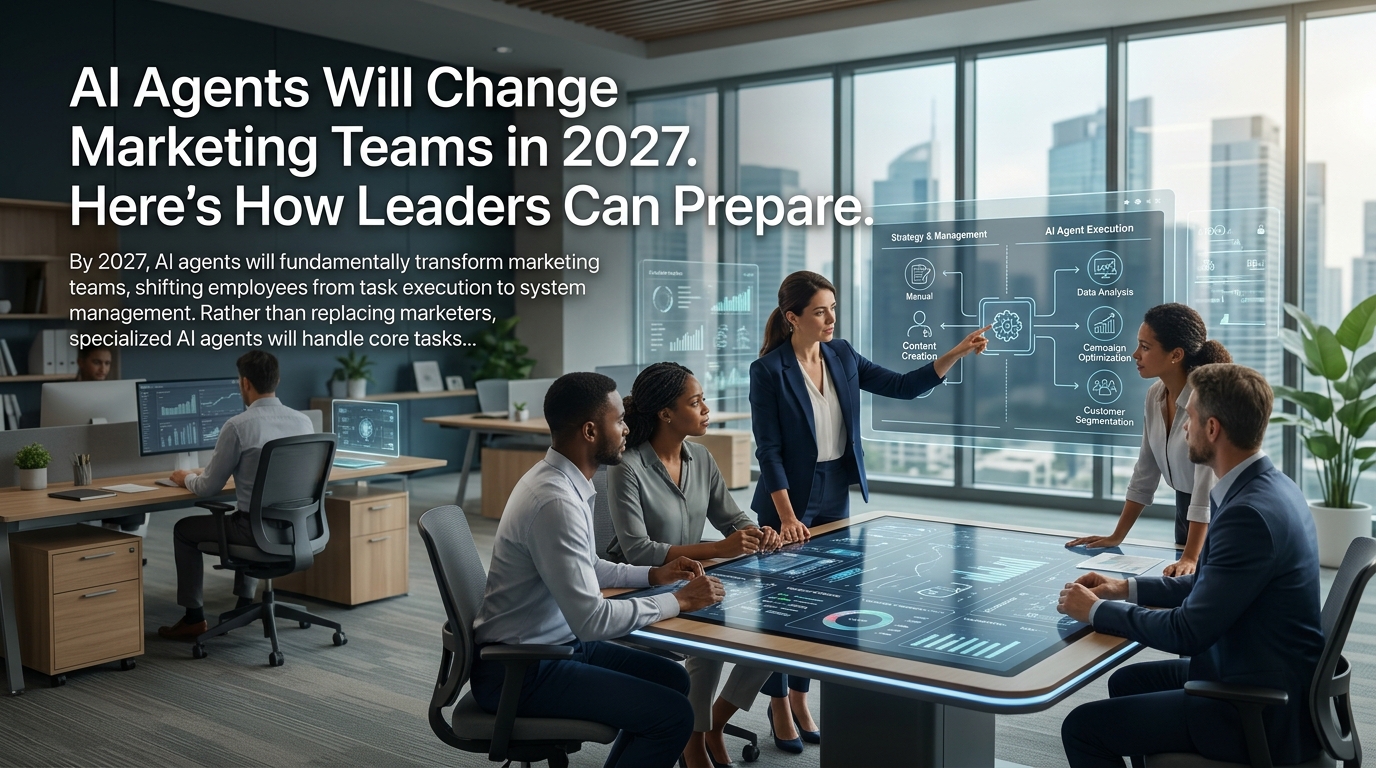
By 2027, your marketing team won’t be running campaigns—they’ll be managing the AI agents that run campaigns. The shift moves employees from task execution to system design, with specialized agents handling continuous processes like performance monitoring and optimization while humans focus on strategic oversight and guardrails.
Key Points:
- AI agents will handle continuous processes (monitoring, optimization, execution) while marketers shift to strategic oversight and system management
- Success requires understanding business relationships beyond individual metrics—ensuring AI decisions align with overall profitability and customer value, not just conversion rates
- Shared organizational knowledge becomes competitive advantage: agents need access to customer insights, past experiments, and commercial priorities to make intelligent decisions
- Leaders must identify which decisions can be safely automated versus those requiring human judgment, concentrating human involvement where it creates maximum value
Why it matters: This isn’t about replacing marketers—it’s about redefining the job. The marketers who survive this transition will be the ones who understand that their new role is feeding context, designing constraints, and ensuring AI optimizes for profit, not just performance. The ones who don’t will keep manually tweaking campaigns while their competitors scale with systems.
🔗 Adobe Named a Leader in B2B Marketing Automation Platforms (9 minute read)

Adobe’s been named a Leader in Gartner’s 2026 Magic Quadrant for the 15th straight year, but the real story is their shift from marketing automation to marketing orchestration. They’re using AI reasoning to anticipate buyer needs across entire buying groups—not just individual contacts—and offering two paths: the expanded Marketo portfolio for existing users and Journey Optimizer B2B edition for enterprises needing deeper data unification.
Key Points:
- The shift from automation to orchestration: AI moves from executing tasks to anticipating buyer needs across entire buying groups, not individual leads
- Two implementation paths: Marketo portfolio (Optimizer and Qualifier) for existing users, Journey Optimizer B2B edition for enterprises requiring deeper data unification
- New agentic AI experiences include MCP server integration with ChatGPT and Claude, account insights dashboards, and advanced content tools
- 59% of CMOs are prioritizing AI integration—Adobe positions itself as the partner for efficient B2B growth in the AI era
Why it matters: Marketing orchestration versus automation is the new dividing line. Automation executes what you tell it to do. Orchestration anticipates what needs to happen next based on buying-group behavior and commercial context. If your platform is still optimizing for individual MQLs instead of account-level buying signals, you’re solving the wrong problem.
🔗 How CDPs and AI Driven Marketing Automation Are Redefining Customer Engagement in Banking (5 minute read)
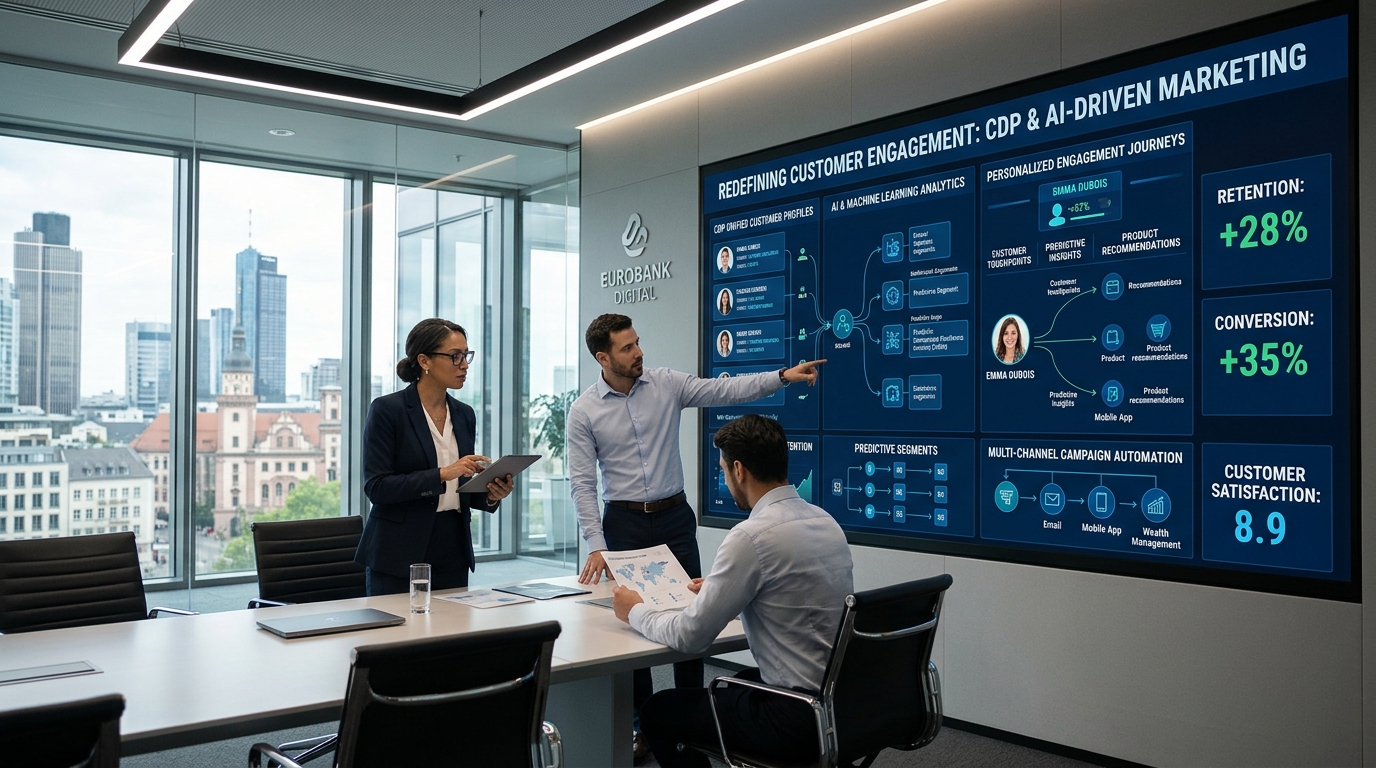
European banks are using Customer Data Platforms combined with AI-driven marketing automation to solve a problem every industry with legacy systems faces: fragmented customer data killing personalization. CDPs unify data across silos, enabling real-time behavioral insights, predictive risk detection, and omnichannel consistency, while AI orchestrates personalized journeys at scale.
Key Points:
- CDPs solve five critical issues: data silos, regulatory compliance, hyper-personalization demands, digital transformation barriers, and margin pressures
- Real-time behavioral insights enable predictive interventions—from fraud warnings to savings nudges—transforming banks from reactive to proactive
- AI and marketing automation orchestrate personalized journeys at scale while reducing costs and improving profitability
- For modern financial institutions, these capabilities are foundational, not optional—the same applies to any industry with legacy data fragmentation
Why it matters: Banking’s CDP playbook applies to any business with legacy systems and fragmented customer data. If you can’t unify behavioral signals across channels in real time, you can’t feed AI agents the context they need to personalize at scale. The competitive advantage isn’t the AI—it’s the data architecture that makes AI decisions intelligent instead of random.
“The shift from automation to orchestration isn’t about better tools—it’s about designing systems that think in terms of customer value and business outcomes, not just task completion.”
— Mark Coppens, Founder, LuxeScale
Which marketing decision should stay human-controlled longest?
- A) Budget allocation across channels
- B) Brand voice and messaging strategy
- C) What metrics define success
- D) Which customer segments to prioritize
The pattern across every story in this issue is the same: AI doesn’t replace strategy—it exposes the lack of it. Marketers who succeed in 2027 will be the ones who stop optimizing individual tactics and start designing systems that align AI execution with actual business outcomes.
Your funnel isn’t broken. It’s just built for a world where humans manually manage every step. That world is ending. The question isn’t whether to adopt AI agents—it’s whether you’ll design the guardrails and data architecture that make them intelligent, or let them optimize for the wrong goals faster than you can course-correct.
Start with one decision you’re currently making manually every week. Ask: what context would an AI agent need to make this decision as well as you do? If you can’t answer that question, you’ve found your first strategic project for 2027.
Keep building,
Funnel Marketing Systems Editor
📊 How did you like today’s email?
Originally published by Funnel Marketing Guy, your resource for funnel marketing, sales funnels, ClickFunnels, lead generation, conversion optimization, email marketing, marketing automation, and digital marketing strategies.
Continue your journey at https://www.funnelmarketingguy.com.
Enjoyed this issue?
Subscribe to get Funnel Marketing System delivered to your inbox every week.
Join 17 other subscribers • Free forever